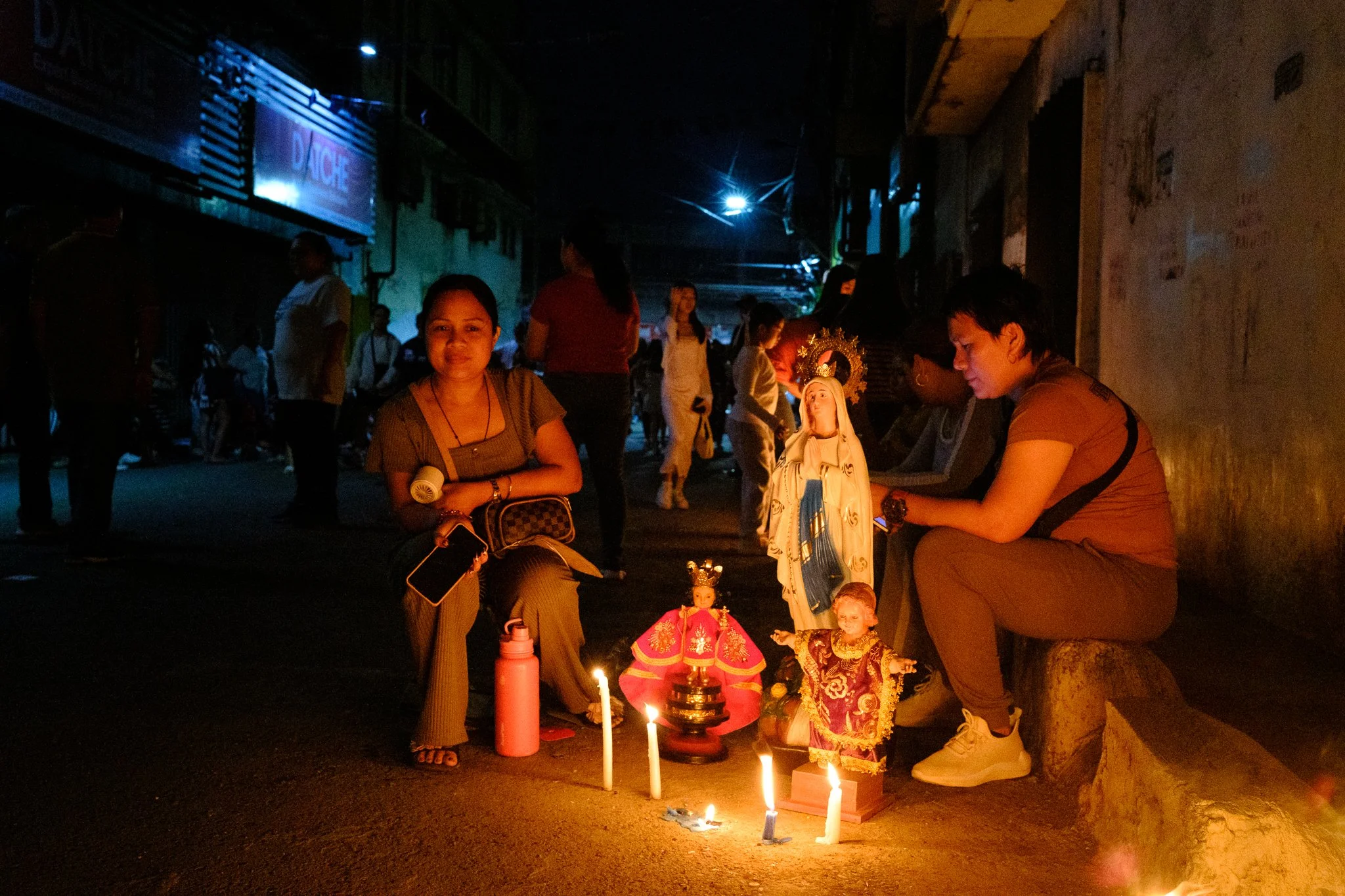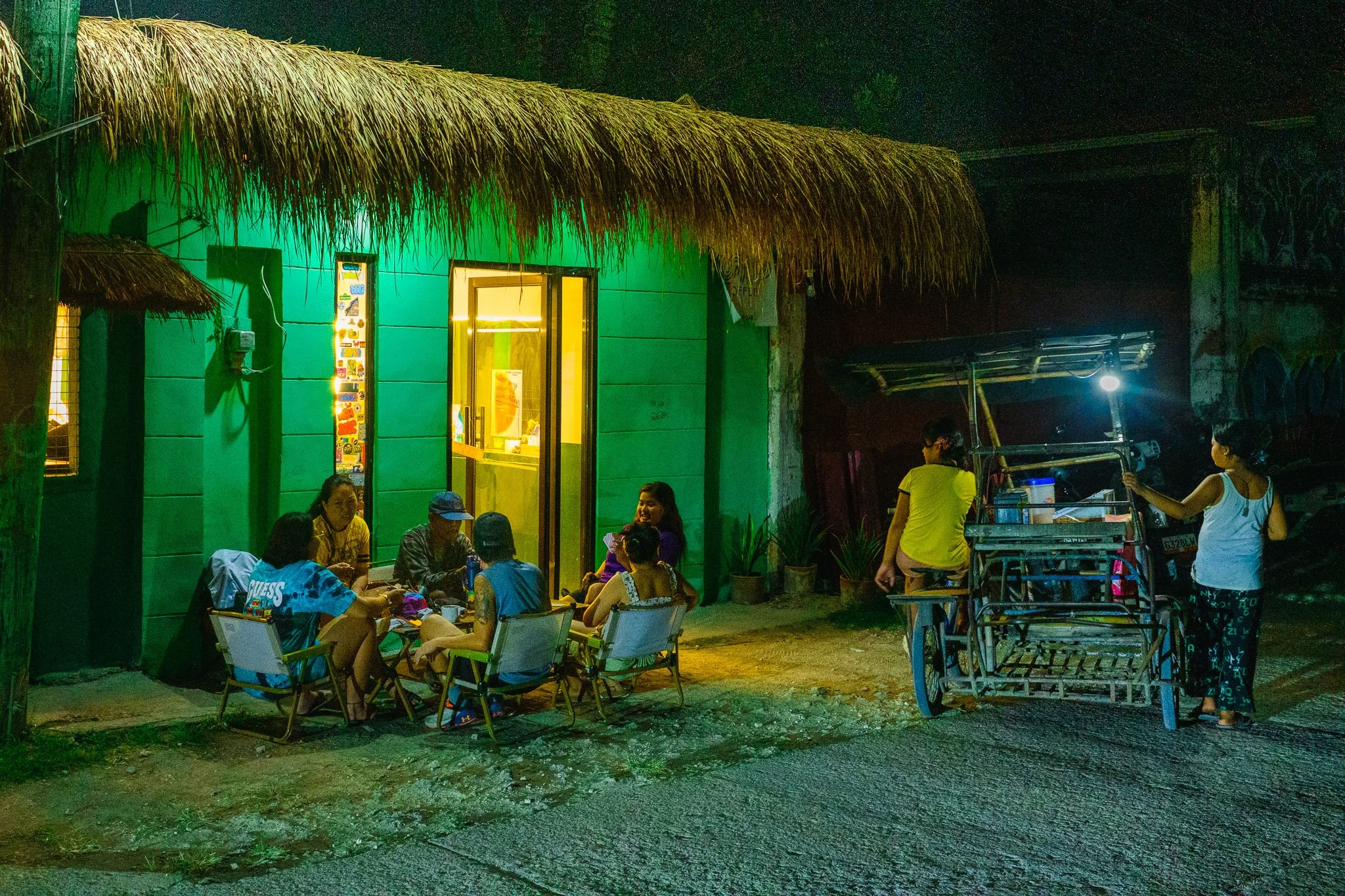
Coming from the Netherlands, one of the first things that struck me about life in the Philippines was how much of it happens outside. In Holland, private life is kept behind closed doors, away from the street. Here, the street appears to be part of the house. Families eat outside, children play on the pavement until late, neighbors gather on steps and in doorways. The boundary between domestic life and public life is porous in a way that takes some getting used to, and then becomes something you cannot imagine living without. The house, it sometimes seems, is only for sleeping.
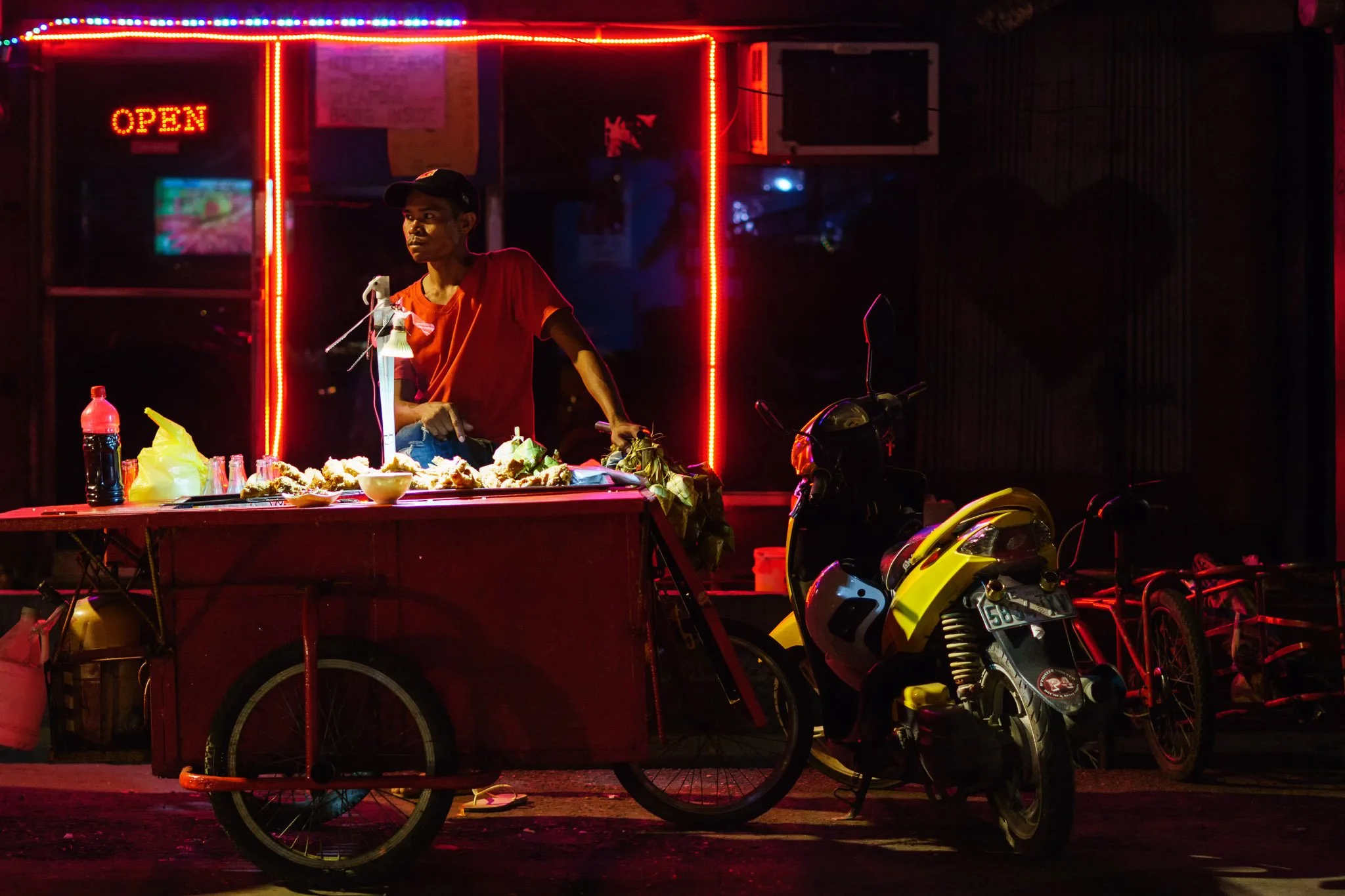
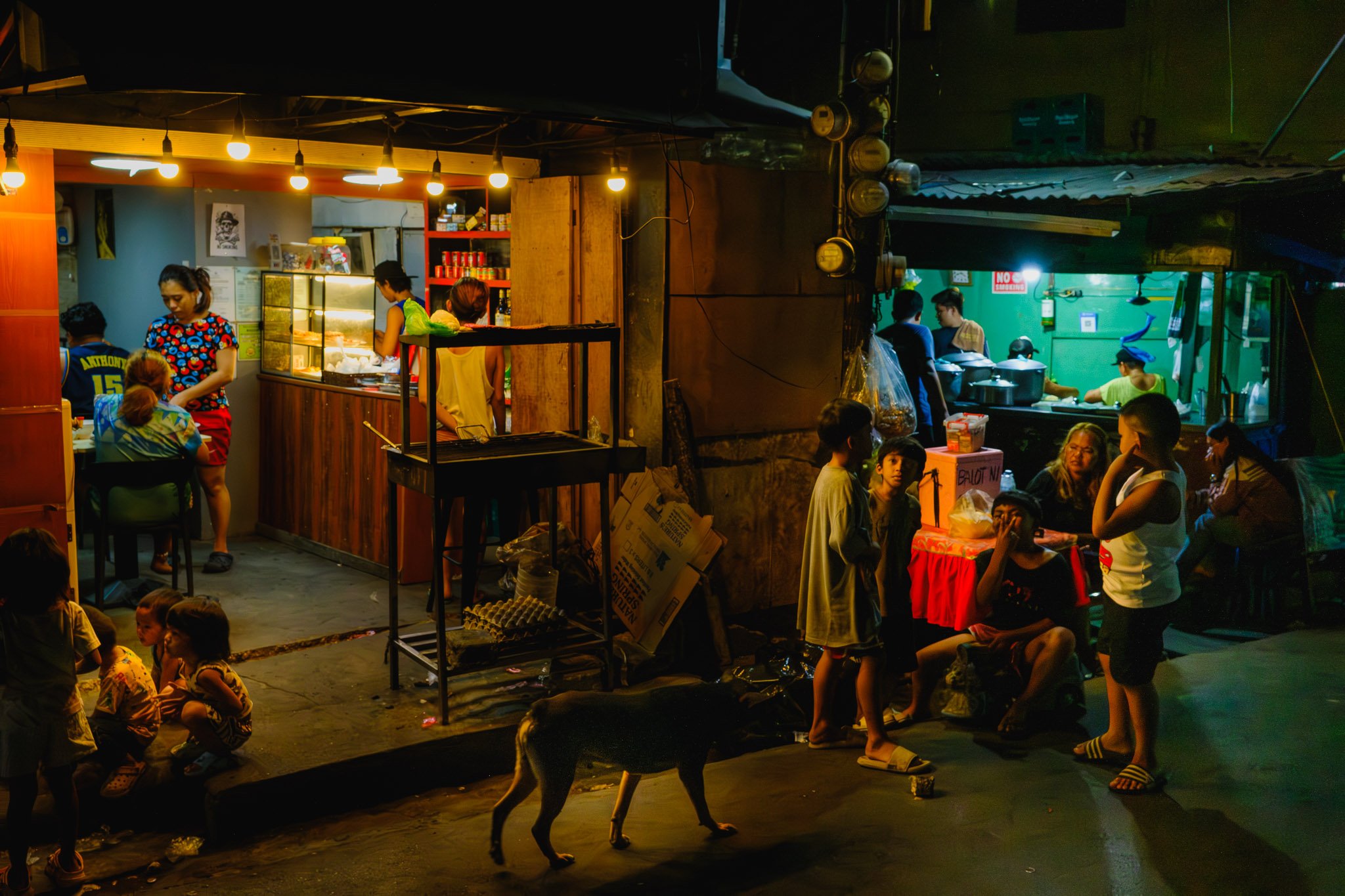
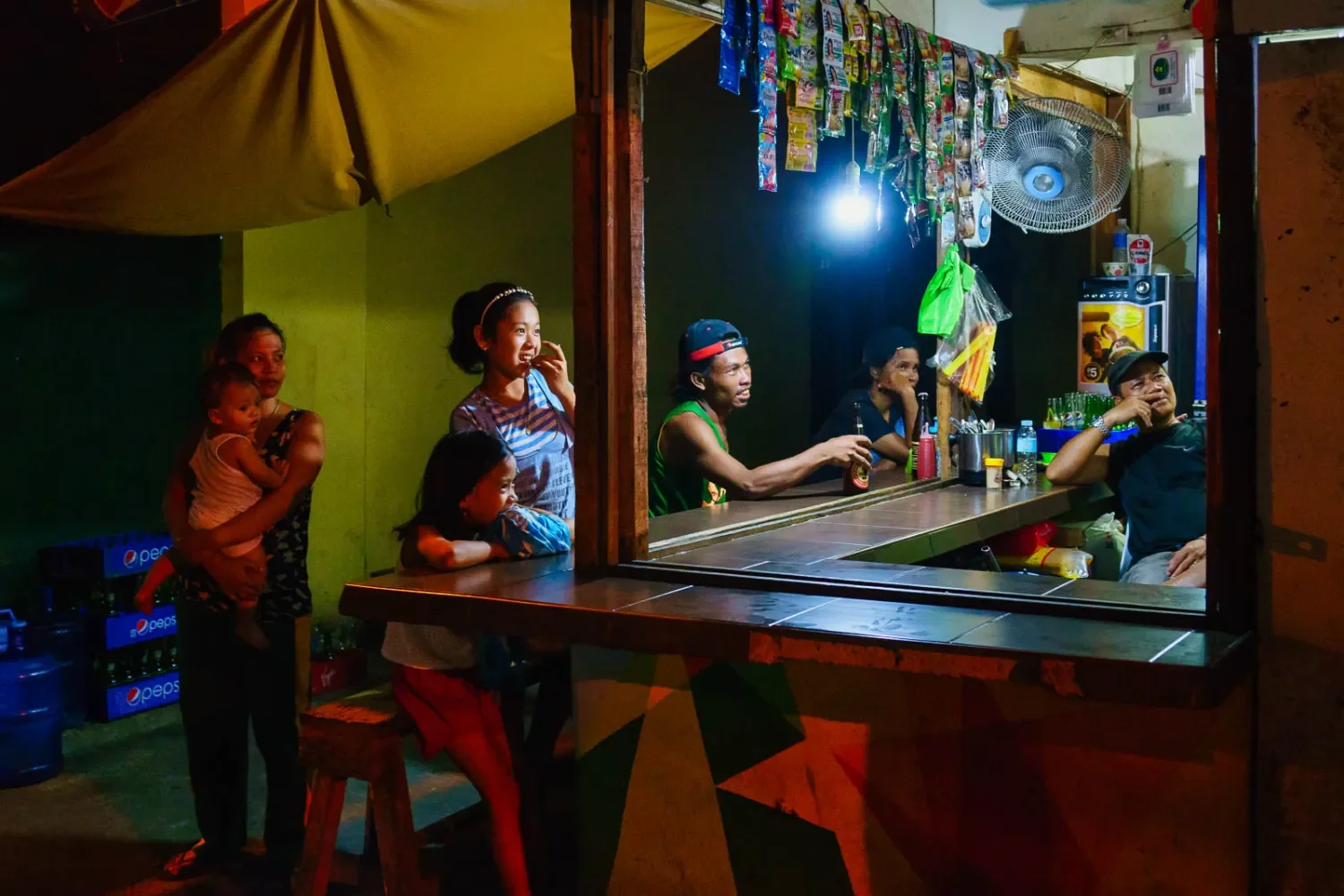
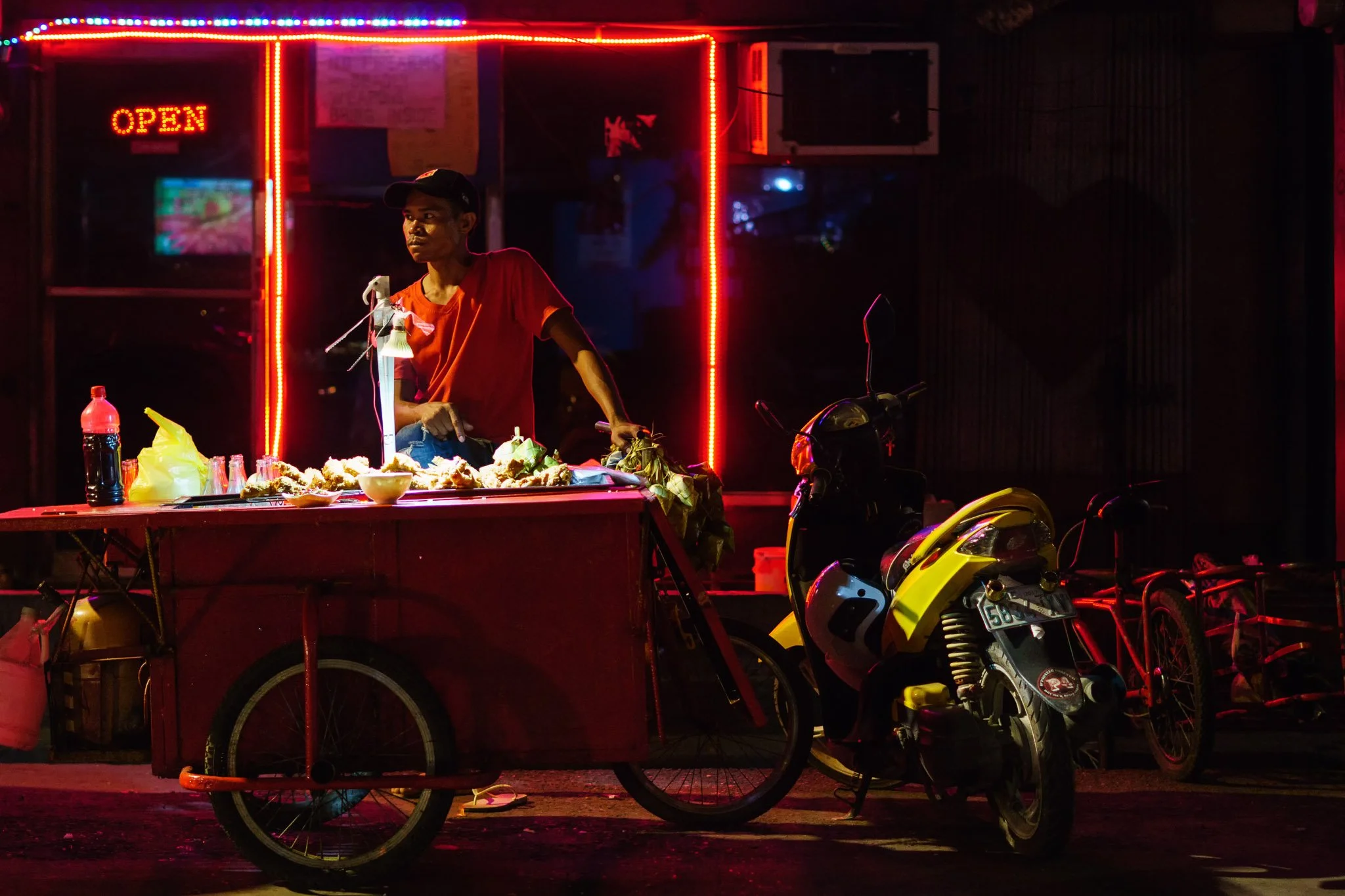
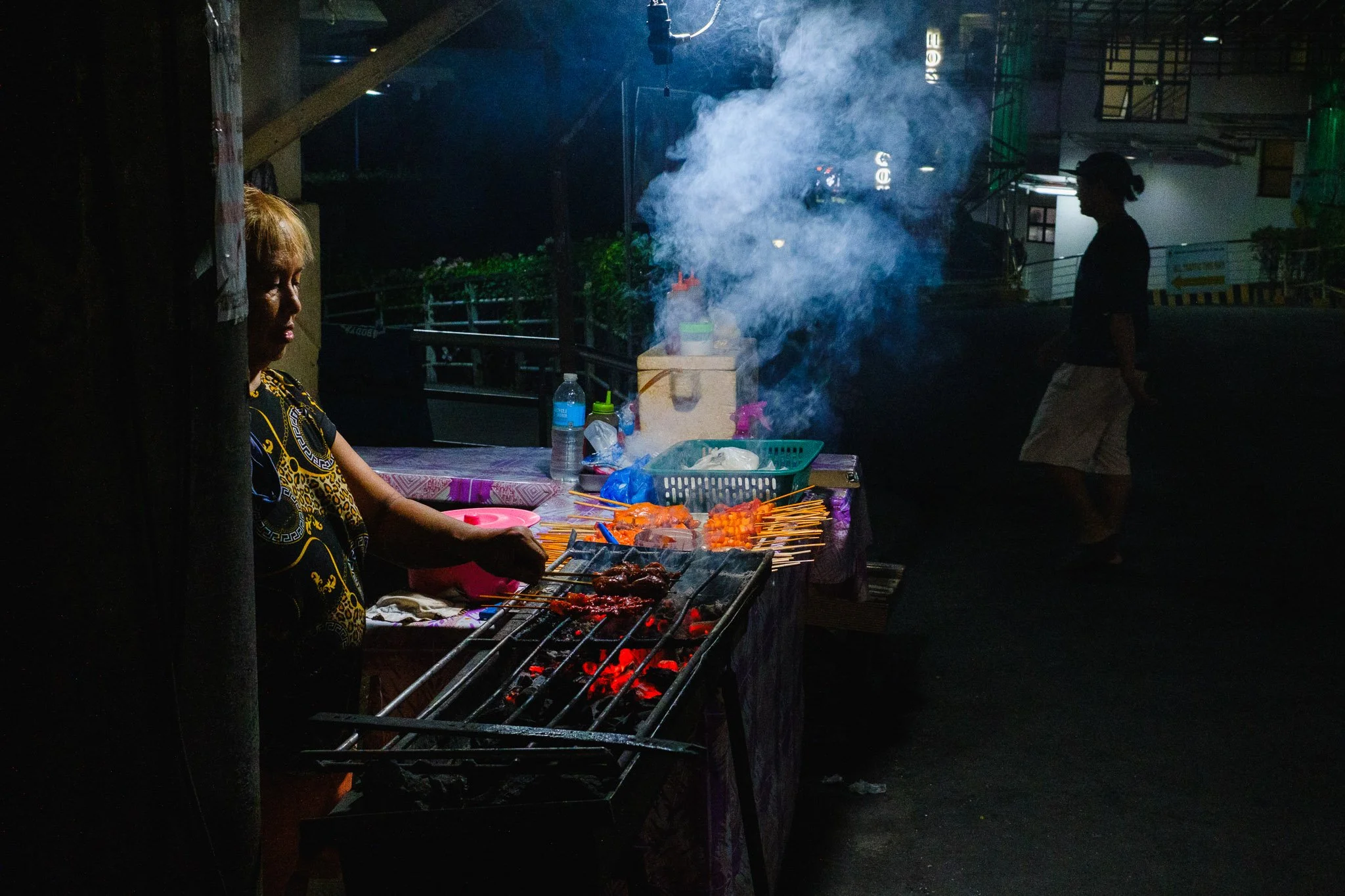
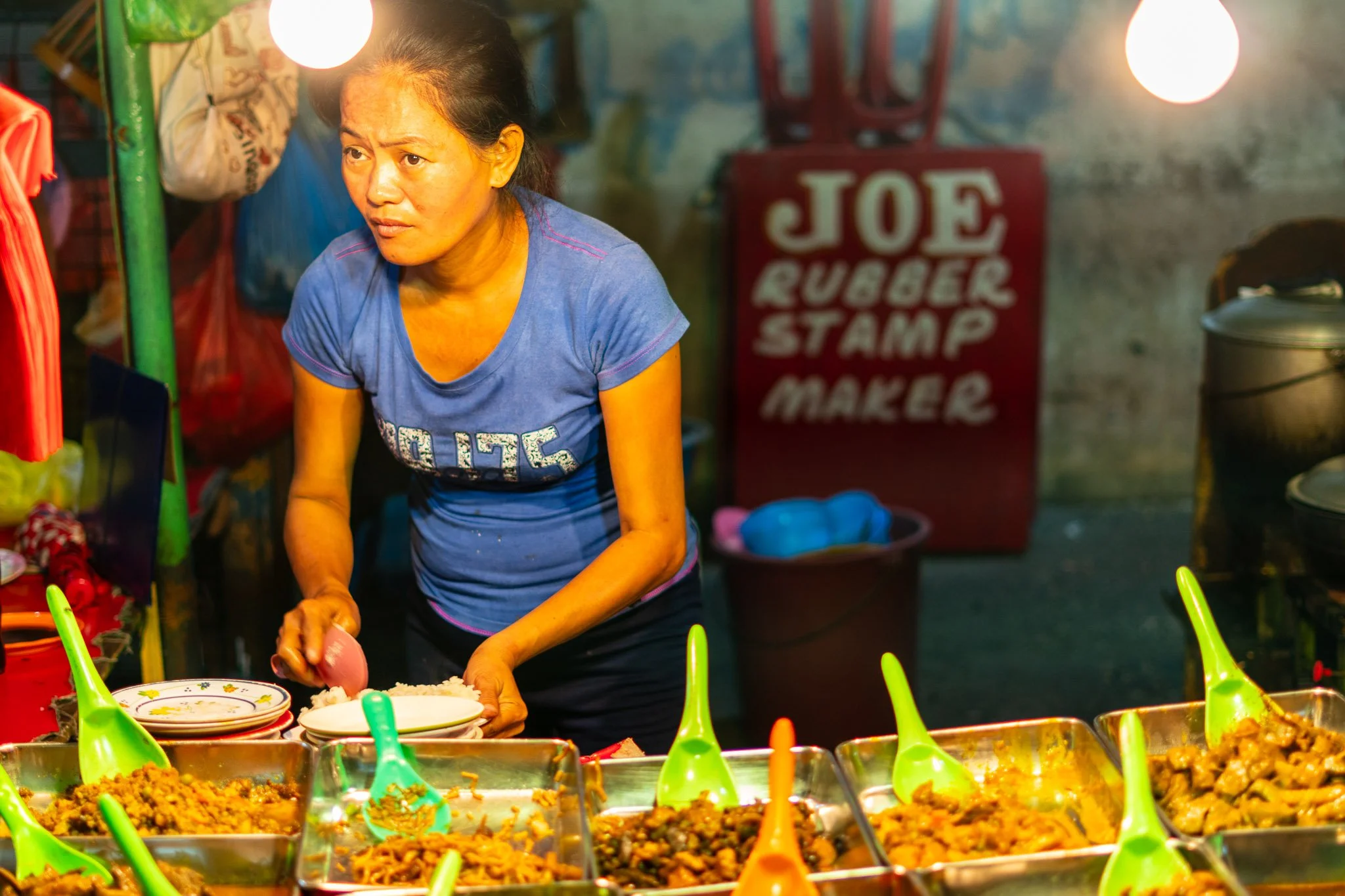
Shooting at night in the Philippines means looking for hot spots of light. Usually not the big bright neon of urban centers — here the lights are more likely to belong to a karenderia, a small family-run eatery tucked into a residential street. The karenderia is the natural expression of Filipino street life — a home kitchen that has simply moved outside, or opened its wall to the street. It is invariably a family affair, with all hands involved — cooking, grilling, serving, washing up. The woman at the stove is doing what she would do at home, for more people. The plastic table on the pavement is as domestic as any dining room. And the people eating there are not customers in any formal sense — they are guests, fed by people who take the food seriously. It is also an impromptu social hotspot on the street.
The warm light, the smoke from the barbecue, and often the vivid colors of the interior attract eaters, moths and night photographers alike.
My connection to these places runs deeper than photography. My family-in-law ran a store like this for many years. I spent hours watching them work — cooking, selling, catering to the many familiar faces that came every day. There was always food in the house — most of it destined for the store, and some, usually a little better, kept for the family. What stays with me is the efficiency of it — no wasted movements, no hesitation. Hands that had done this ten thousand times moving through the kitchen with a quiet authority that no culinary school teaches. And always the tasting — a spoon lifted, a small adjustment, the seasoning corrected by memory and instinct rather than any written recipe. A lifetime distilled into a morning’s cooking.
Their customers were the young professionals, students and workers who rent a bunk or a shared room in the boarding houses that fill Philippine cities. Without a kitchen of their own, the street becomes their dining room. Every evening they point at whatever is under the glass and eat adobo, sinigang or grilled fish for less than the price of a bus fare — take home or dine in. It is simple food, honestly cooked, and it connects them — however briefly — to something that feels like home.
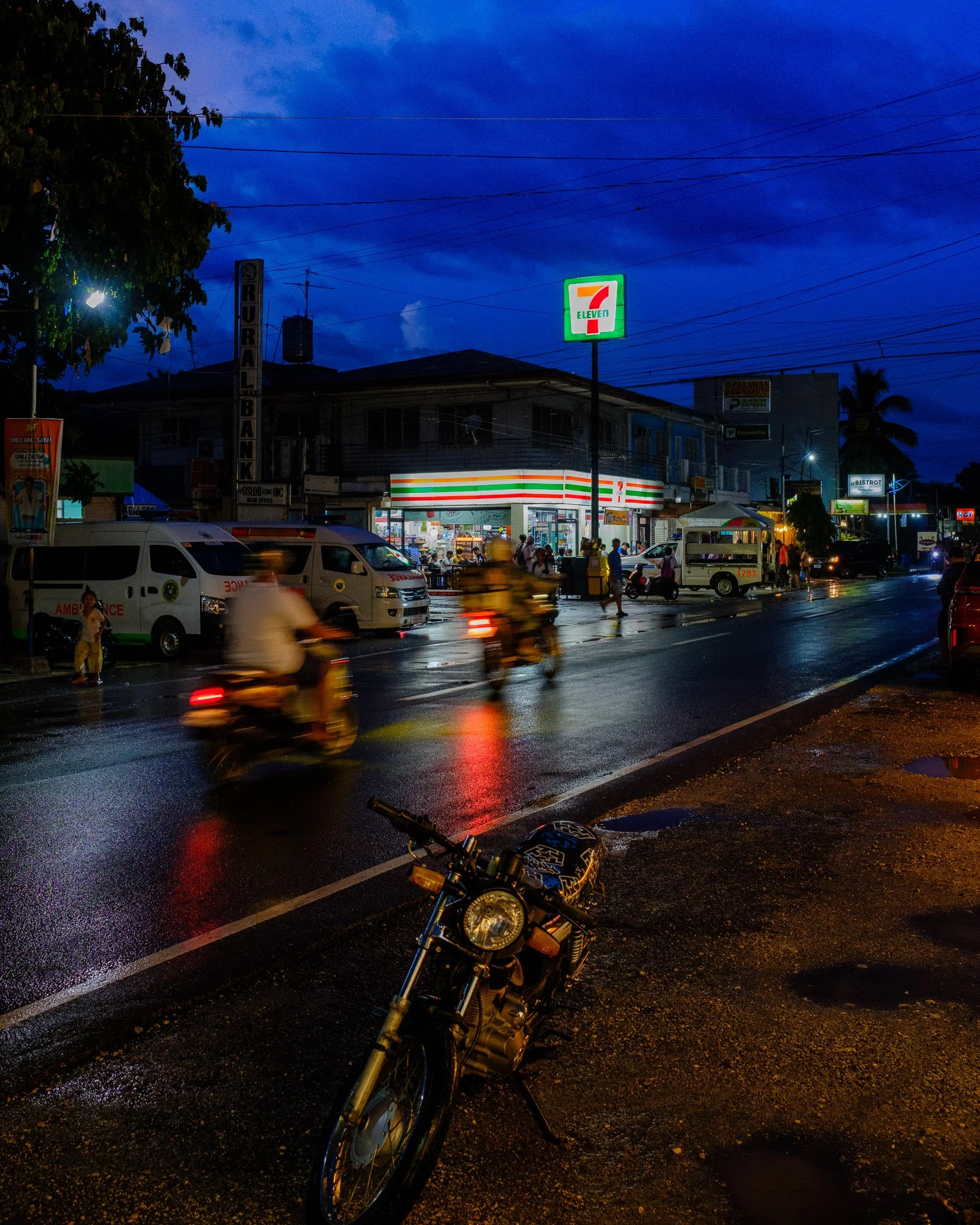
But these small lights are under threat. The convenience stores that line every major street now carry ready-to-eat meals in sealed packaging. Fast food chains, both global and the Filipino brands that have grown to rival them, have pushed deeper into residential neighbourhoods. And on the streets themselves, the fried food is everywhere — kwek kwek, fried chicken, fishballs — cheap, fast and filling, but a narrower kind of nourishment than what the karenderia offers.
What the karenderia gives you — variety, vegetables, broth, a specific luto, a cook’s particular hand — cannot be found on a convenience store shelf. When a karenderia closes, a neighbourhood loses not just a place to eat but a piece of its street’s life. The plastic chairs stay empty. The light goes out. And the moths, finding nothing to gather around, move on.
Photographs taken in Cebu City and surrounding areas.
Ubo Pakes is a Dutch environmental engineer who moved to the Philippines in 2008. Photography helps him explore Philippine culture and the differences from his home country. Through his camera, he stays curious about his surroundings.
Living and working in Cebu, he focuses on the many people who live and work on the streets. Creating portraits allows him to connect with society, learn the language, and understand local customs. He mainly documents the faces and lives of ordinary people in daily life.