Santo Niño de Cebu, a statue of the child Jesus brought to the Philippines by Spanish explorers under Ferdinand Magellan in 1521, holds profound religious and historical significance for both Cebu City and the Philippines. As the oldest Christian relic in the country, the Santo Niño is the patron saint of Cebu and represents the deep Catholic faith that has shaped Filipino culture for five centuries. The statue survived fires and conflicts throughout history, which is seen as miraculous proof of divine protection. For us in Cebu, Santo Niño is not merely a religious icon but a beloved patron who is believed to intercede in times of need.
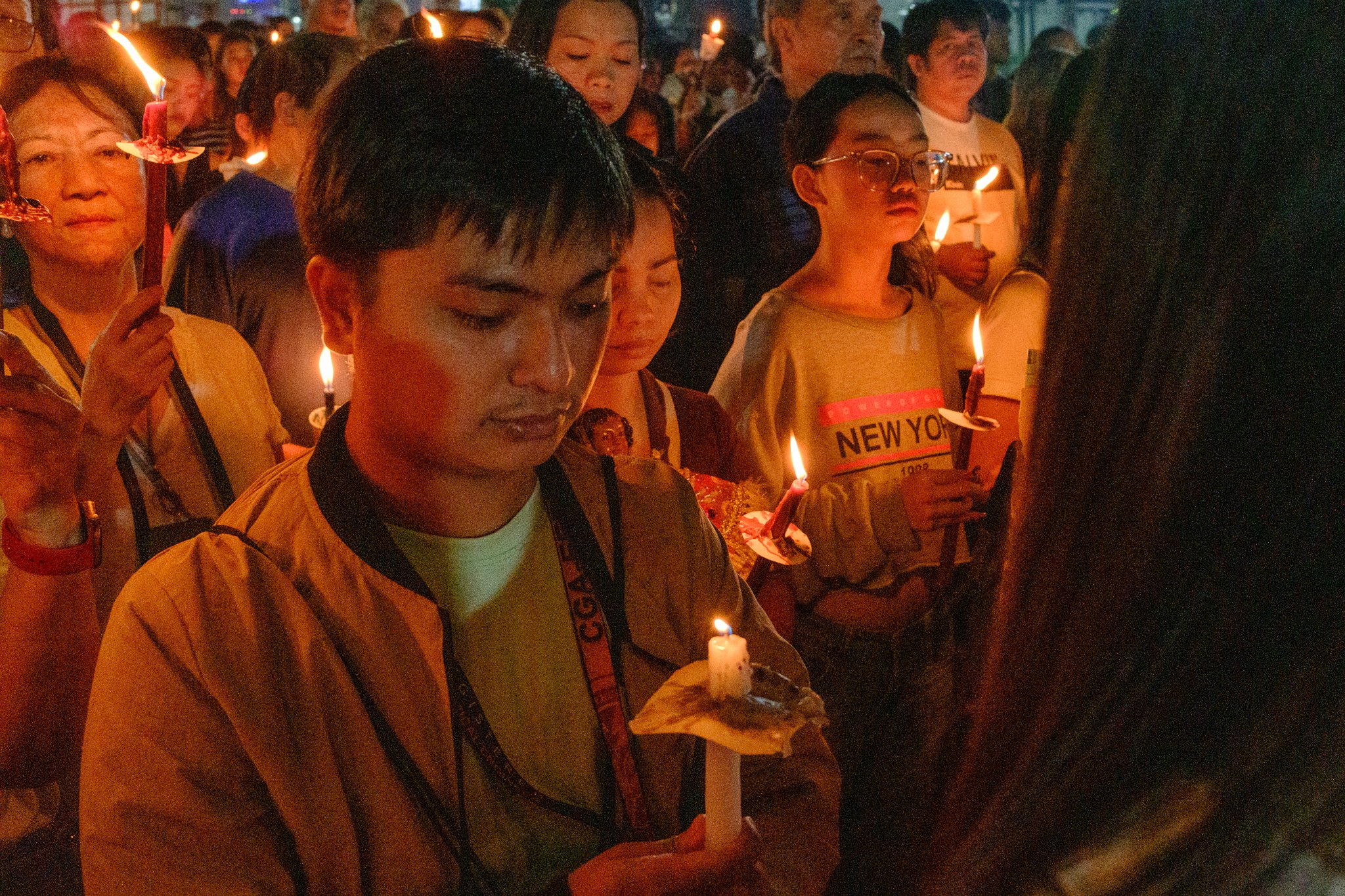
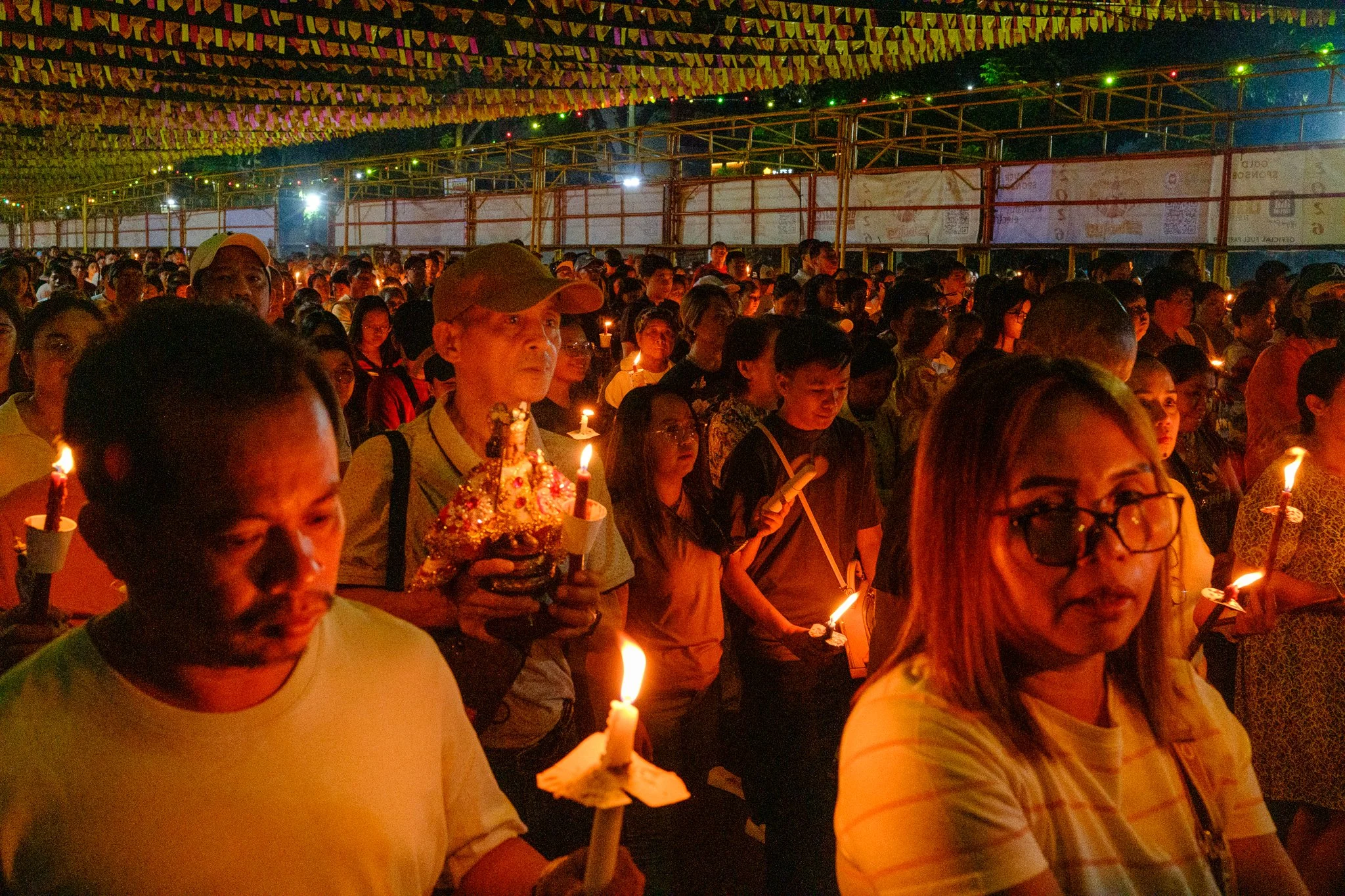
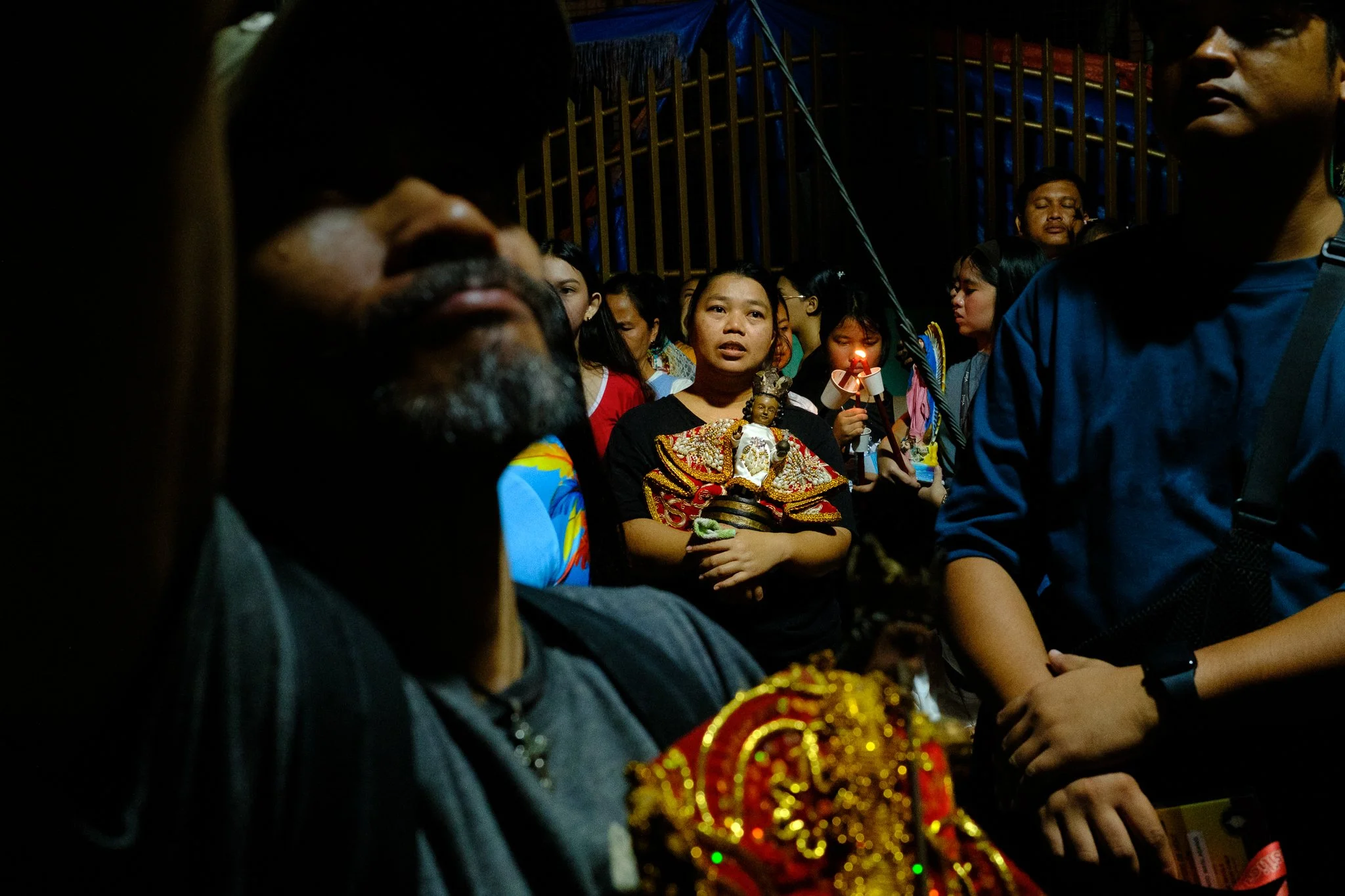
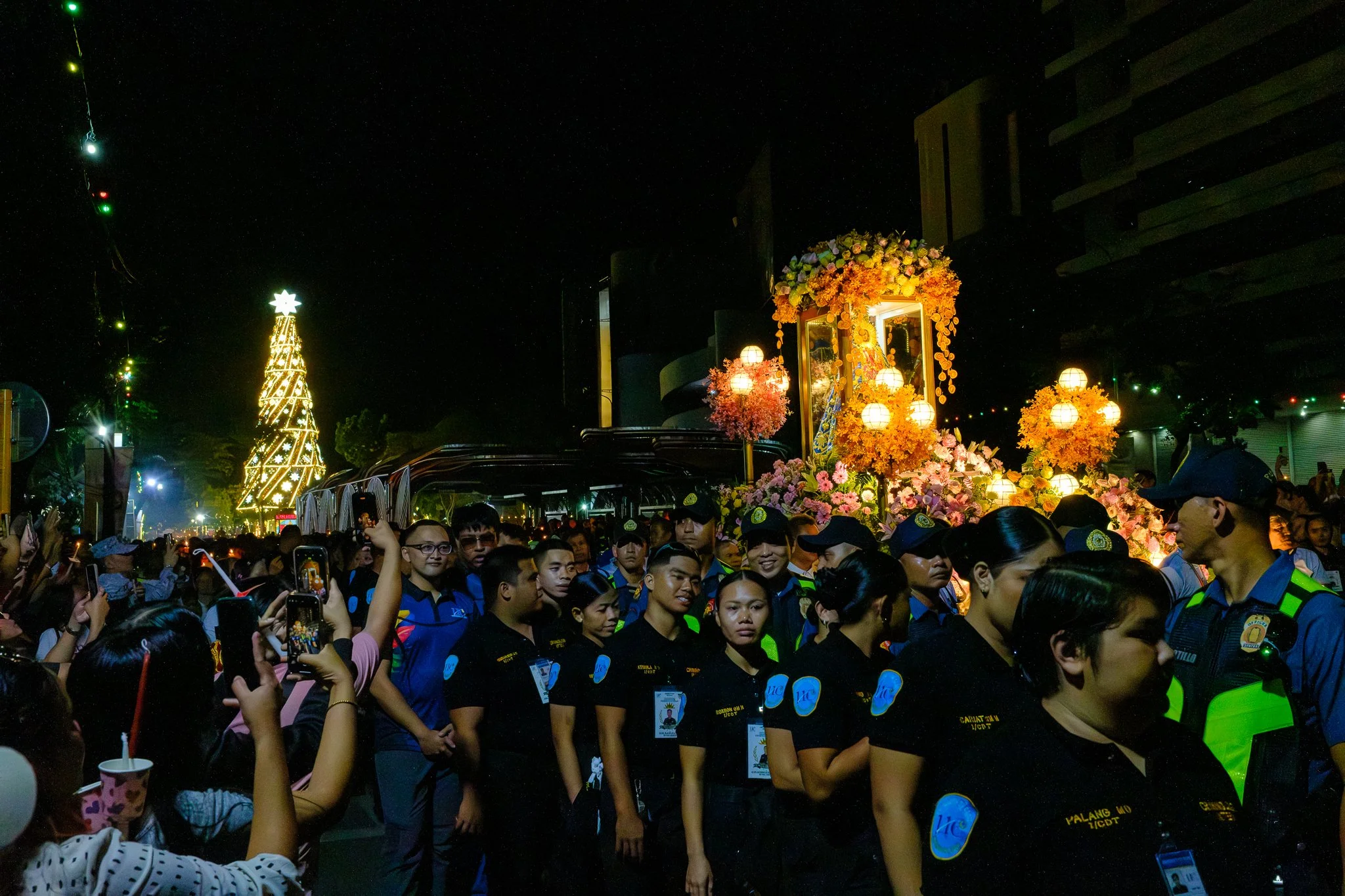
Each January, millions of Filipinos participate in the Sinulog Festival, a vibrant celebration honoring the Santo Niño that has become one of the country's grandest religious and cultural events, featuring street dancing, processions, and fervent displays of devotion. The Walk with Mary, held before the Sinulog Festival's grand parade, is a solemn procession that honors the Virgin Mary and serves as a spiritual prelude to the more exuberant Sinulog celebrations. This year, more than a hundred and fifty thousand devotees, many dressed in white and carrying candles or statues of saints, walk through the streets of Cebu City alongside the image of Our Lady of Guadalupe de Cebu, offering prayers and thanksgiving.
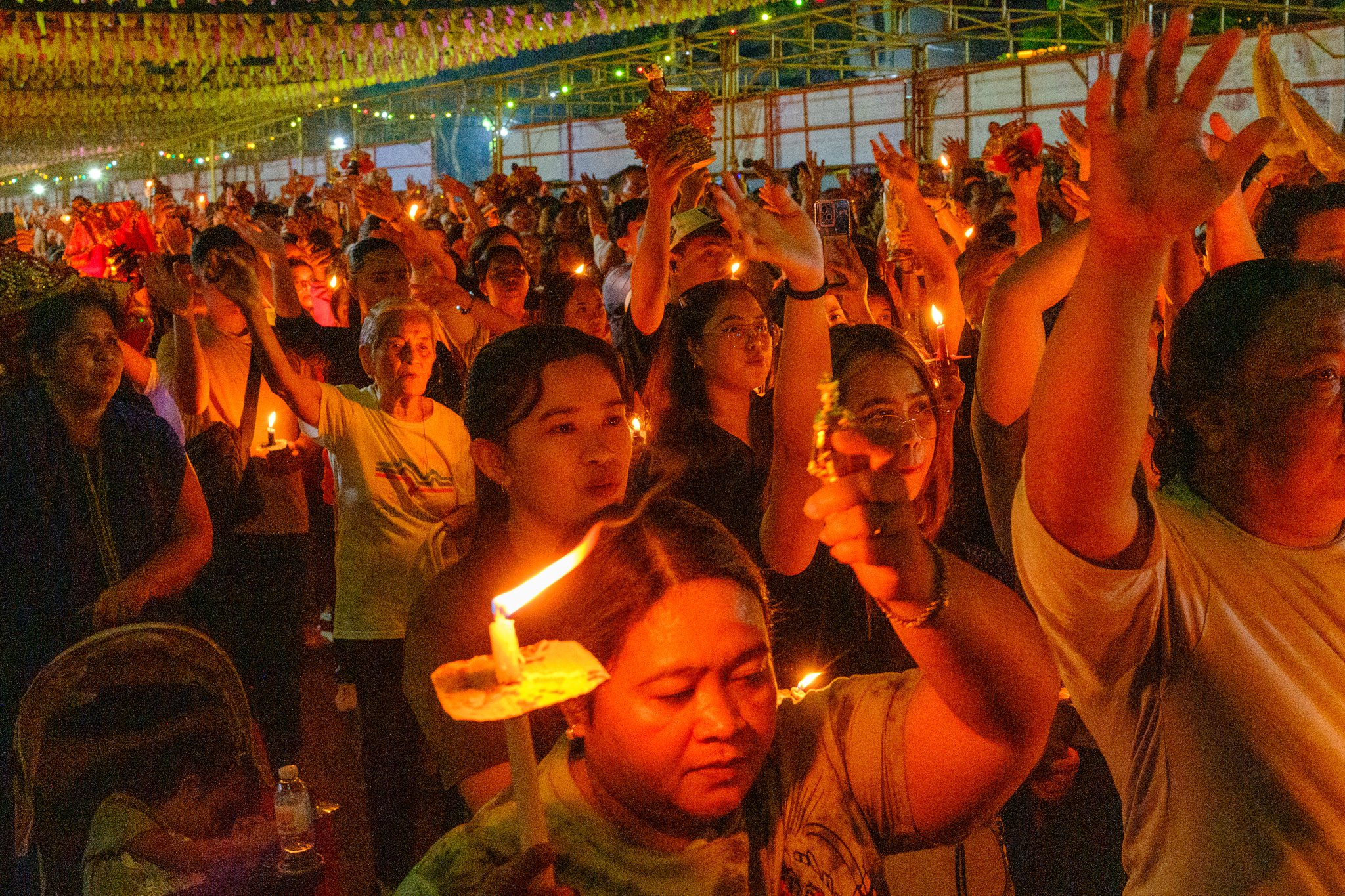
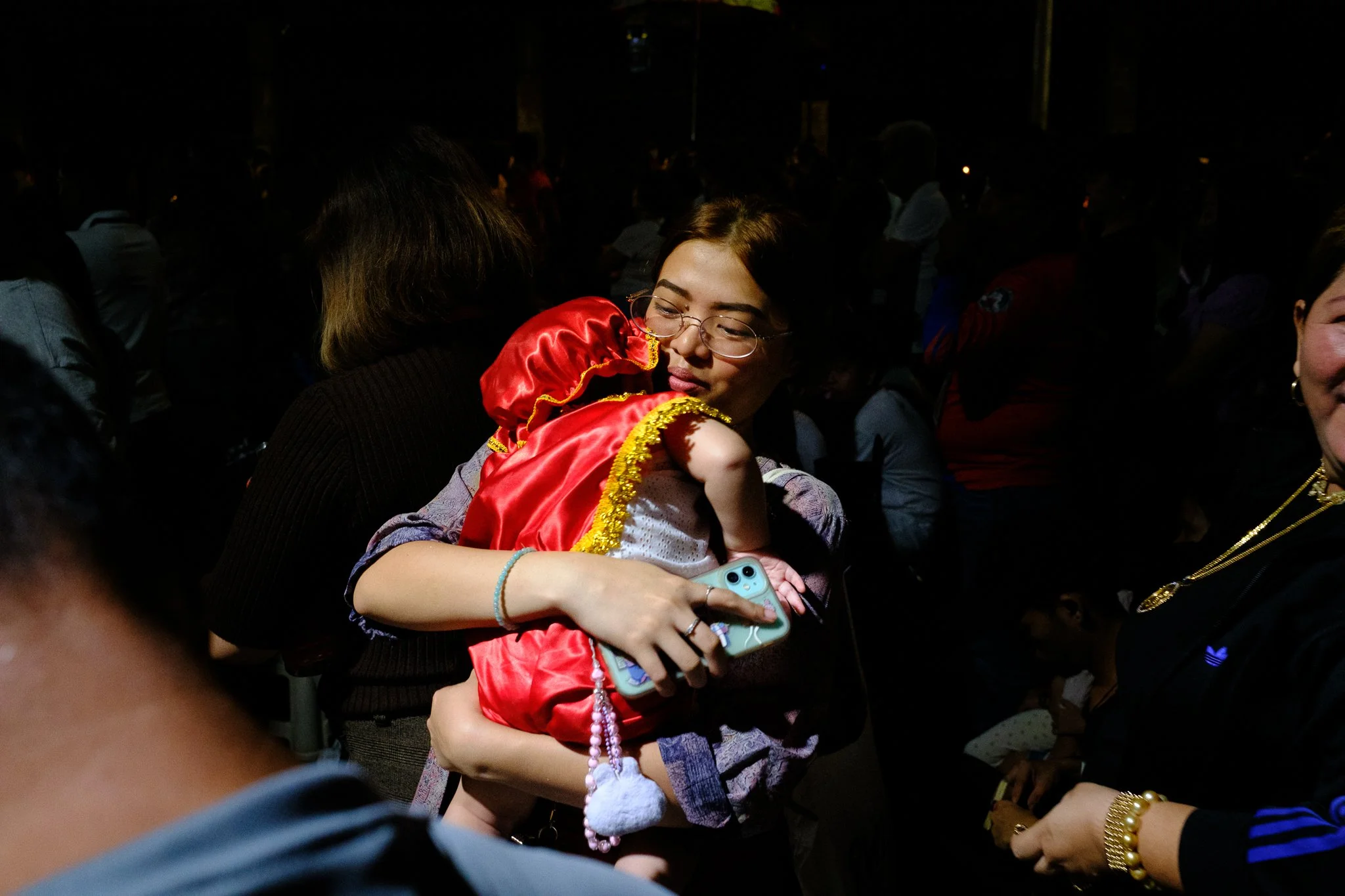
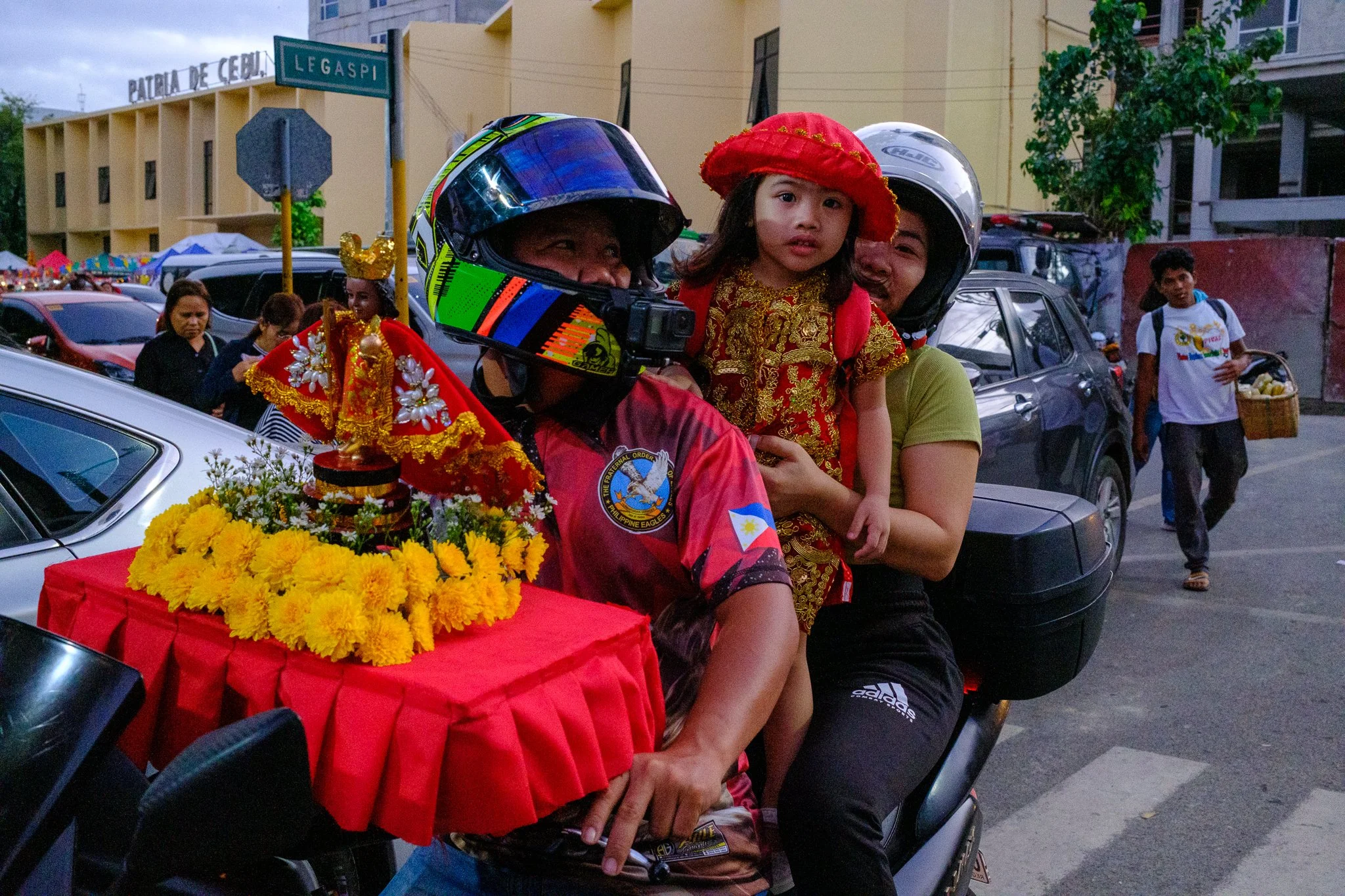
The past two years I have been up in the middle of the night to document this procession. I am amazed with the devotion so many show, attending a nightly procession which starts at three in the morning. Many bringing symbols of their faith, statues of Santo Nino or Mother Mary and sometimes even dressing their children up as live Señor Santo Ninos. These children, of course, are tired in the middle of the night and have to be carried as well for a few kilometers as buggies are not common in the Philippines. At the tune of the hymn “Batobalani sa Gugma” or Magnet of Love, tens of thousands of hands, candles and statues go up in the air and wave. This dedication deeply moves me.
As photographer I have learned that I function better at the sidelines of events like this than at the center. It is a little bit more quiet and there are more options to move and look around and look for a composition. The other disadvantage of joining the actual procession itself is that is it a slow, but steady, moving crowd. So you have to keep moving too and there is little time to look around and see, reflect and compose. Your vision is greatly limited to people directly around you and then even mostly their backs. From the margins, I can observe the small gestures and people and scenes will just flow by naturally.
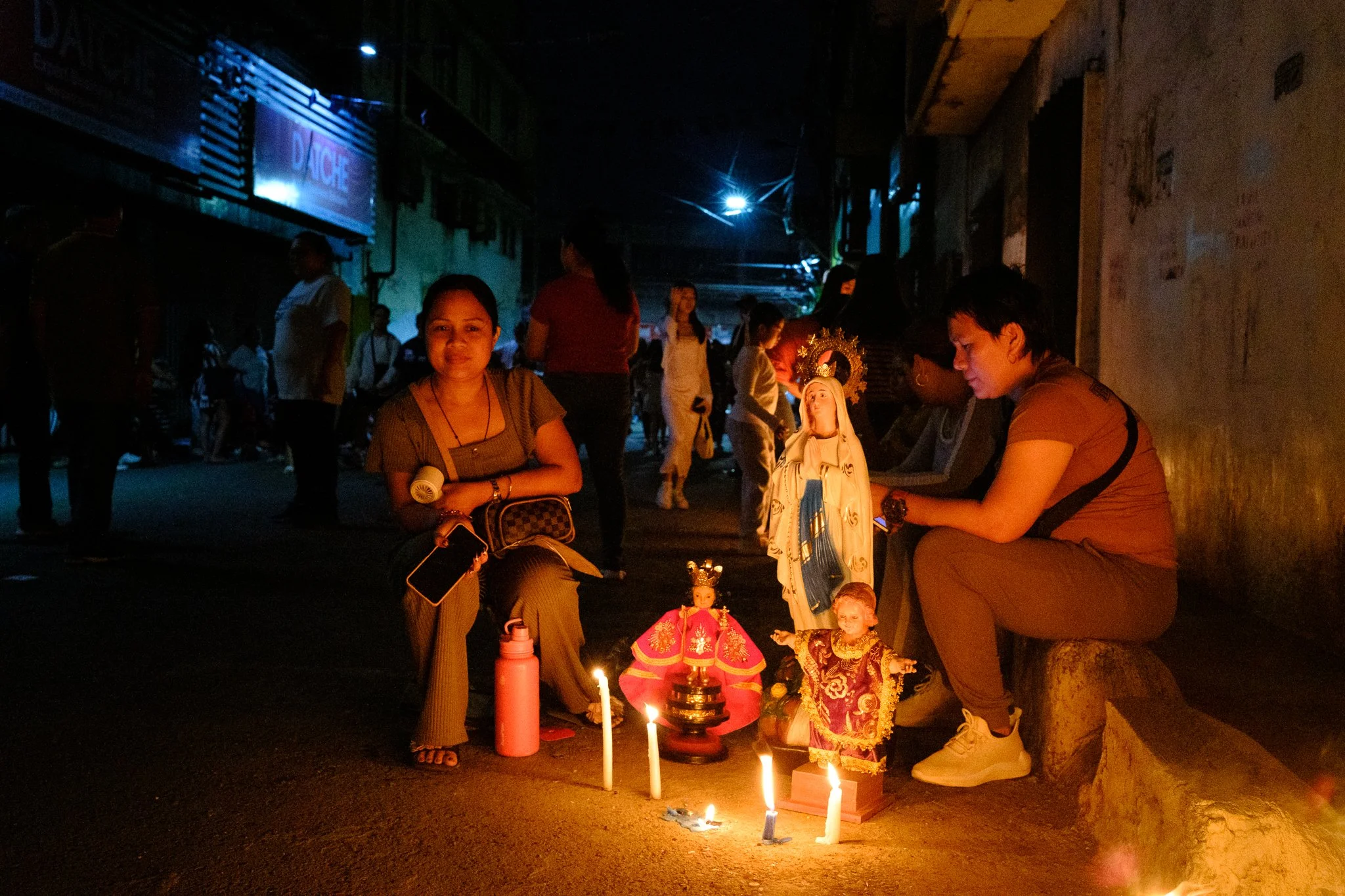
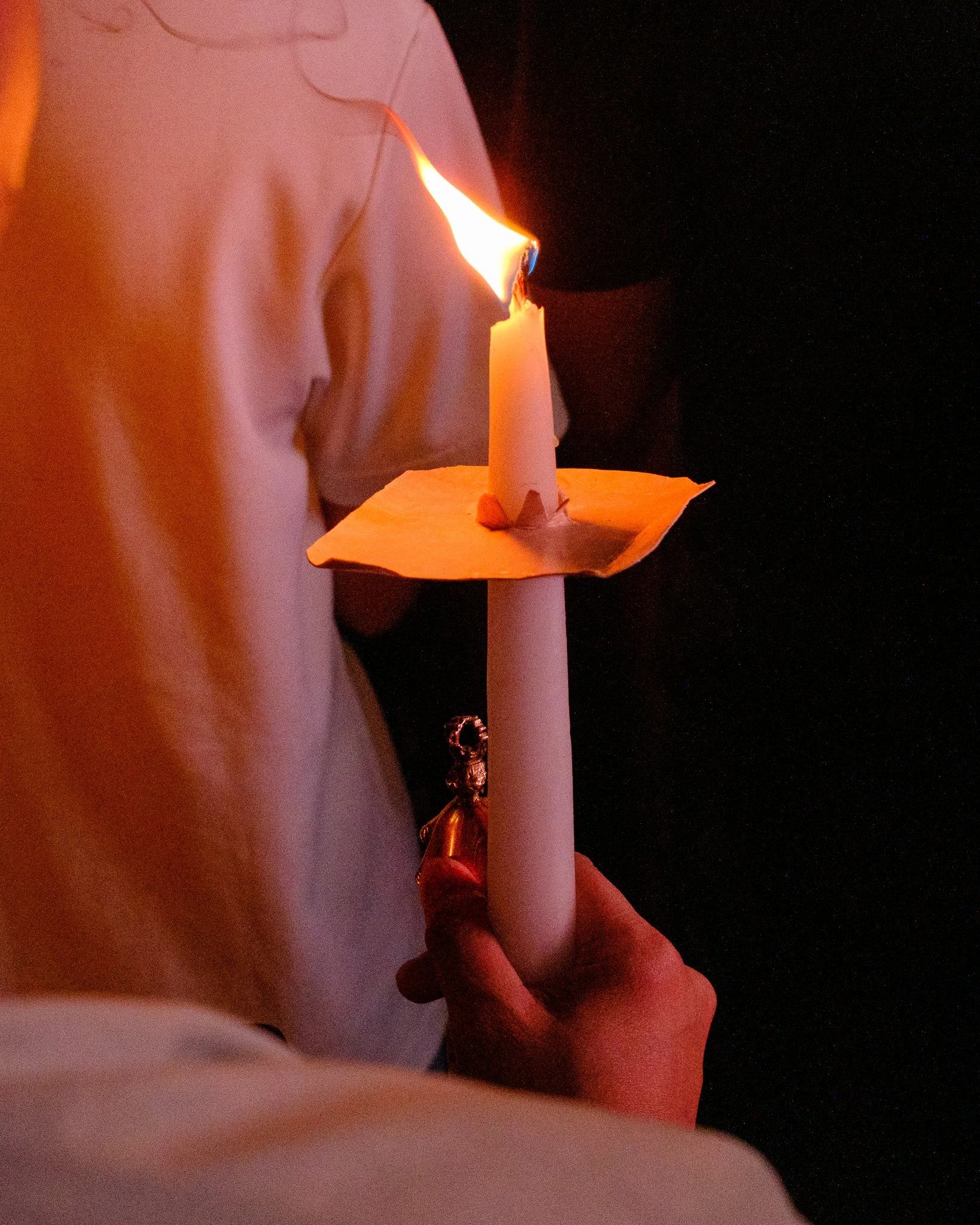
I love the solemn atmosphere of the procession and the way the candles produce pockets of light in the otherwise dark city. The darkness becomes a canvas where each flame tells a story—sometimes hundreds of candles creating a river of light, sometimes a single flame illuminating a small scene. People in the Philippines are almost always friendly towards photographers, but even more so today. People are happy and proud to show their faith.
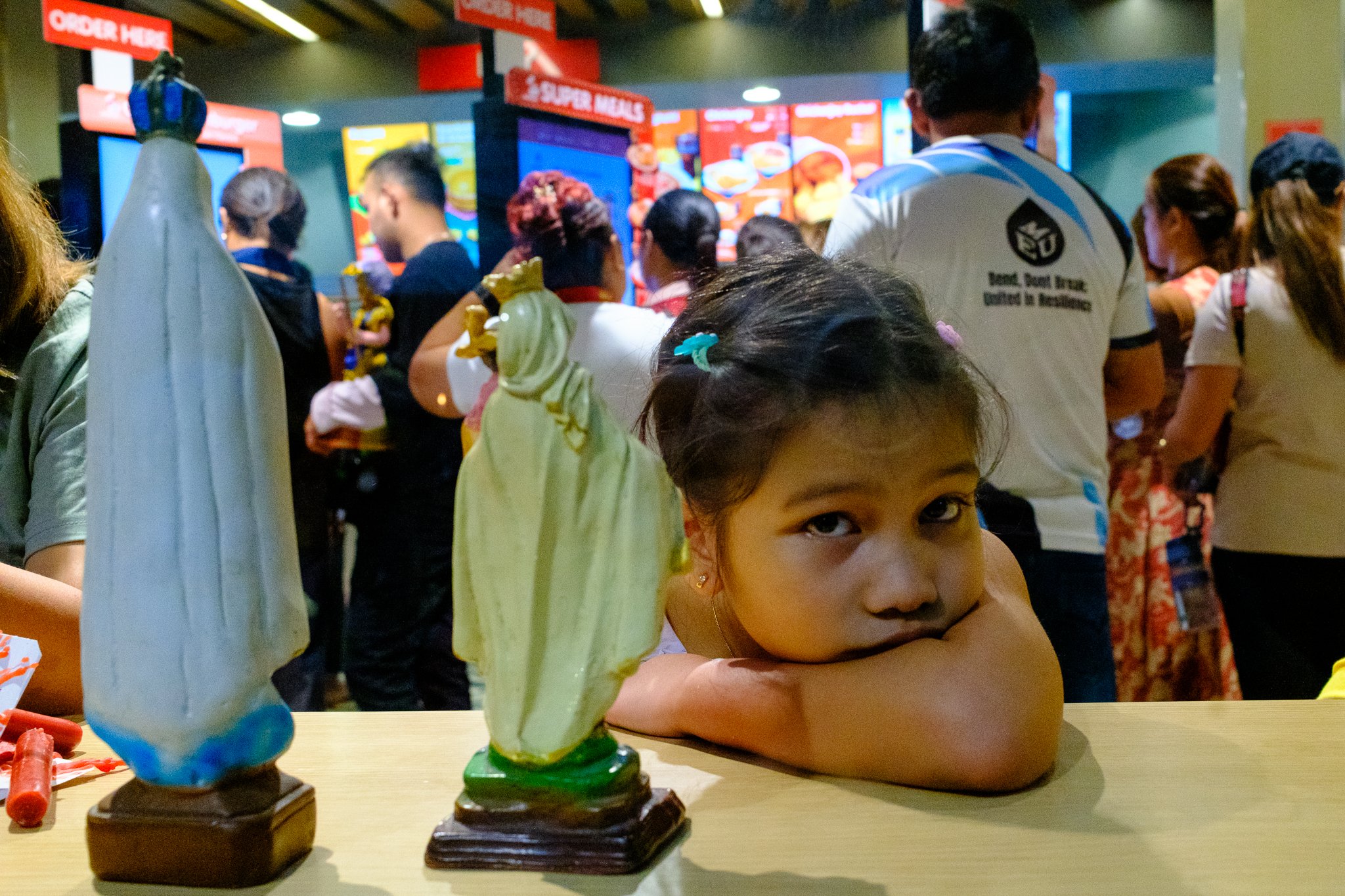
When the statue of mother Mary reaches the Basilica de Santo Niño, the home of Santo Niño, the procession ends and the crowd comes to a standstill. Mass starts now and around the church crowds are thick, but one or two blocks away they thin out a little and people are sitting and listening, vendors move through the crowd. Many people stay, for others this is the sign to go home, get something to eat or have an early start of the day.
Later that day both statues will travel to Mandaue City to be reunited with Saint Joseph the Worker and the next morning there is a fluvial parade with dozens of ships to guide them back to the main land. This ends the official religious proceedings of Sinulog and then on the third Sunday of January, the party starts. With a street dancing parade and many parties, this year attended by about five million people. But that is a different story altogether.