The first time I witnessed the Semana Santa festivals in Spain was some thirty odd years ago. I’d been working as an event manager in Western Andalucia for a couple of months, a short contract, but easily one of the worst jobs I’ve ever had. Almost by accident, towards the end of the job, I found myself in the city of Seville on the evening of Maundy Thursday.
Though the horrors of the nightmare contract are pretty much forgotten it could very easily have ruined Spain for me as I’d been counting the days, and couldn’t wait for the job to be over, but, that one night in Seville has remained one of the most memorable experiences of my life and was, without doubt, the start of my continuing Spanish love affair.
Semana Santa is huge. Semana Santa is amazing. Every city, every town, every village will take to the streets at some point during the week.
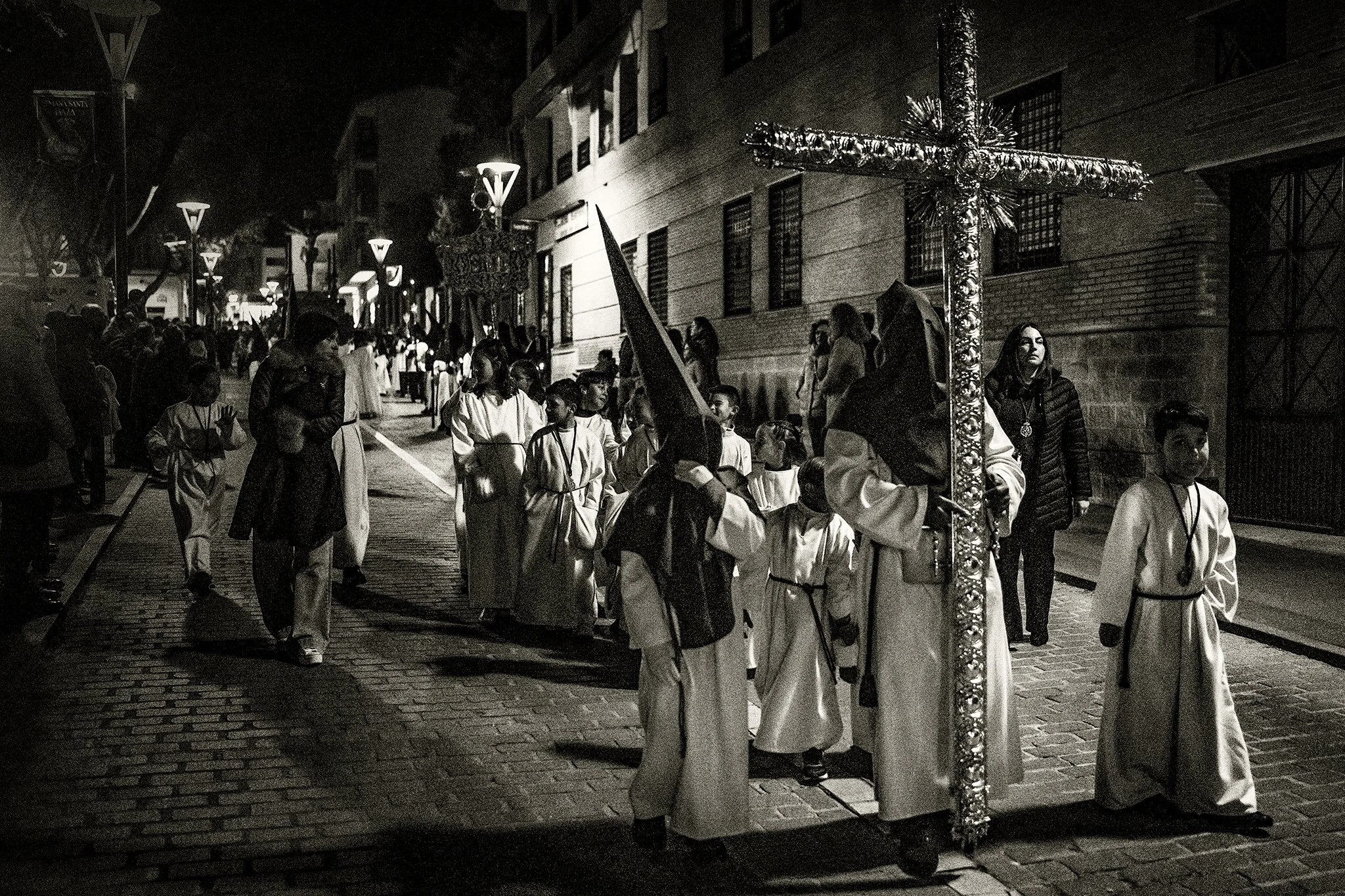
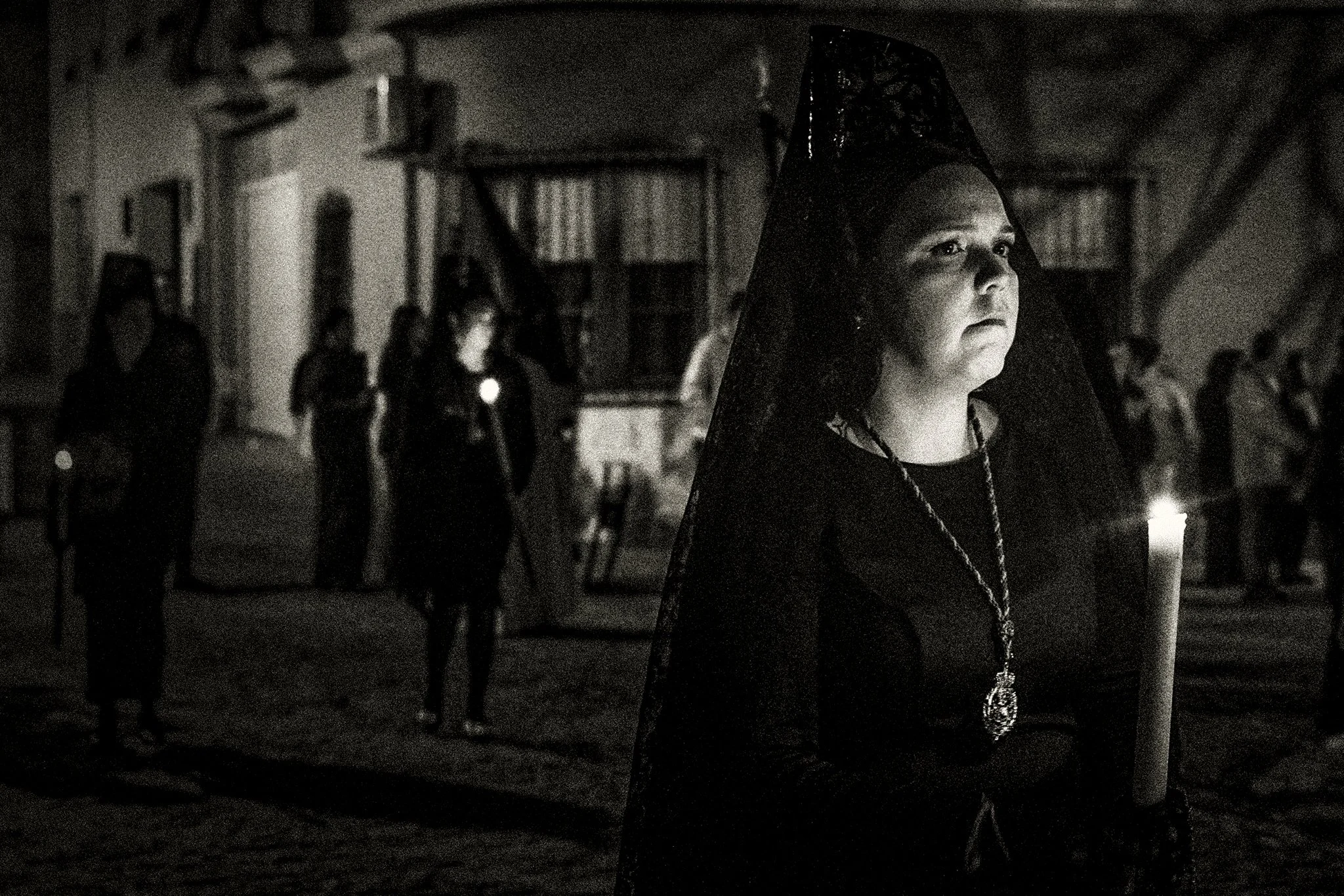
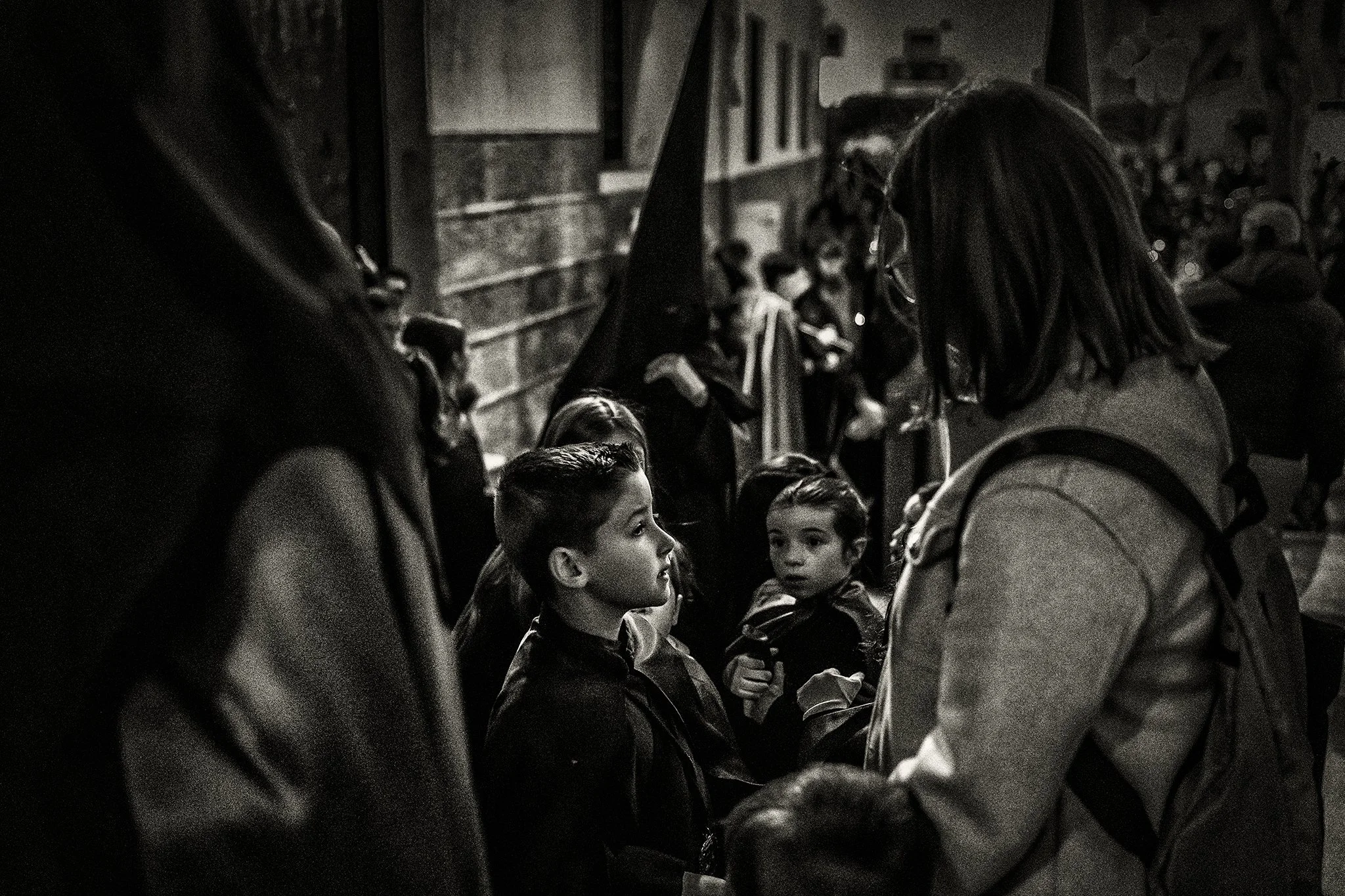
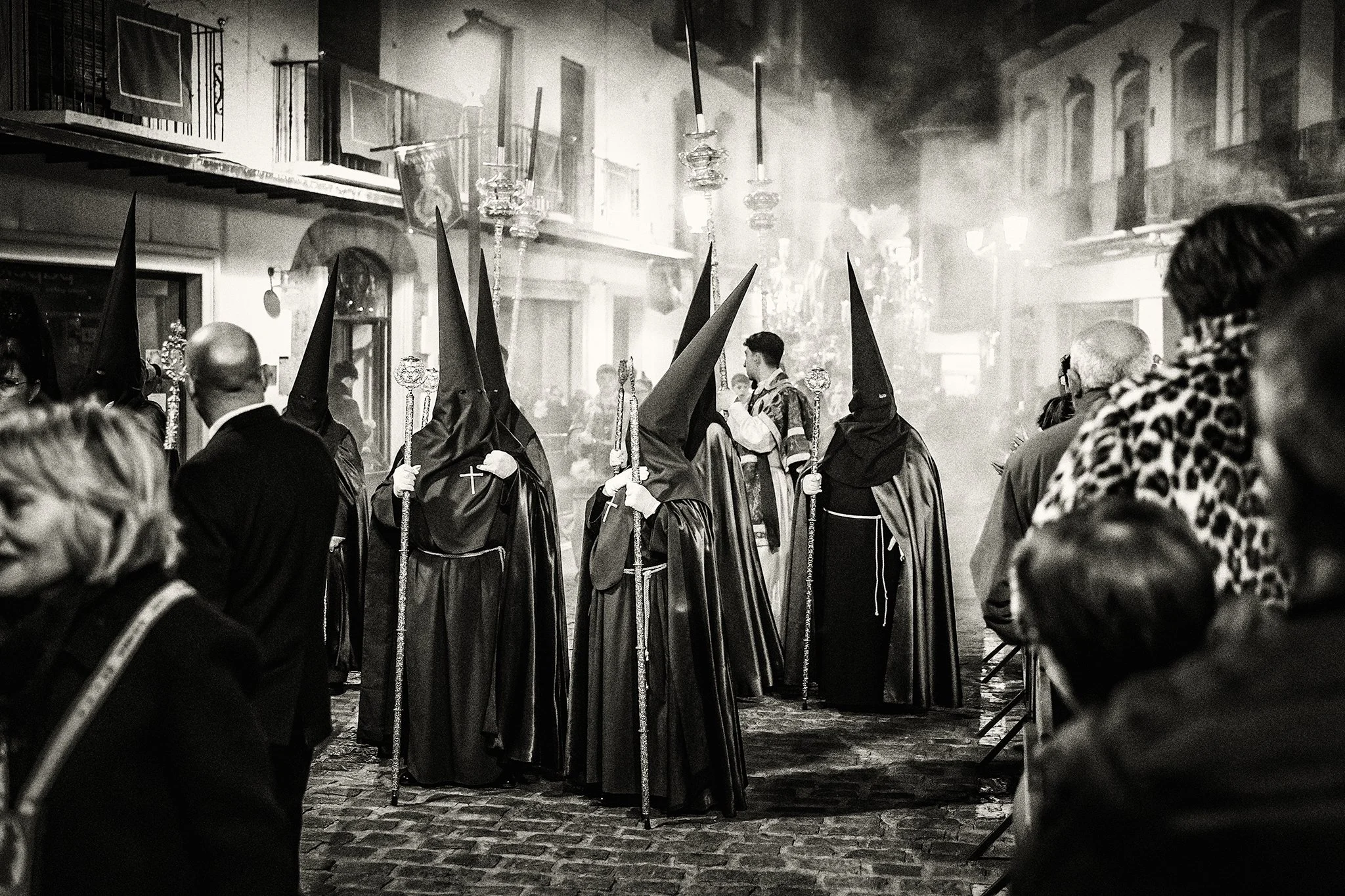
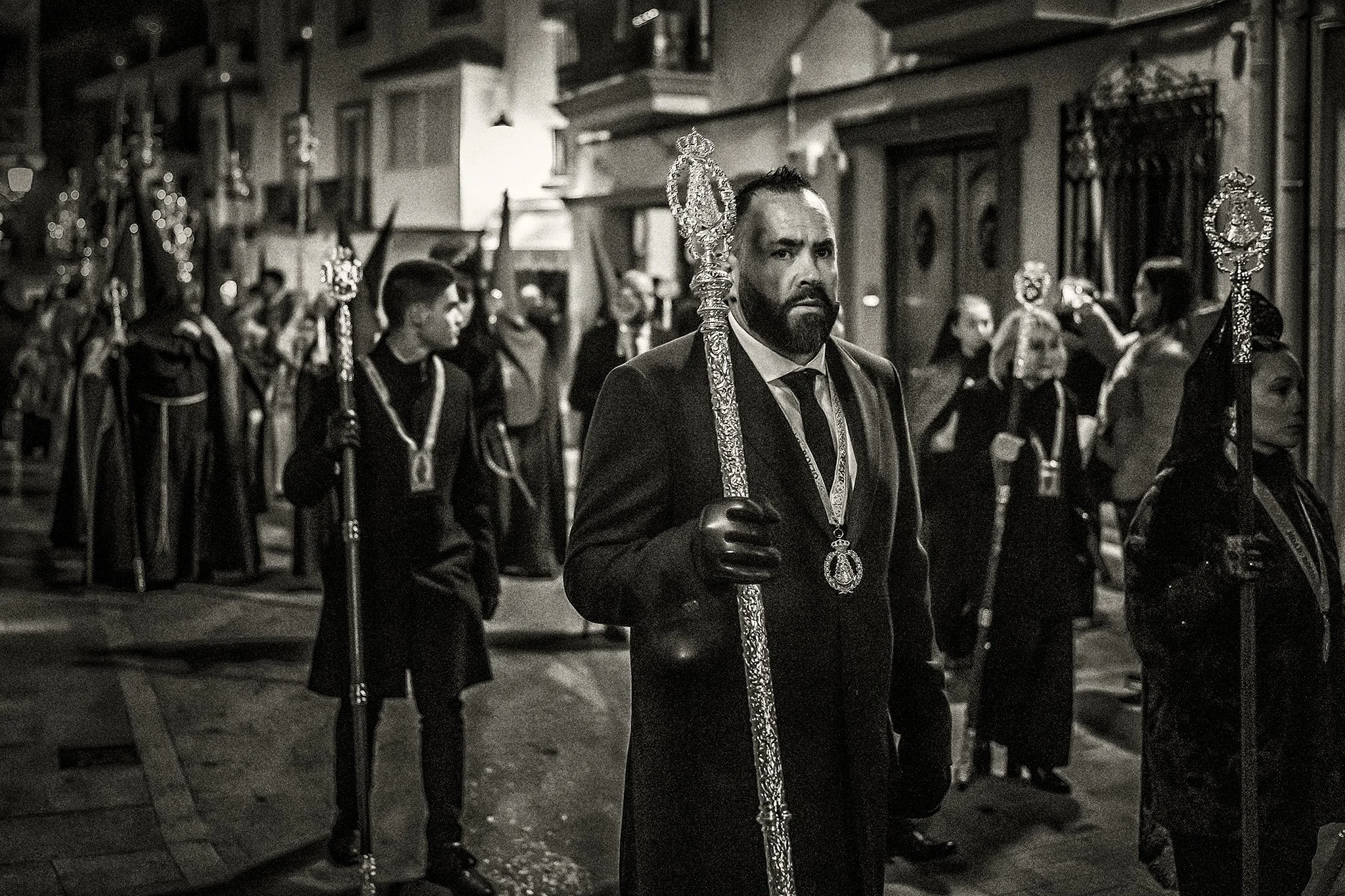
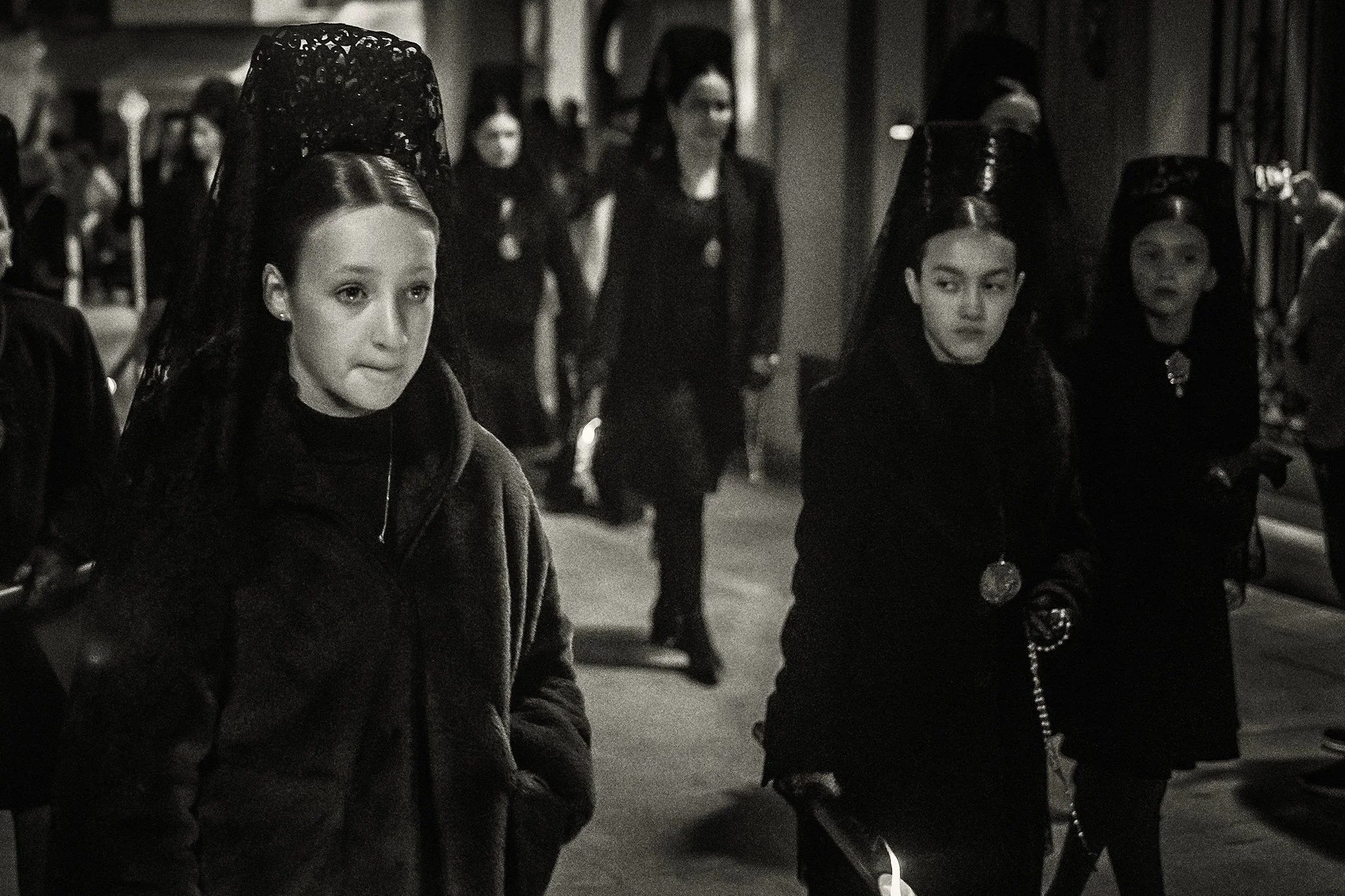
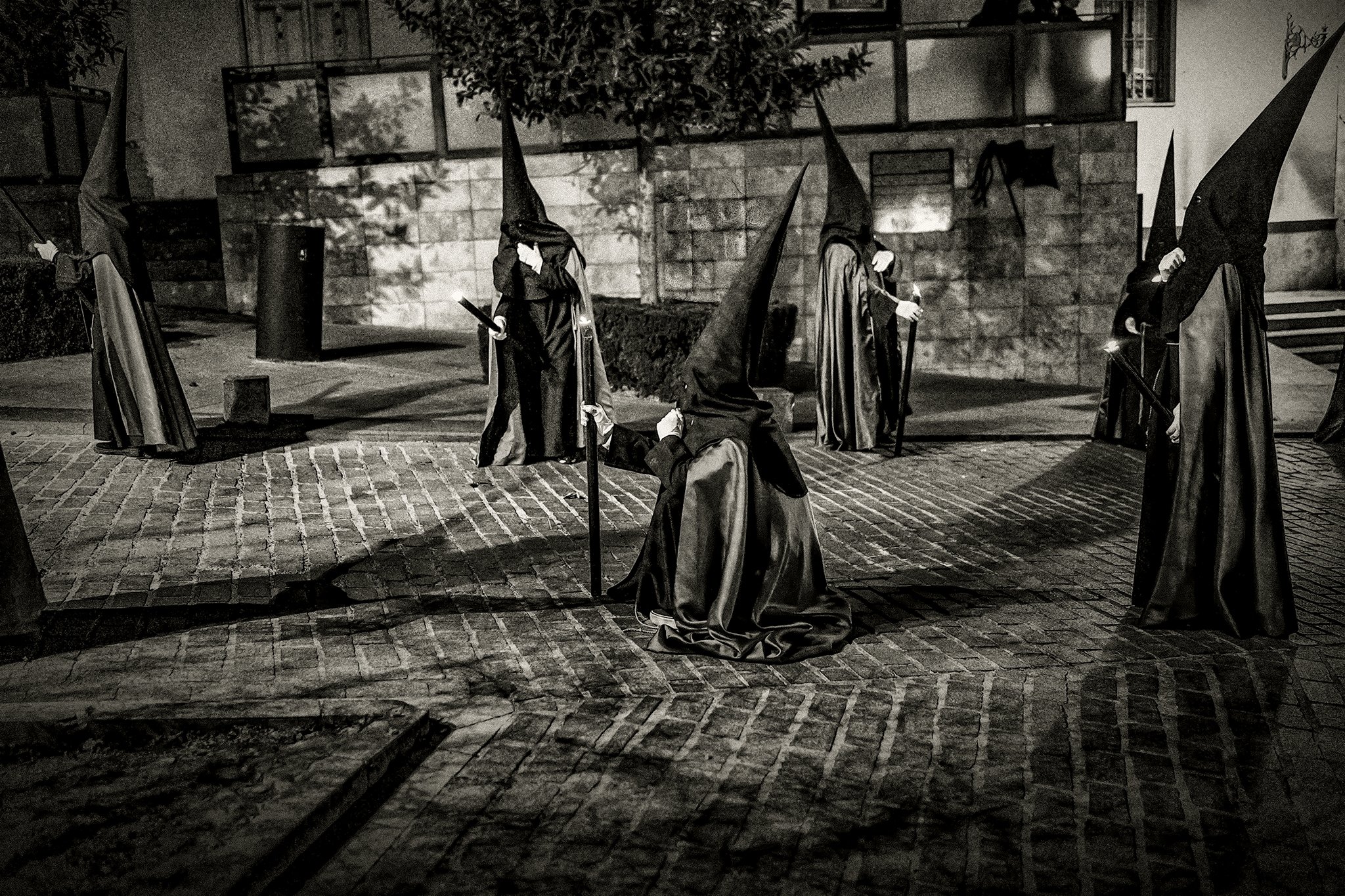
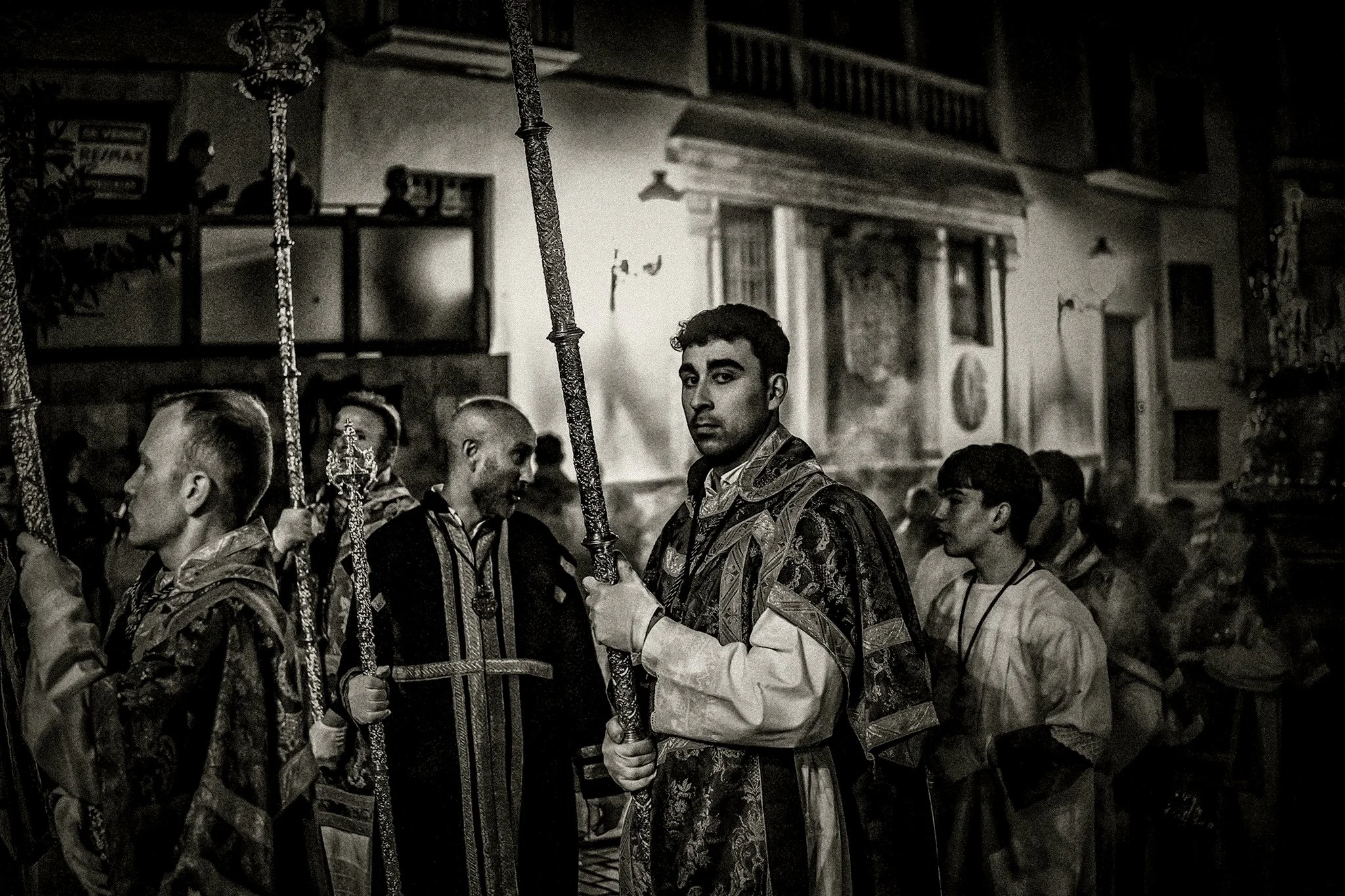
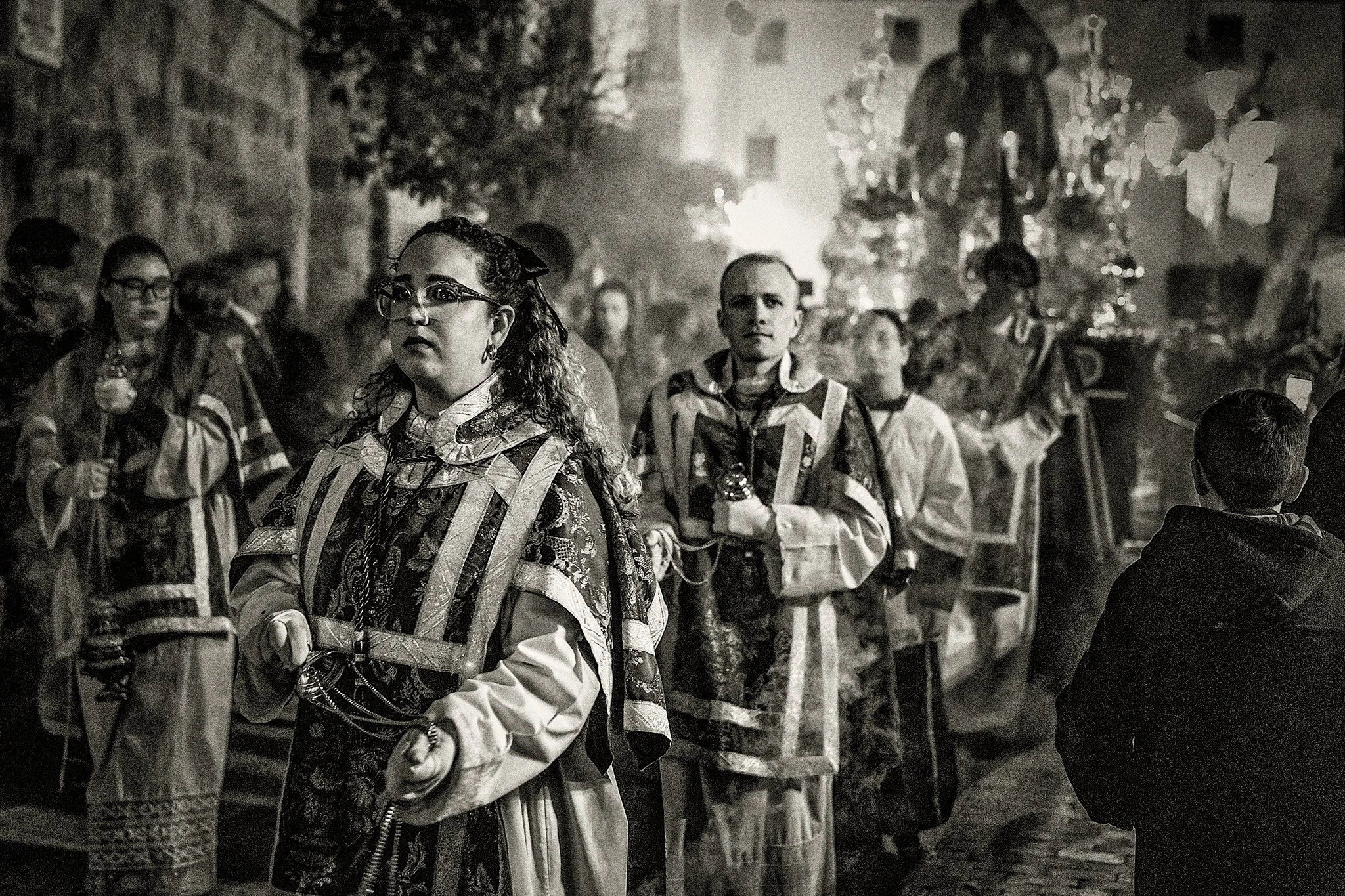
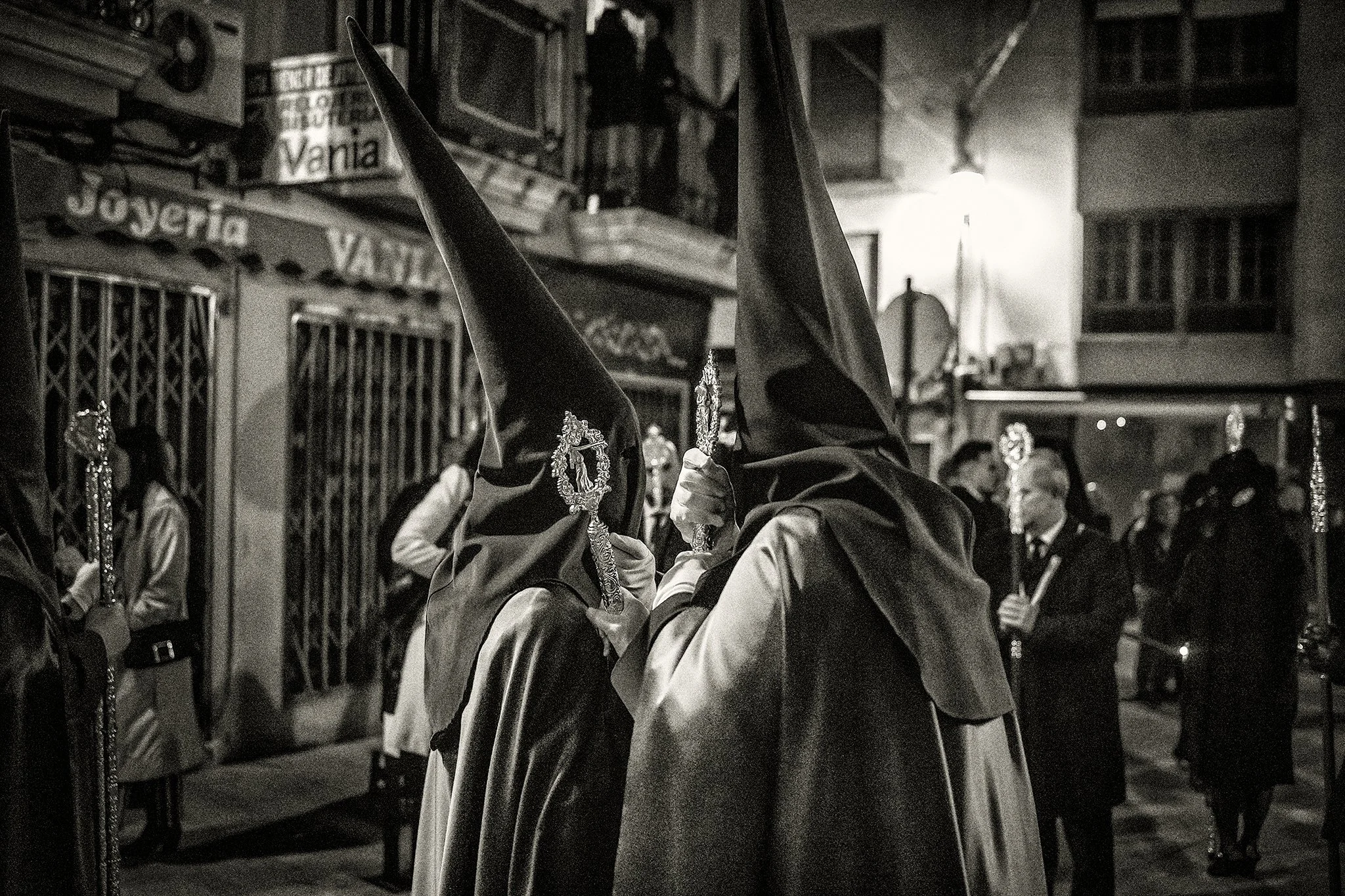
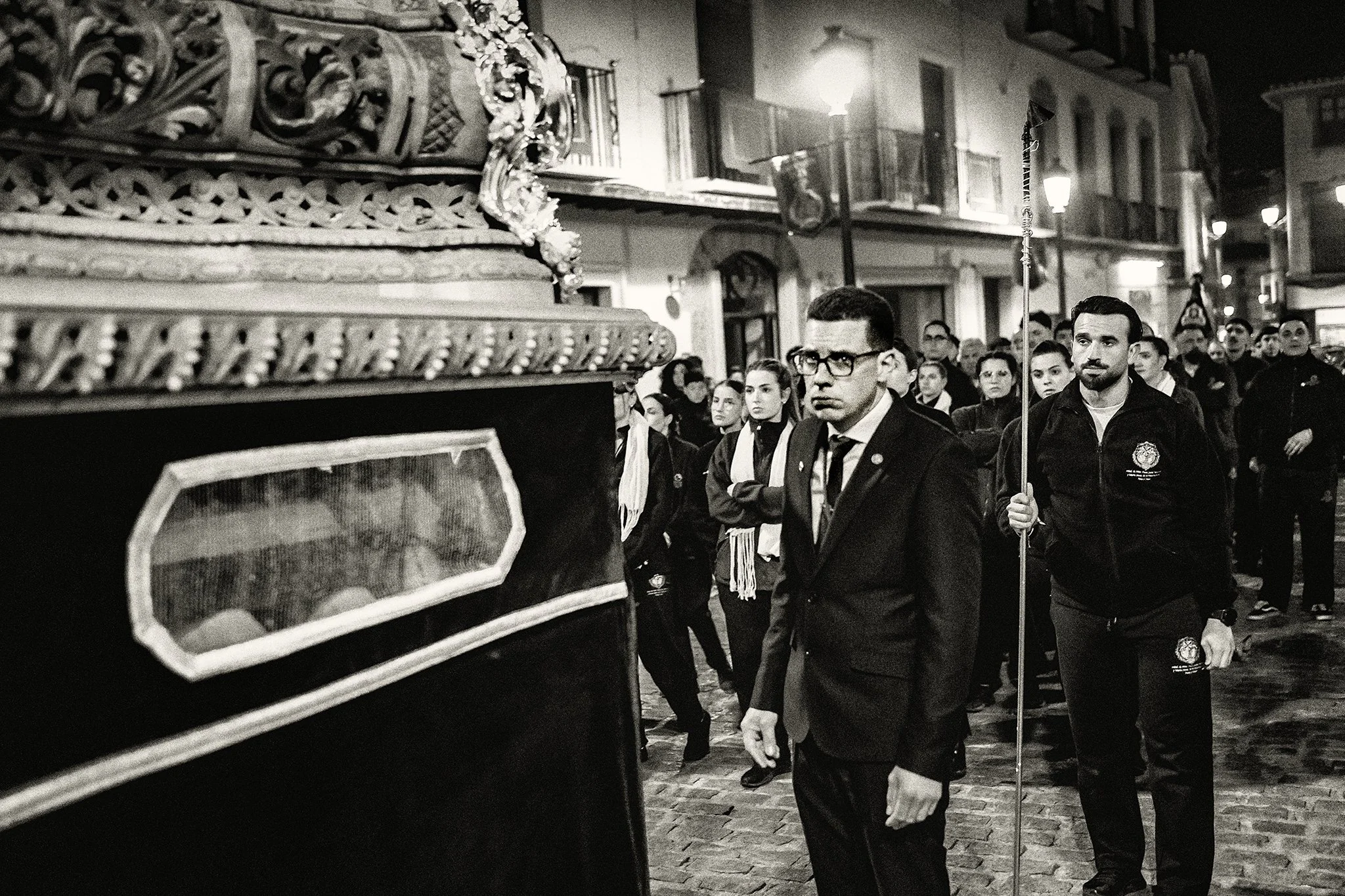
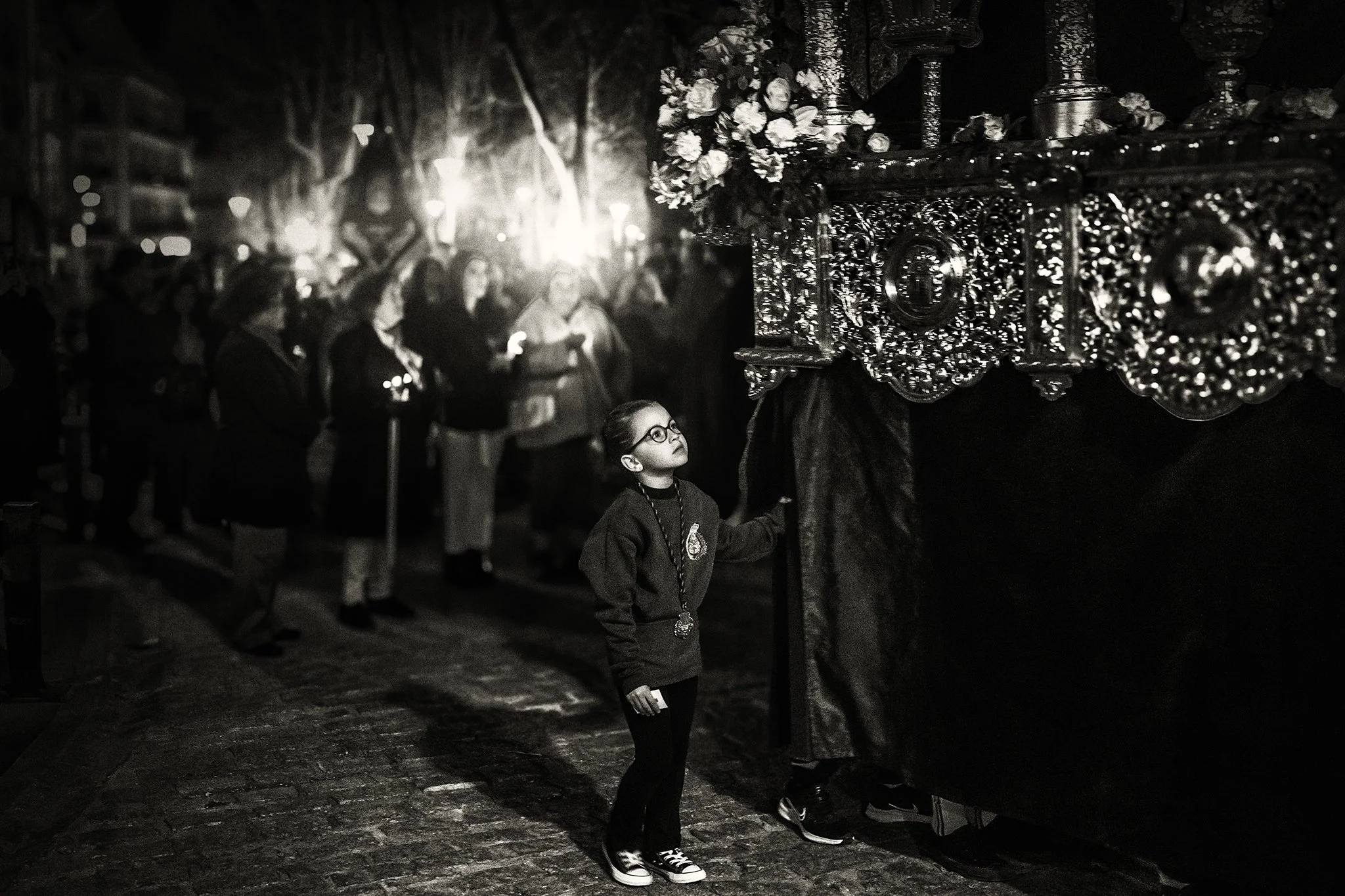
Candles are lit, incense burns, churches open the doors of their store-rooms, and religious effigies and artifacts are uncovered, brought out, cleaned, polished, and prepared to be paraded through the town. In the larger places you will see the cloaked figures of the Nazorenos or Los Penitentes, members of the catholic brotherhoods wearing the distinctive conical Caipirote head dresses. Sometimes barefoot, sometimes with ankleshackles, they accompany ornate Pasos, huge and tremendously heavy ornate floats bearing biblical scenes, carried on the shoulders of other brotherhood members. Some towns have many of these brotherhoods, Jerez de la Frontera has 45, Cordoba 37, and each has its own distinctive cloak and Caipirote. Due to the sheer numbers of brotherhoods the processions often run back to back, both night and day for much of the holy week. As I said, Semana Santa is huge...and amazing!
In my own part of Andalucia things might be a little more low-key, but though processions might be smaller than the larger cities, the Pasos somewhat less splendid, and the brotherhoods fewer in number, the complete engagement with Holy Week is the same.
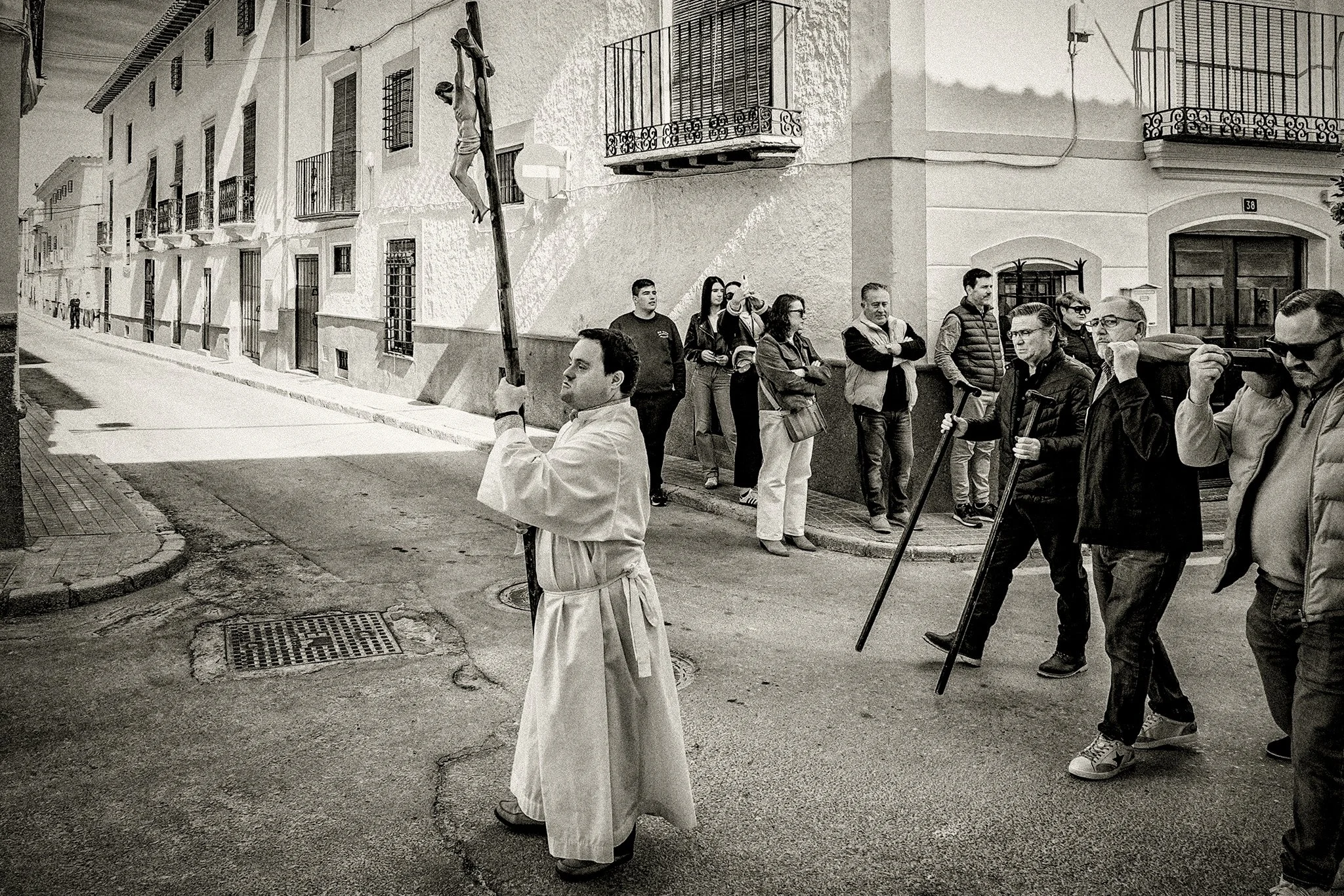
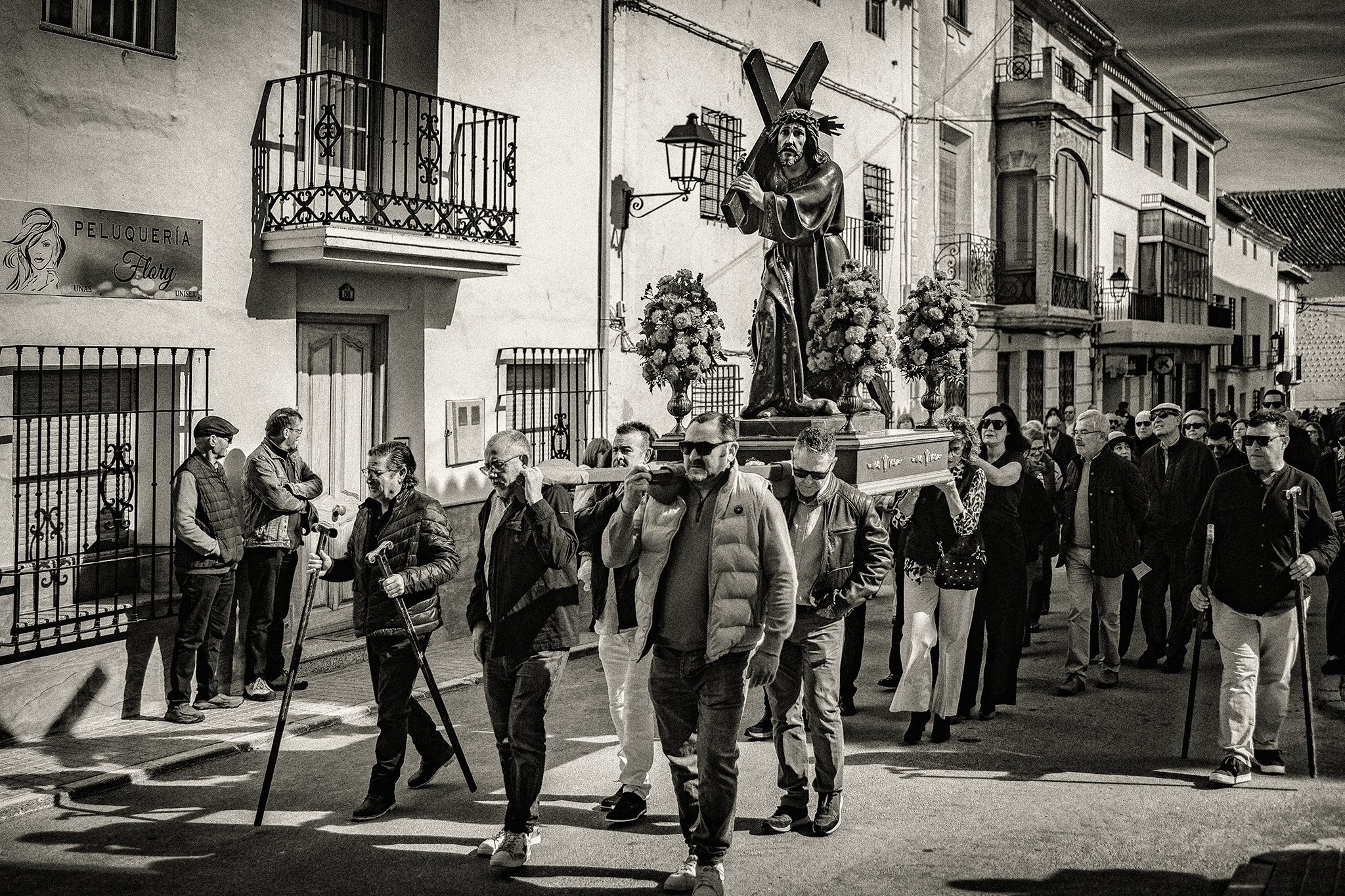
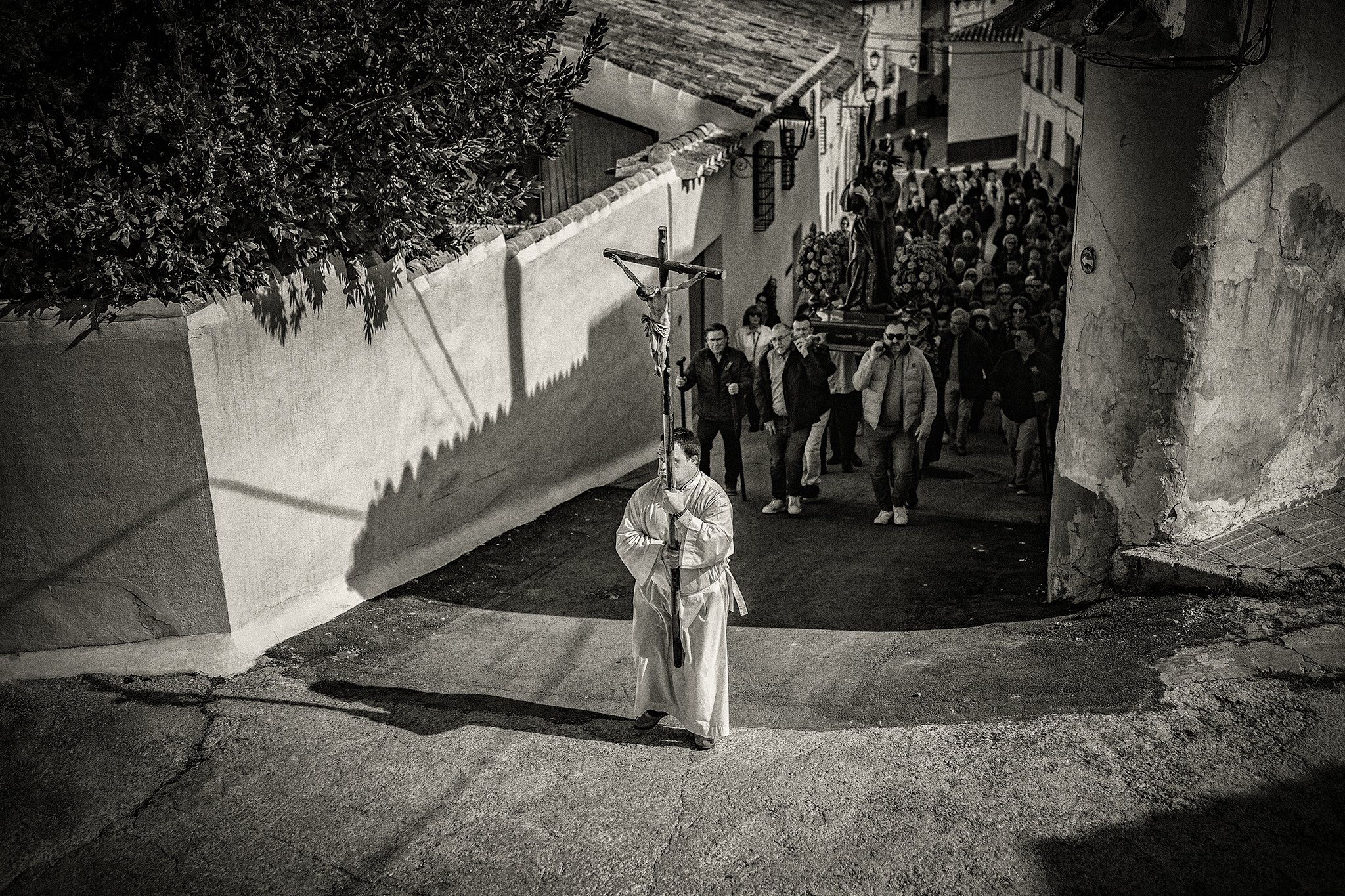
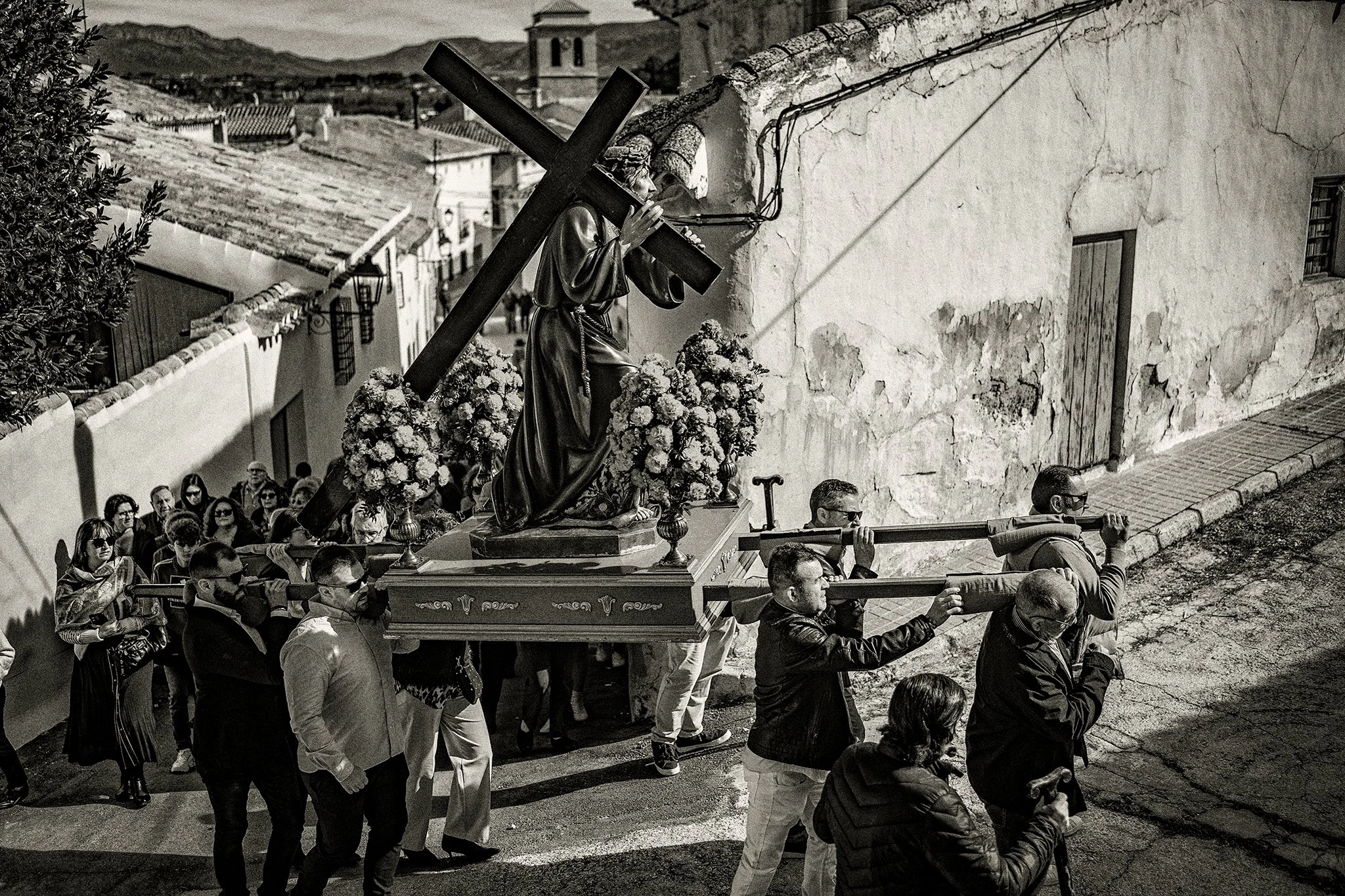
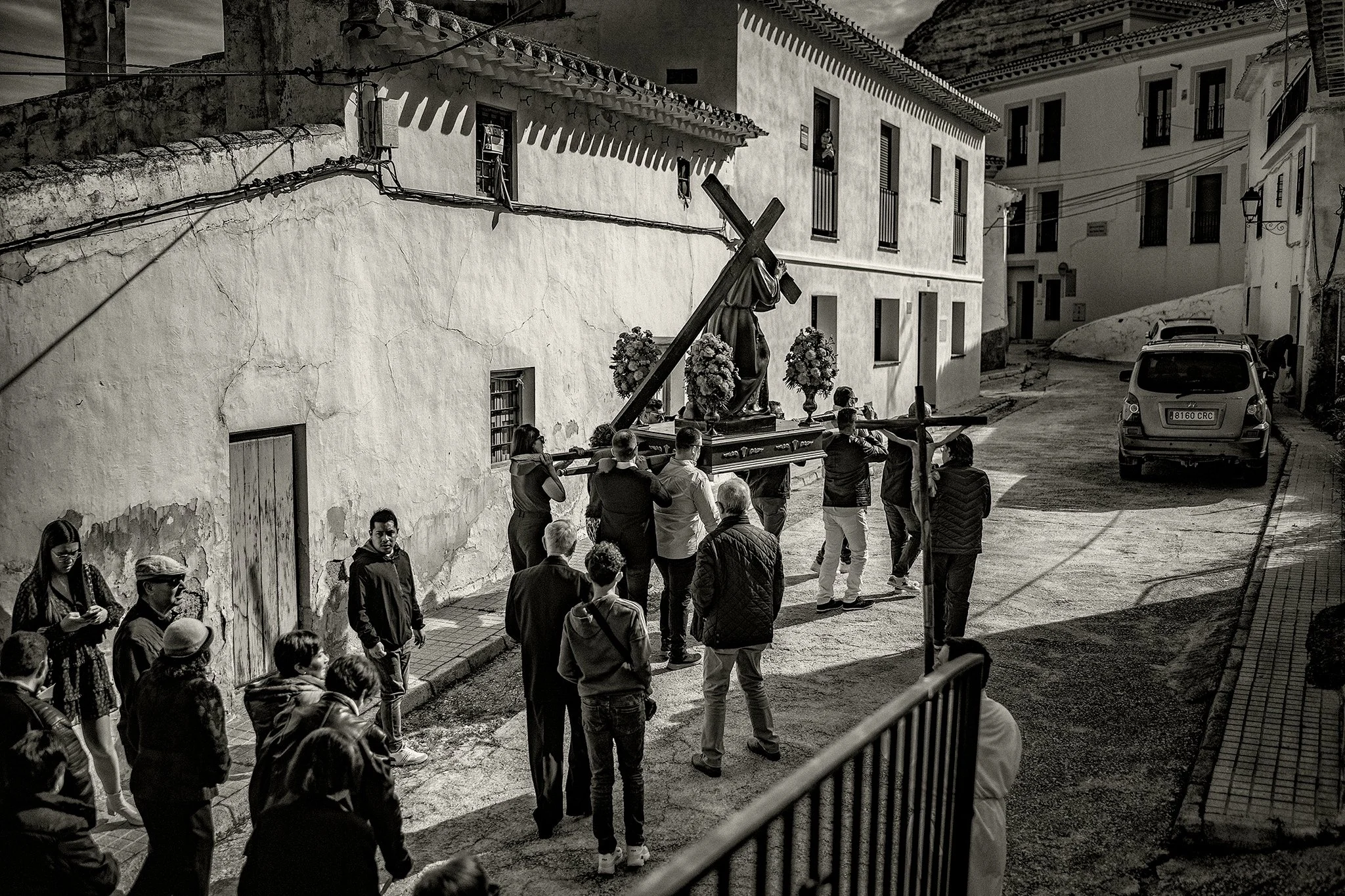
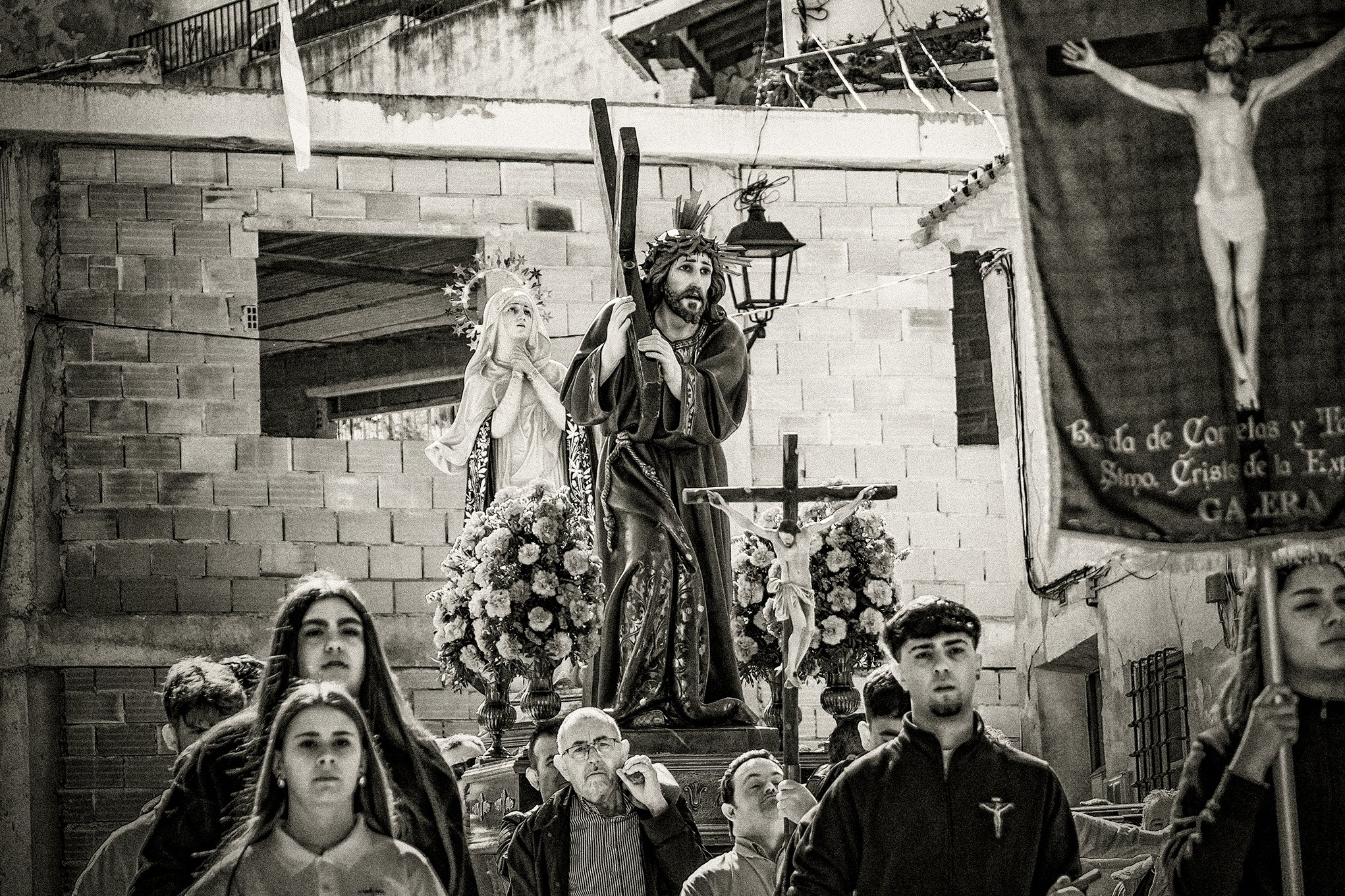
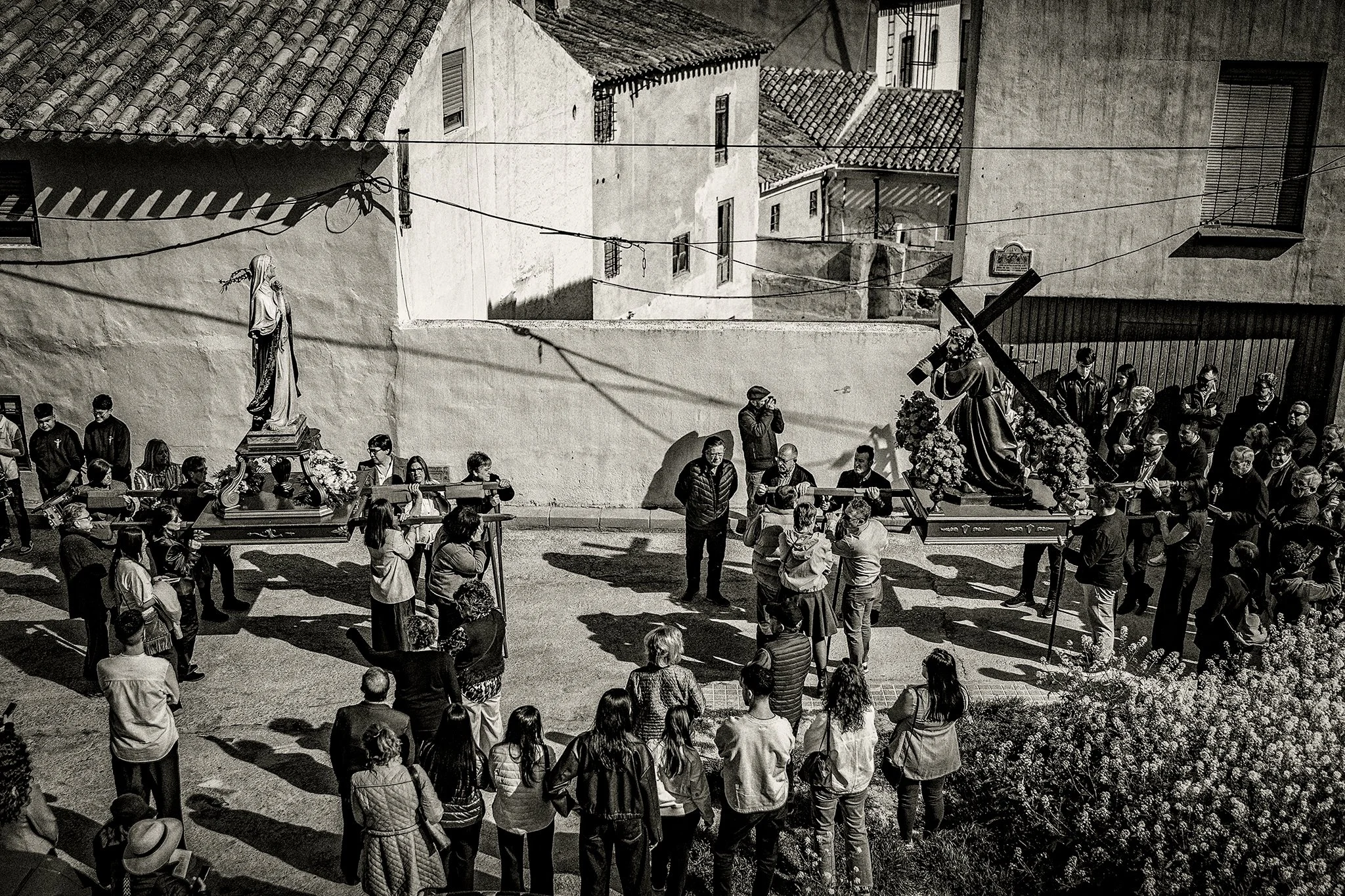
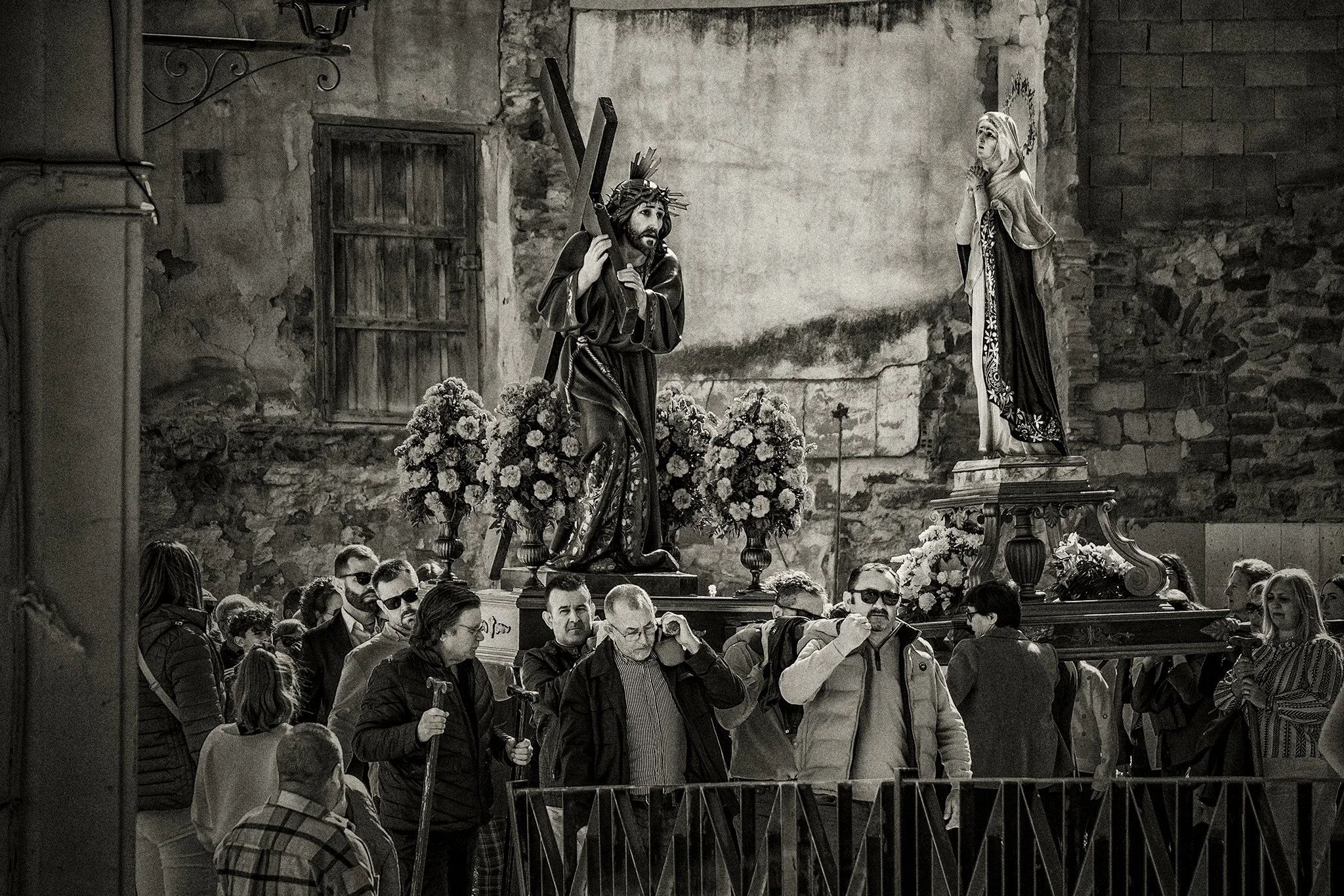
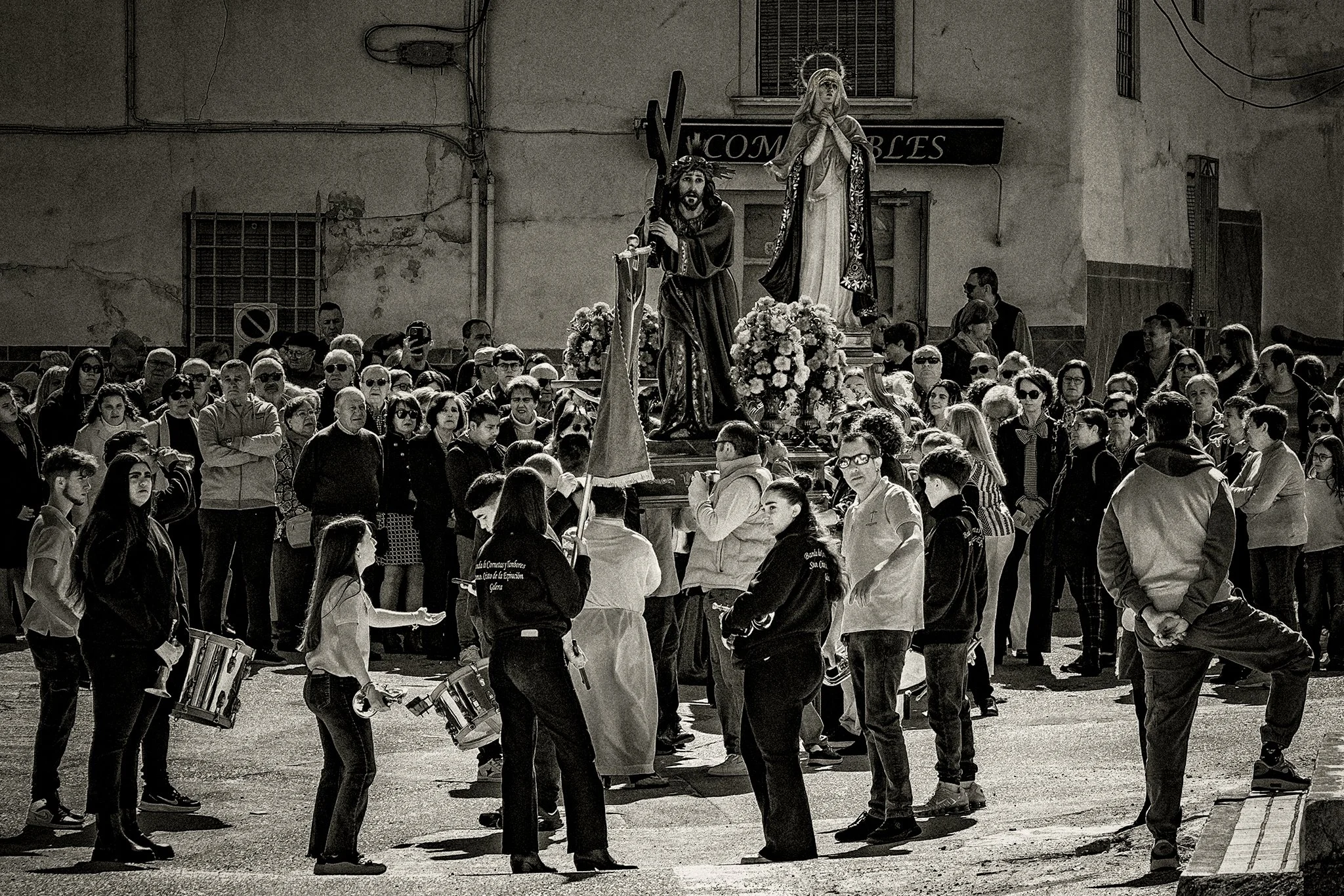
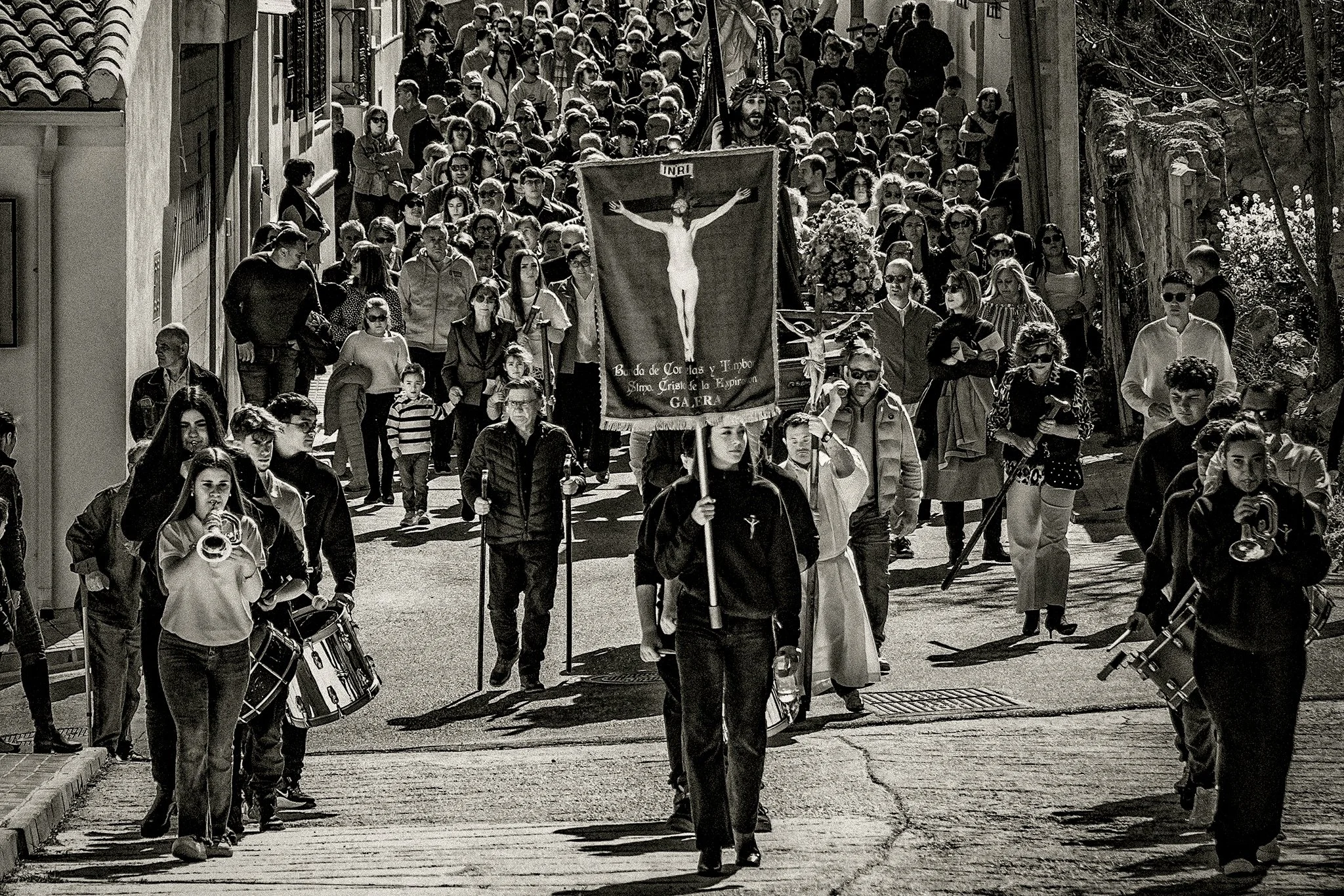
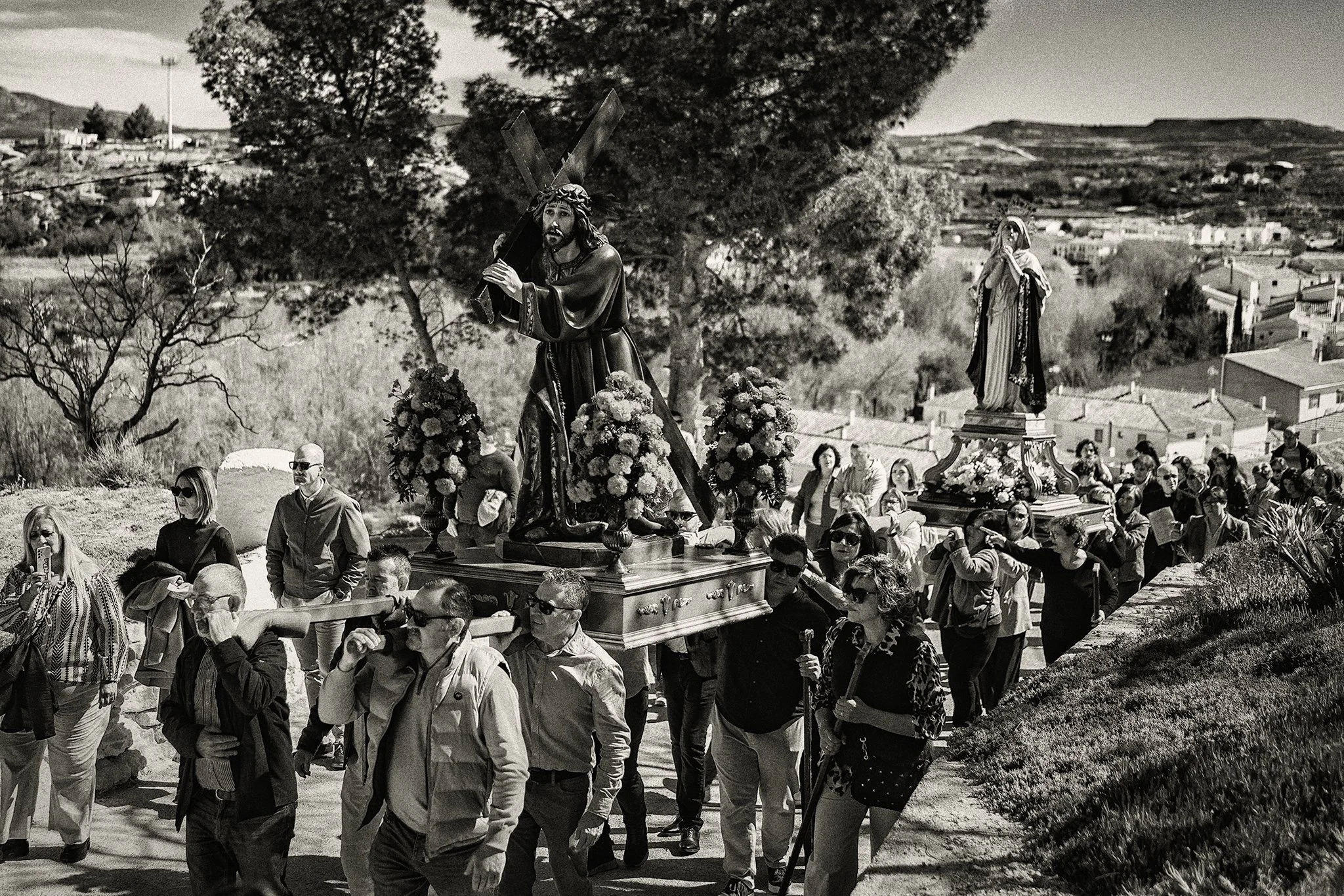
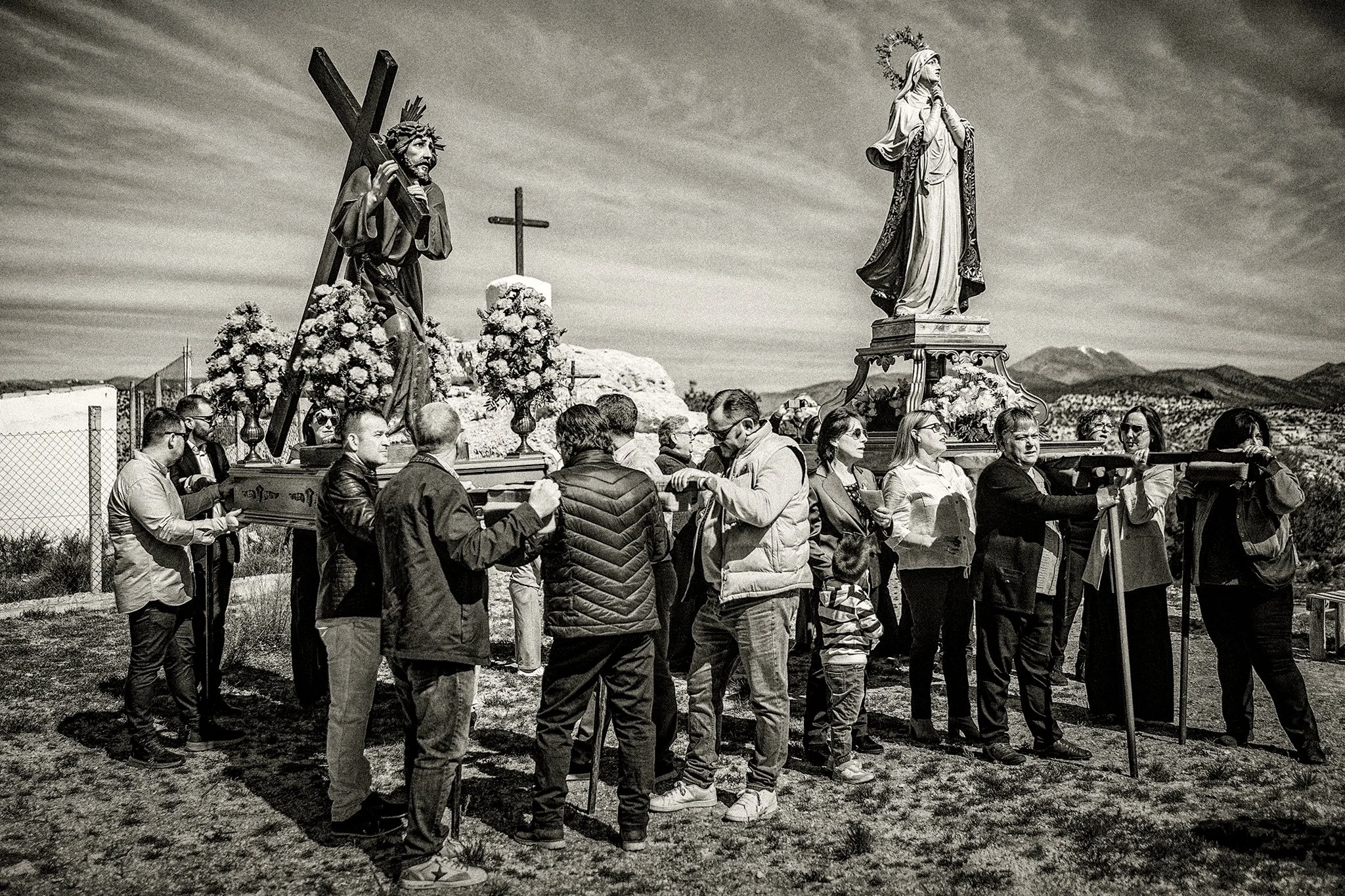
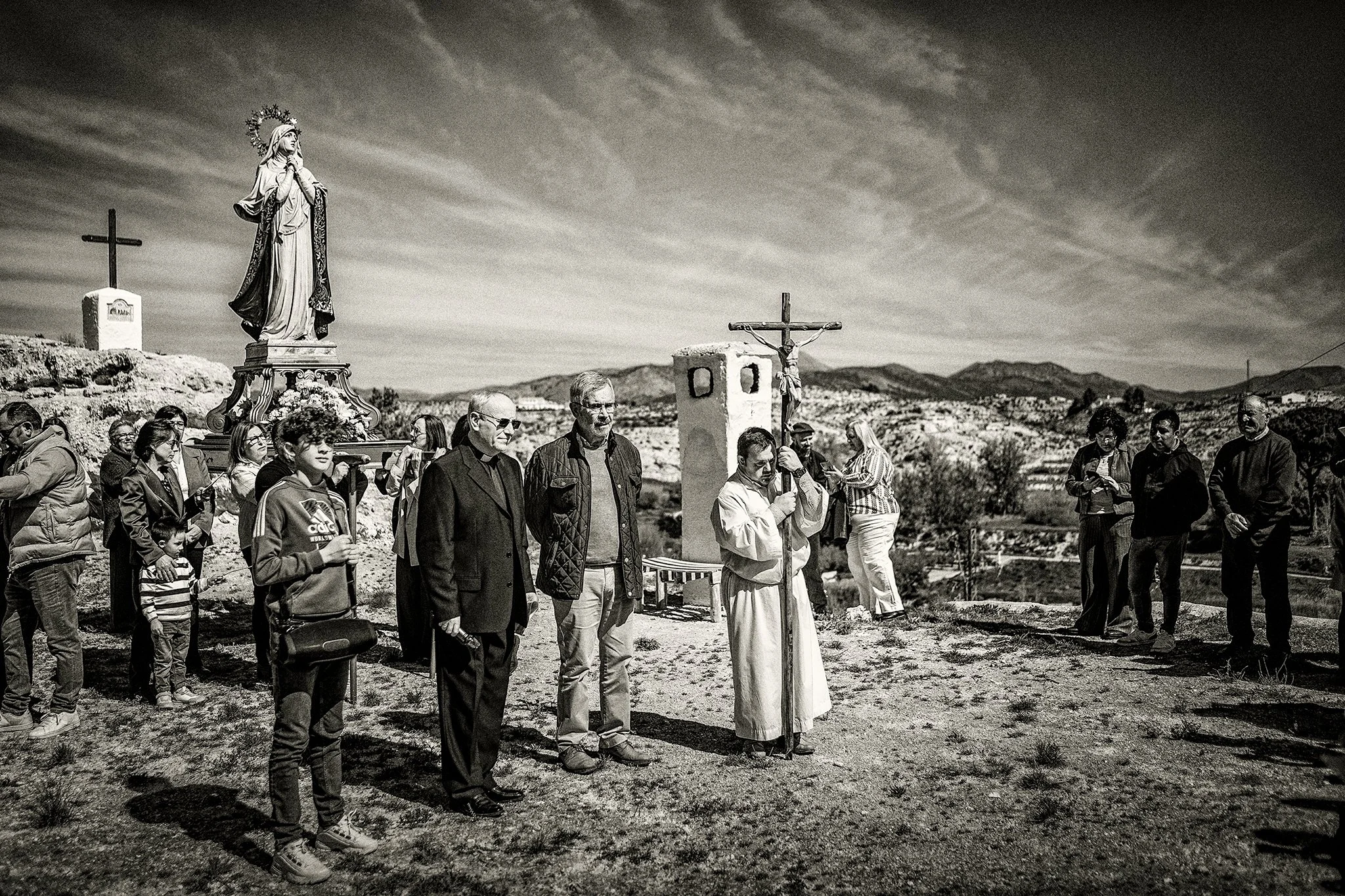
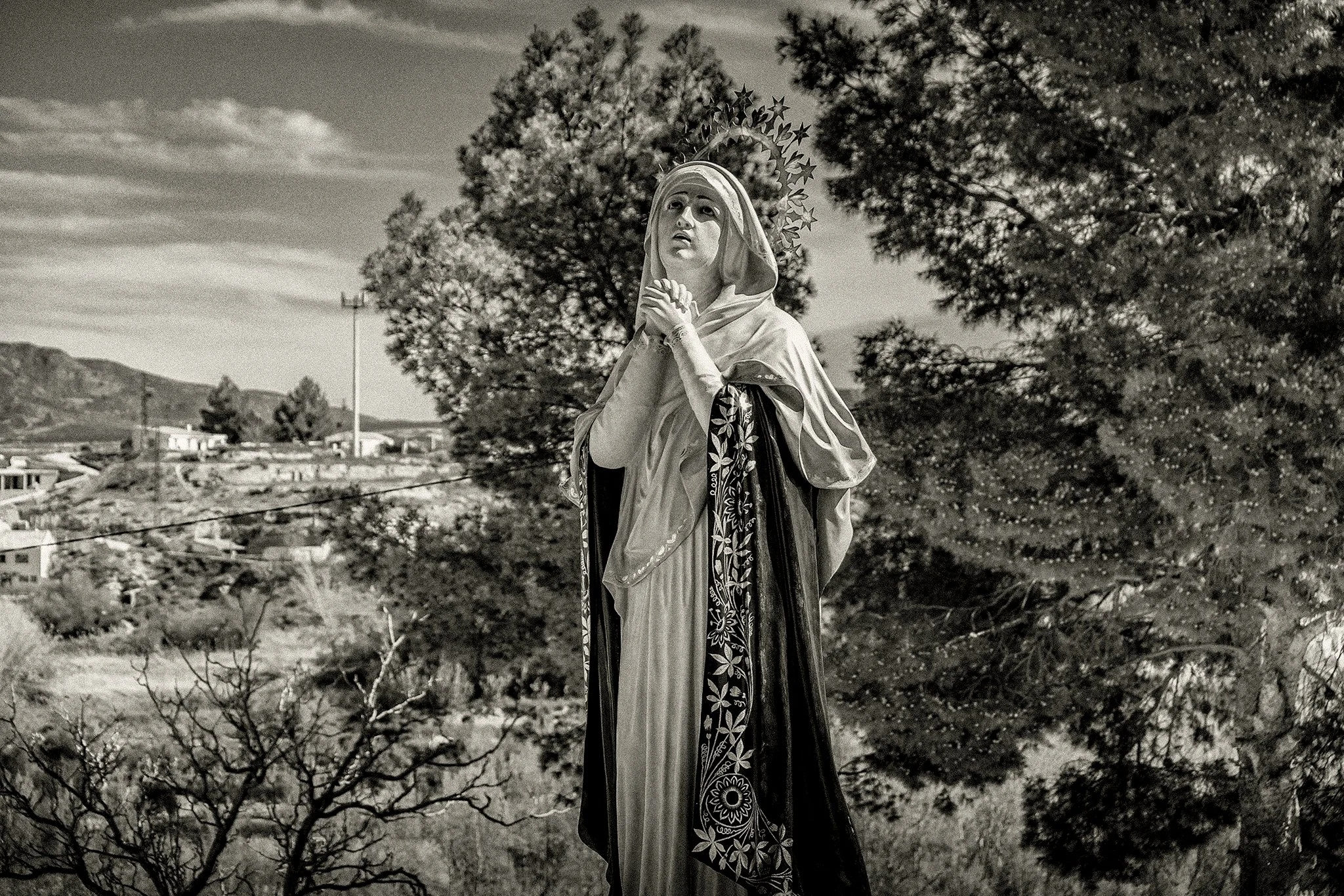
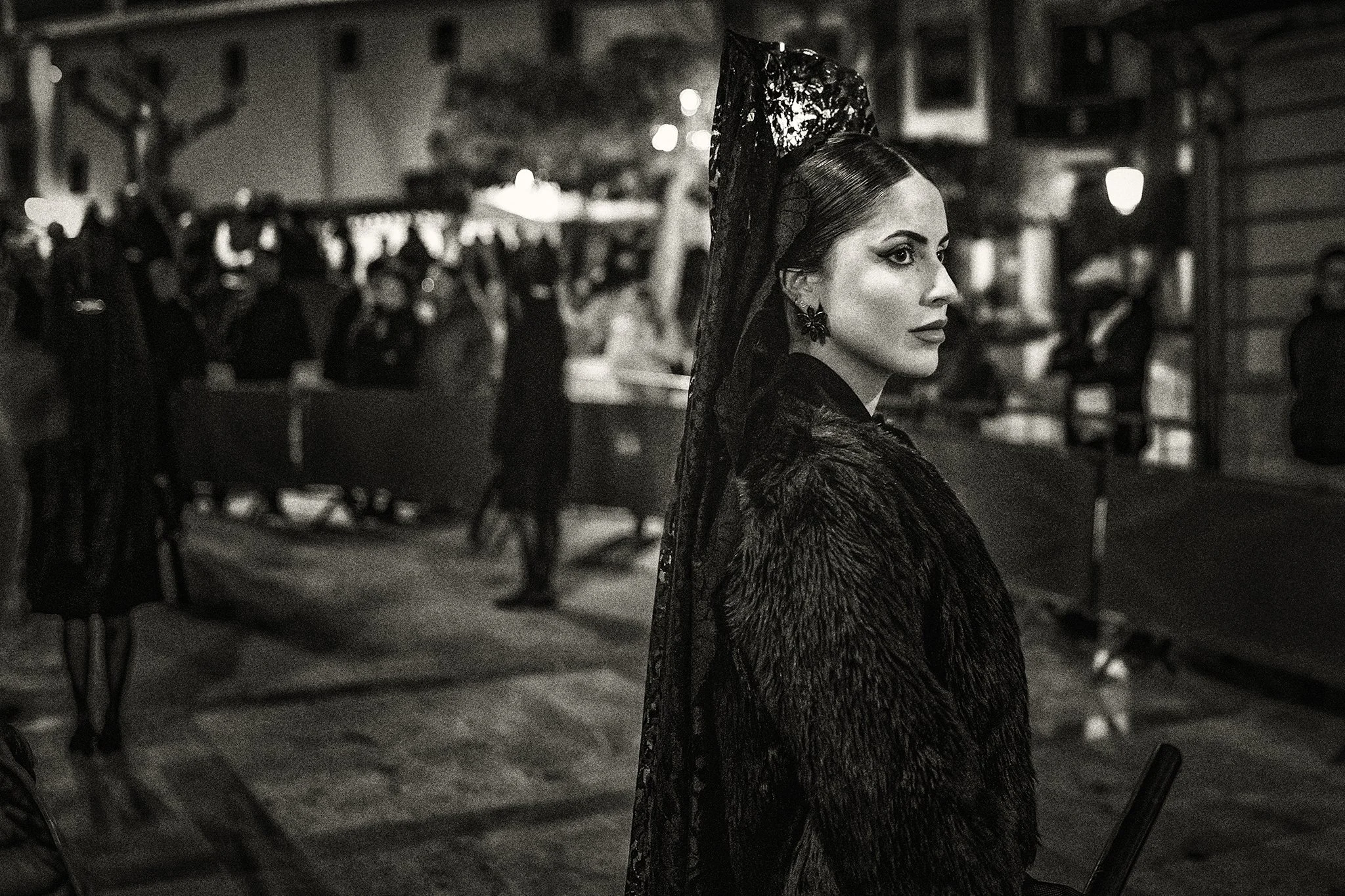
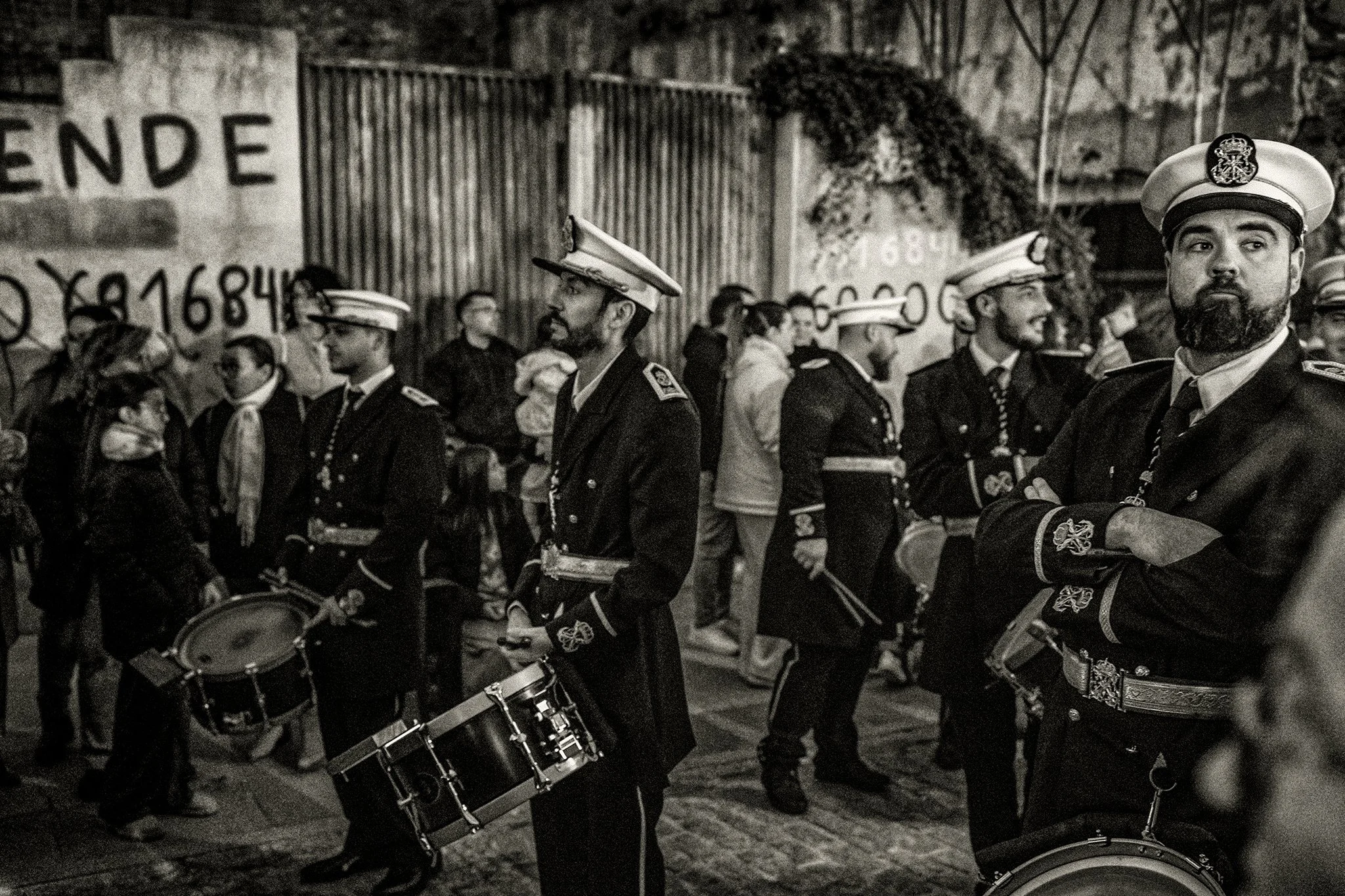
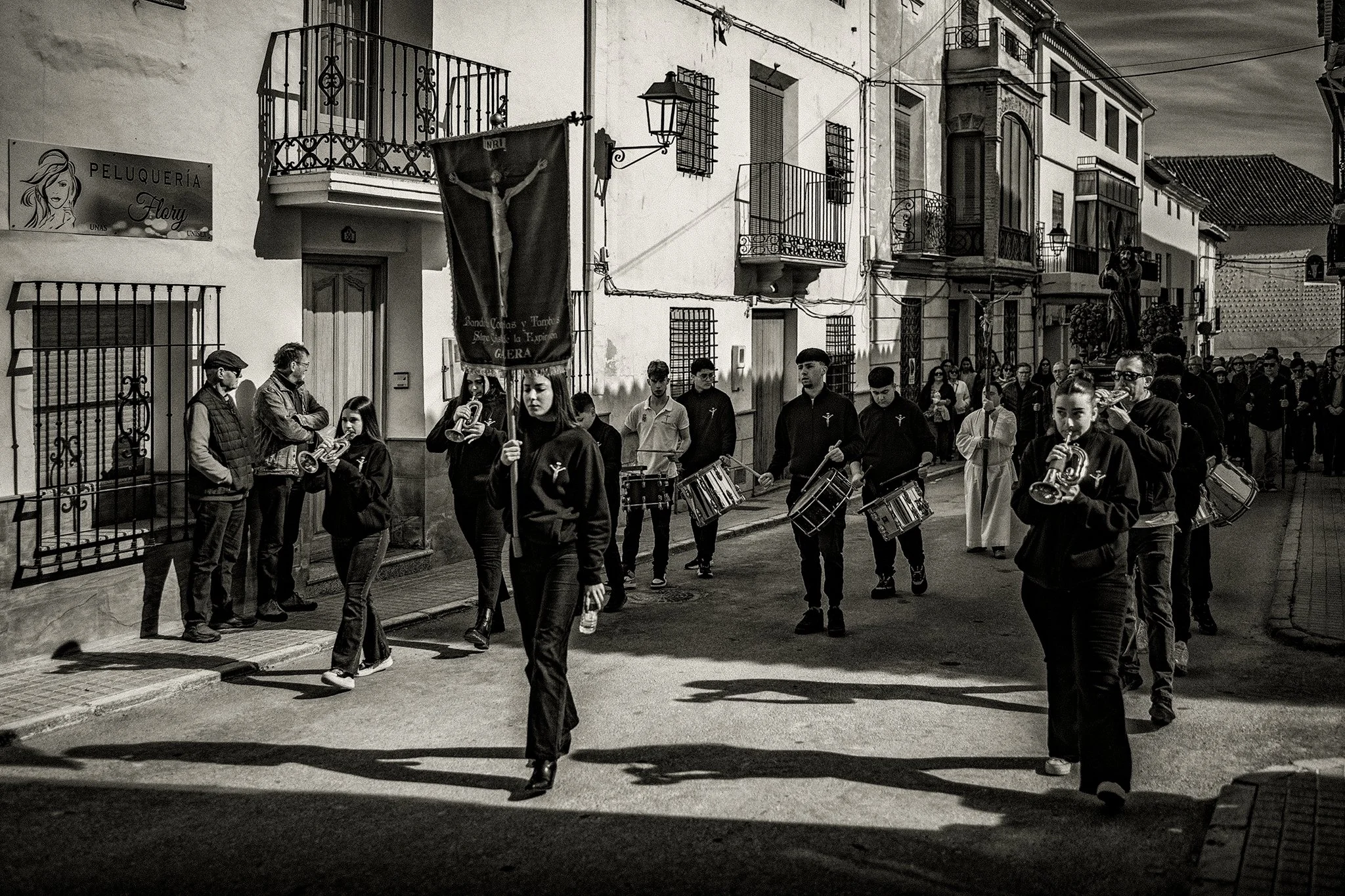
I was able to photograph three processions this year. Two night time processions that ran back to back on Maundy Thursday in the town of Baza, some forty kilometres away, and one on the late morning of Easter Sunday in my own village of Galera. Baza, though a smalltown was spectacular, and even someone as Godless as I, couldn't fail to be moved by thesolemn atmosphere that settled over the inhabitants, and I followed along for some three or four hours as the penitents progressed slowly through the narrow streets to the soundsof marchas processionales, mournful compositions specifically written for the marching bands. Here in Galera, two relatively small pasos bearing the figures of Jesus Christ and Mary are carried by separate routes from the church. They meet high in the village before continuing their climb together, following the route of the stations of the cross to the hill of Las Cruces...Unlike Baza, with its two, one hundred strong, uniformed marching bands, the procession here is lead by a dozen or so of the younger villagers. Dressed in polos and sweats, with shoulder drums and a handful of brass instruments they still sound incredible, and as they progress through the tiny streets the villagers are drawn from the houses, gradually joining the body of people following along.
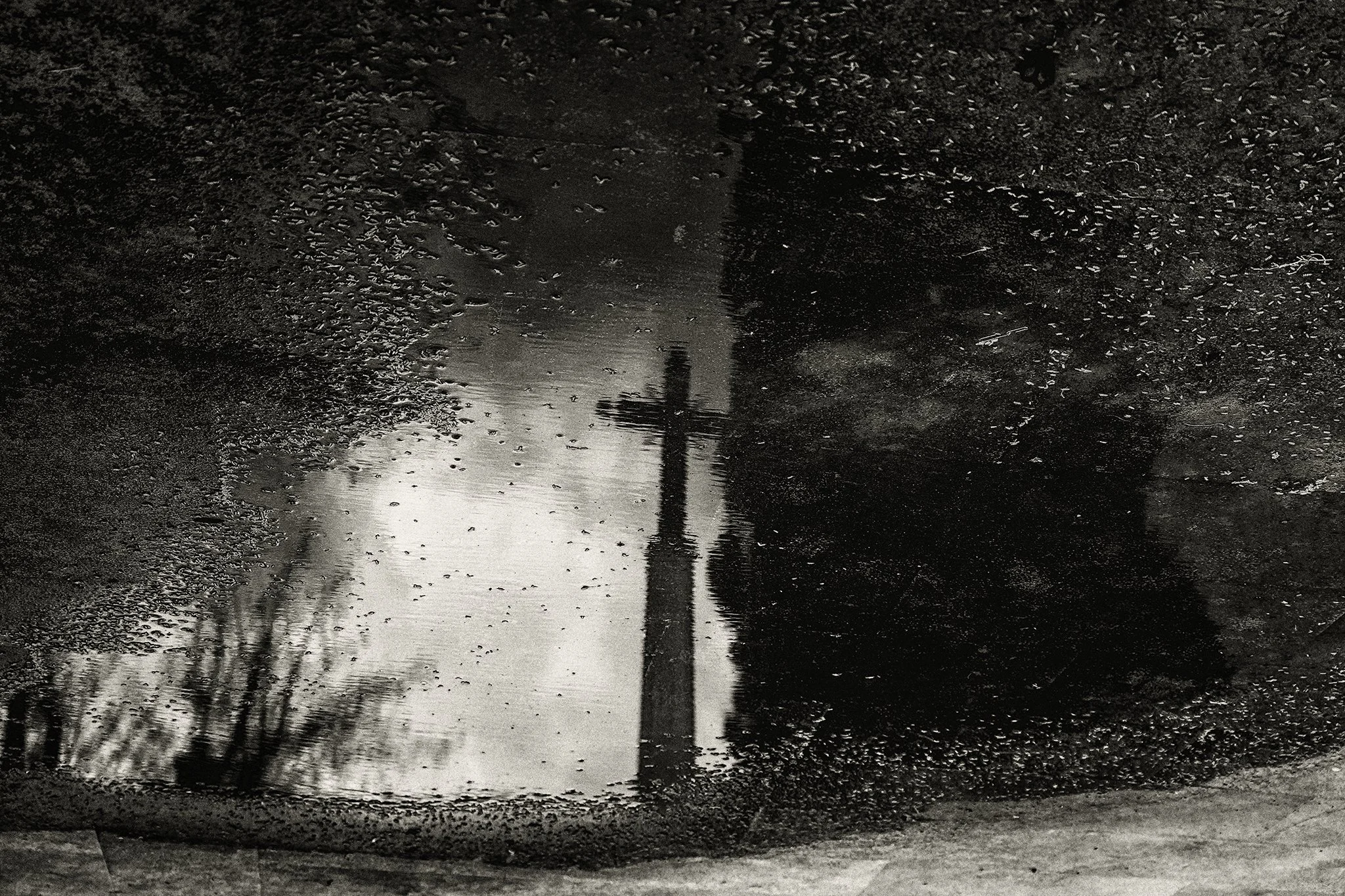
There is, of course, an elephant in the room. At the top of Las Cruces, as everyone gathered around the crosses and effigies, I found myself wondering just how many other people might be there with no belief in anything it was about. As a humanist I categorically reject all supernaturalism and all religious dogmas. However, even if you were to ignore Semana Santa as ‘spectacle’, as a fabulous photographic opportunity and cultural insight, which was my unashamed primary reason for being there, I’m happy to admit there was actually something else. Sometimes, even as an un-believer, it simply feels good to be part of athrong.