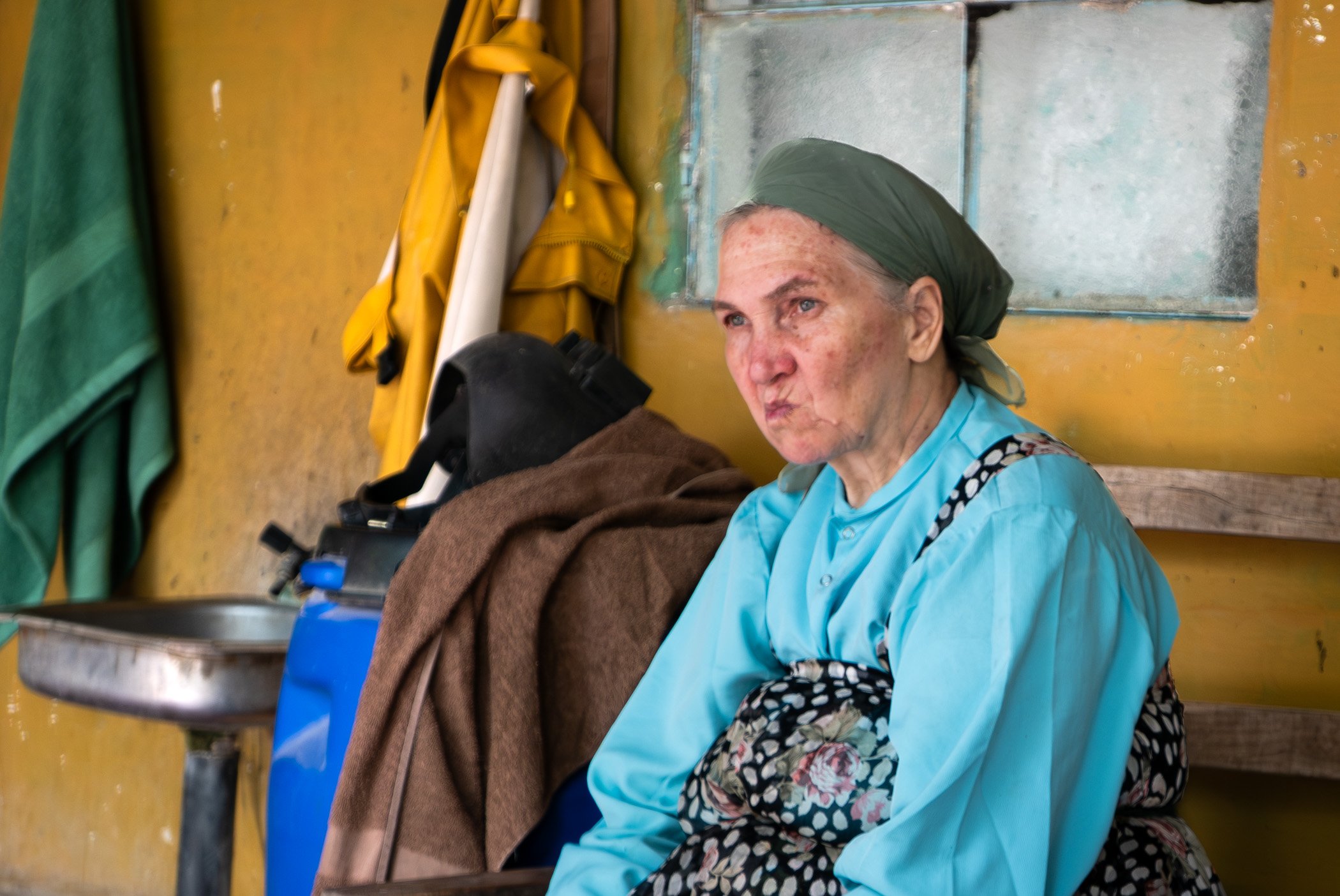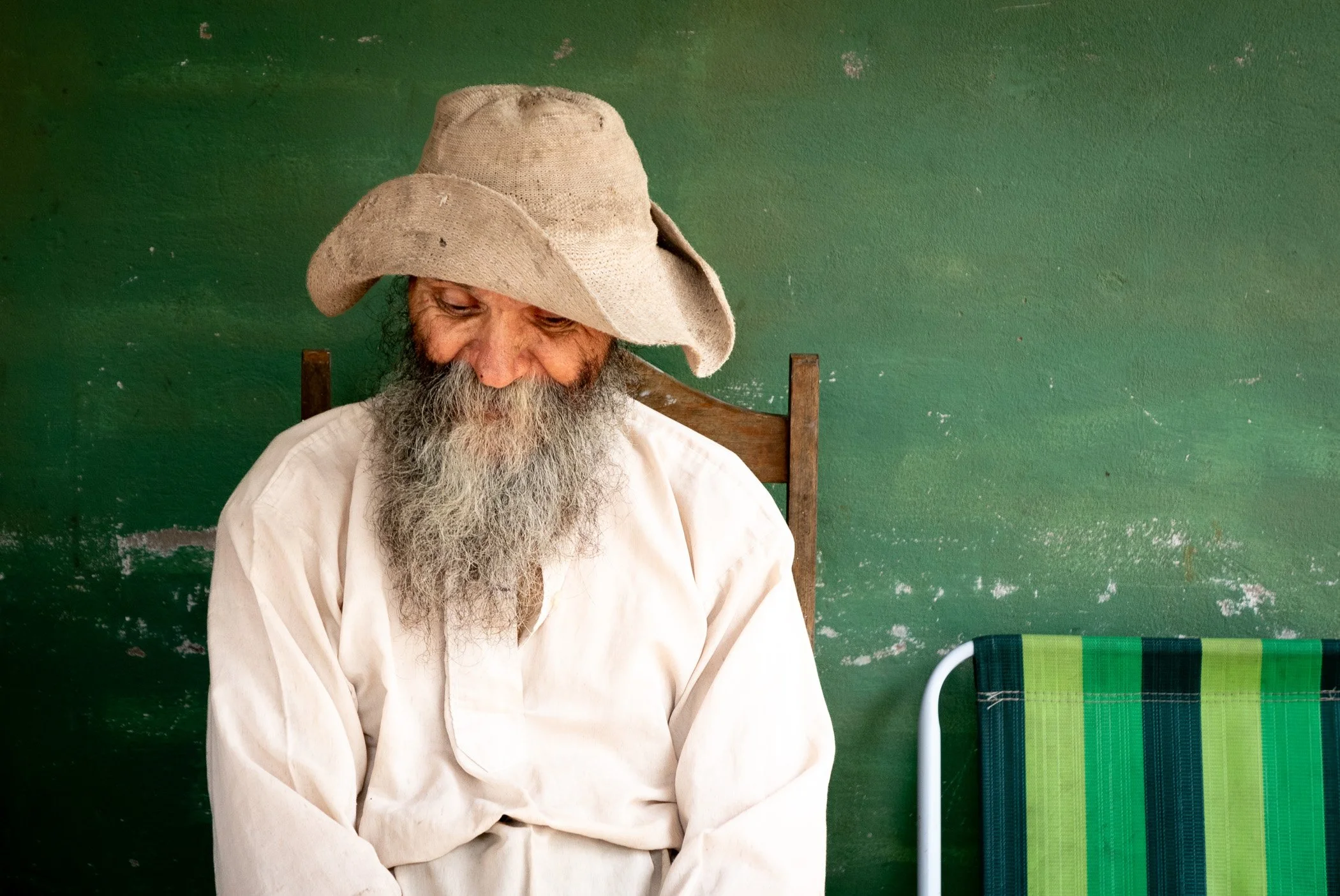
This is a powerful, real-life story enhanced with a few meaningful portraits. Welcome to Progressive Street, a place where stories truly come alive.
WHAT A CHARACTER
October 2020
A few friends and I decided to take a road trip up to the northern region to visit towns and villages along the Uruguayan coastline.
We went to San Javier, a town I’d been wanting to check out for a long time. Back in 1913, a colony of Russian, Ukrainian, Belarusian, and other neighbouring immigrants was founded there.
We also drove out to “Colonia Ofir”. That’s where I met Sergei, and where the story I’m trying to tell here really begins. Ofir is about 14 kilometres away from San Javier, and from what I could gather, it was founded over 50 years later—a completely different wave of Russian immigration.
The settlers in Ofir belong to what they call Old Believers ("staroveri"), an ultra-conservative branch of dissident Eastern Orthodox Christianity from the 16th century that ended up scattered across the US, Brazil, Argentina, and Uruguay.
We knew the colony was super closed-off. They didn't like people taking pictures of the community, visitors weren't generally welcome, and it was hard to get them to talk to outsiders. They kept outside contact to the absolute minimum needed for basic trade and farming, living completely isolated from technology, radio, and TV.
Younger generations have started opening up a bit more to the outside world, which has softened their long-standing isolation. Every now and then, people have even bought homemade cheese or traditional hand-embroidered Russian fabrics from them.
Finding the "bearded men's trail"—as locals used to call the road to the colony—was no easy task, but we made it.
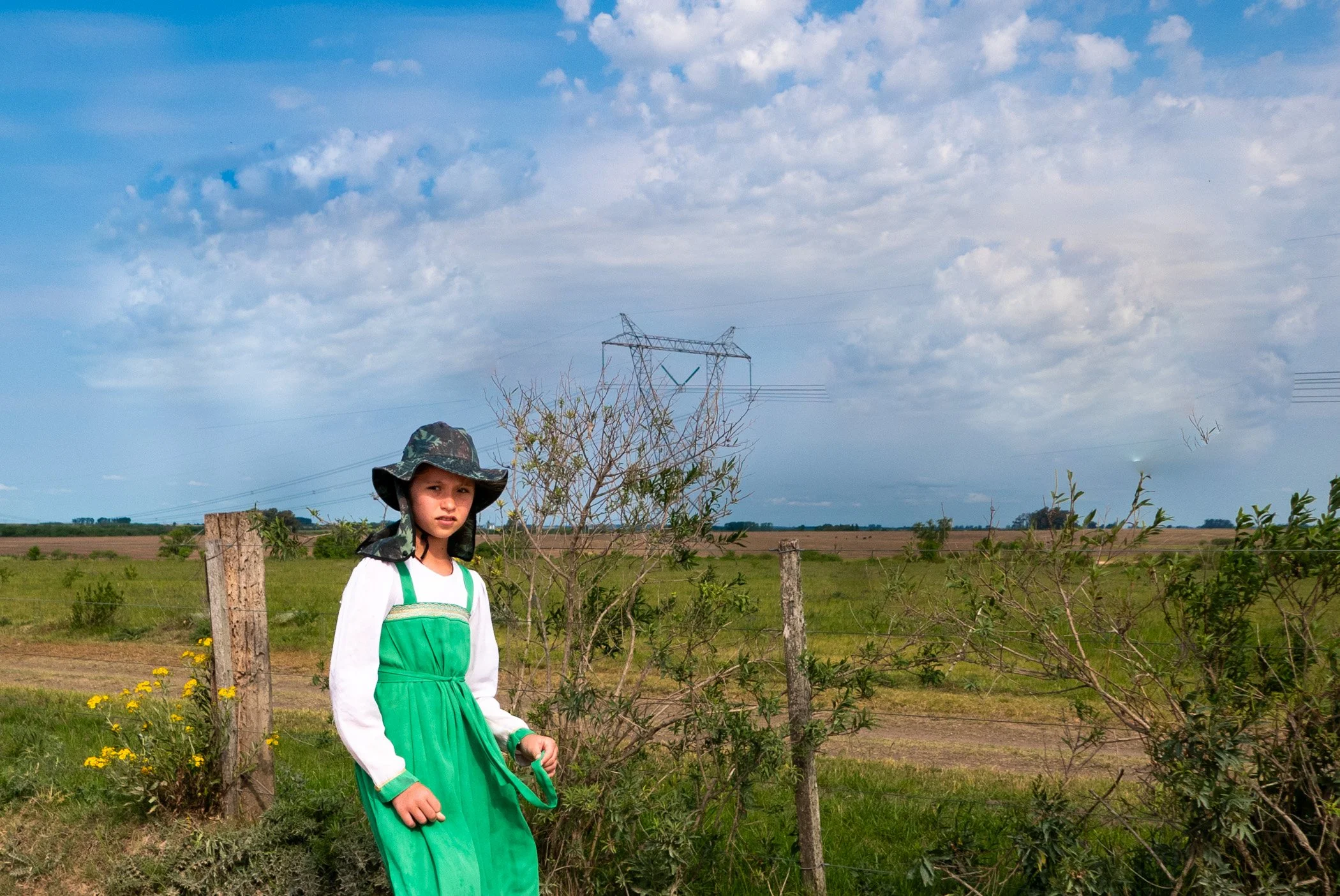
Right after a pretty sharp bend, a young girl around twelve years old popped up, leading a cow along the side of the road. I was sitting in the back seat with my camera in hand and took a quick photo. She looked at us wide-eyed and just kept walking. She was a pretty, slim girl wearing a hat with a neck flap, a white blouse with wide sleeves edged in green, and a matching long, ankle-length green dress. It was unusual clothing for farm work, especially nowadays.
We kept going down the dirt road. On both sides, you could see a few planted fields, sheds, and a handful of makeshift houses. The very first one was Sergei's.
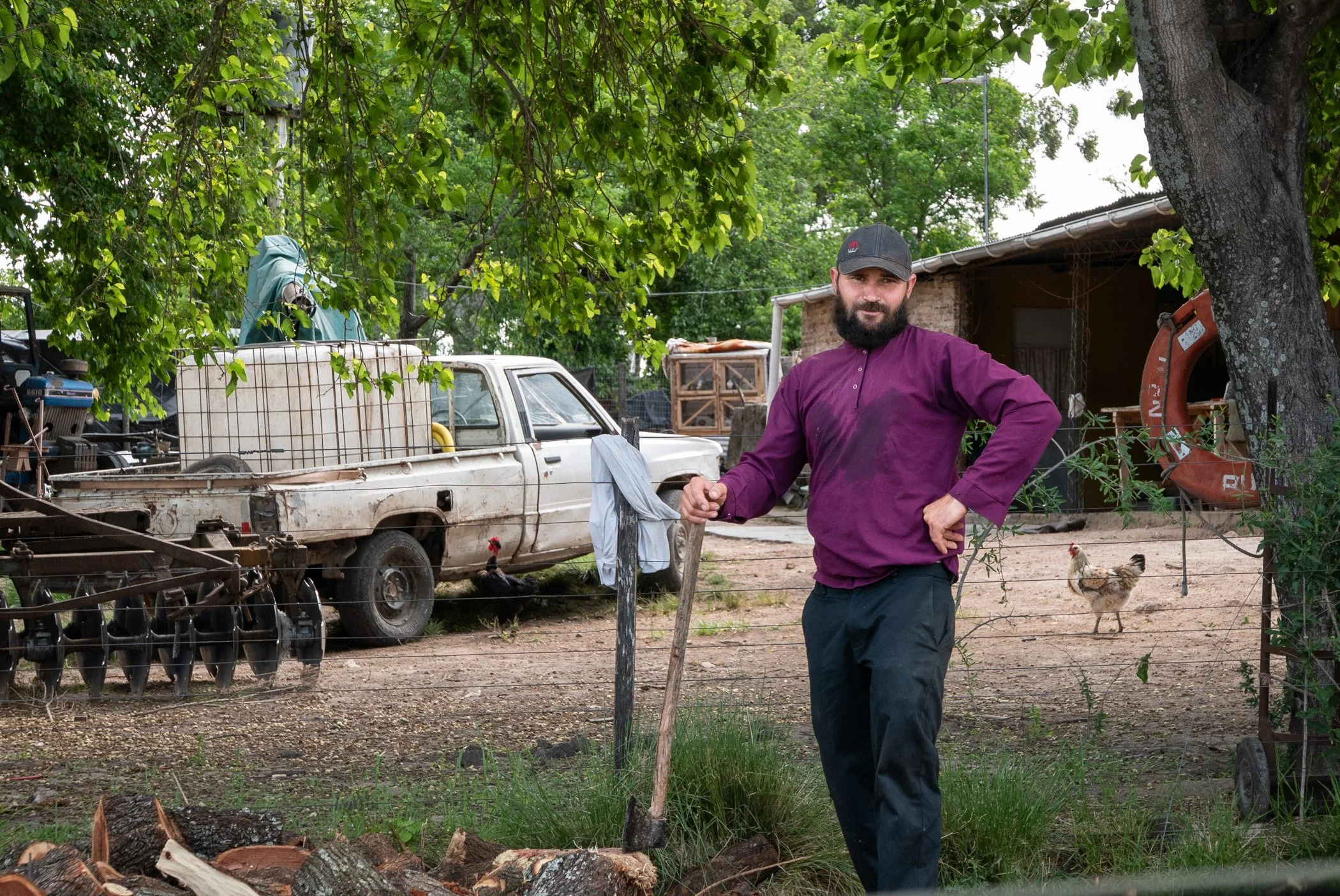
It was a modest house with a yard in front cluttered with an old pickup truck, ploughs, loose wire, and random junk scattered around. A few chickens were pecking near a guy in his late twenties or early thirties of average height. He had a moustache and a thick dark beard. He was wearing a solid purple shirt with just three buttons at the collar and wide sleeves over black pants. When he saw us arrive, he stopped, leaned on the heavy axe he was using to chop firewood, and smiled.
One of my friends called out from the car and asked if they had any cheese for sale. He said they did, but that it was white cottage cheese. We said sure, since our main goal was really just to meet them and try to make some sort of connection.
Right then, Sergei came walking around from behind the house, and his presence hit me right away. He was an older man—or at least he looked like one, though at a certain point in life, anyone around our own age starts looking older than us.
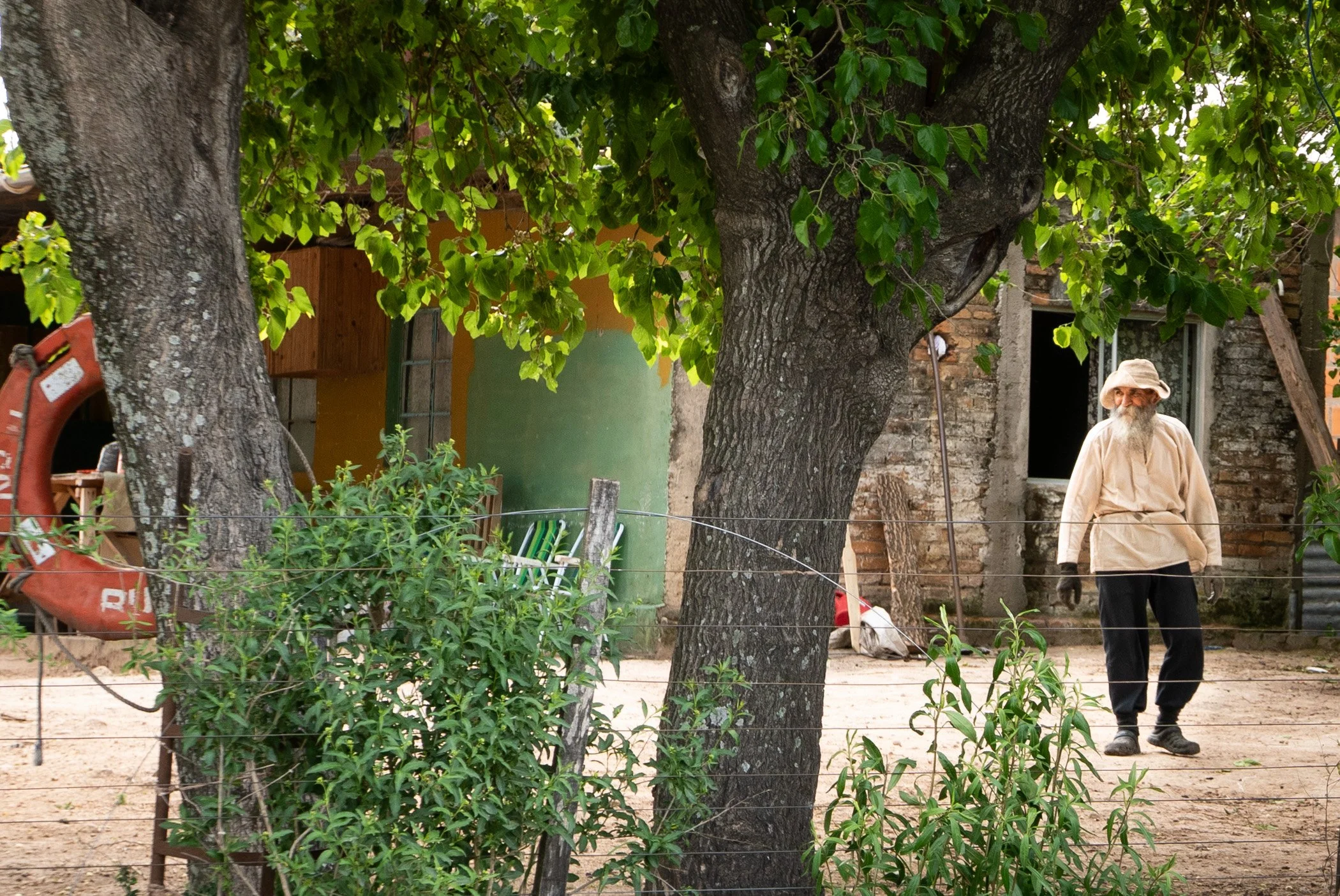
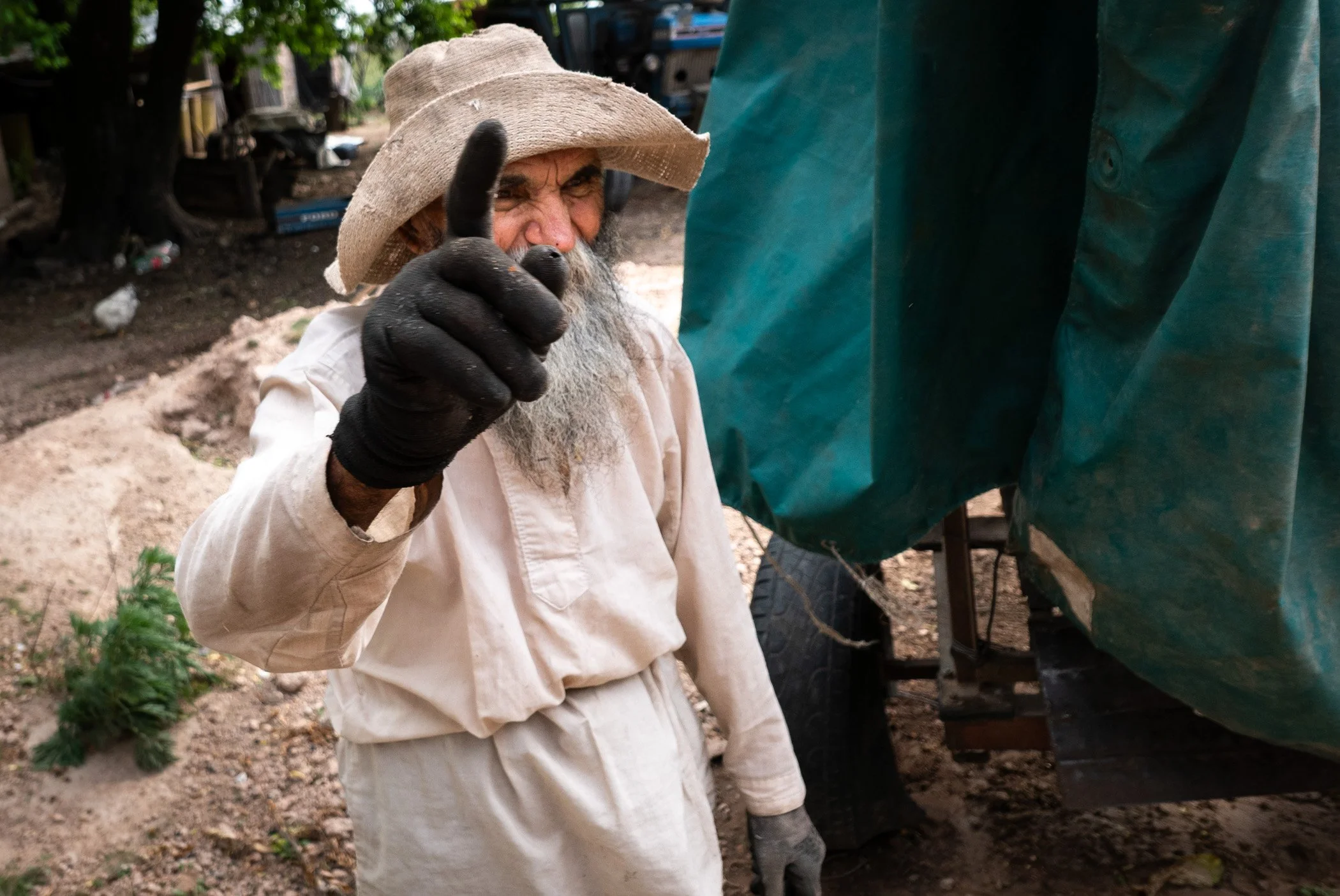
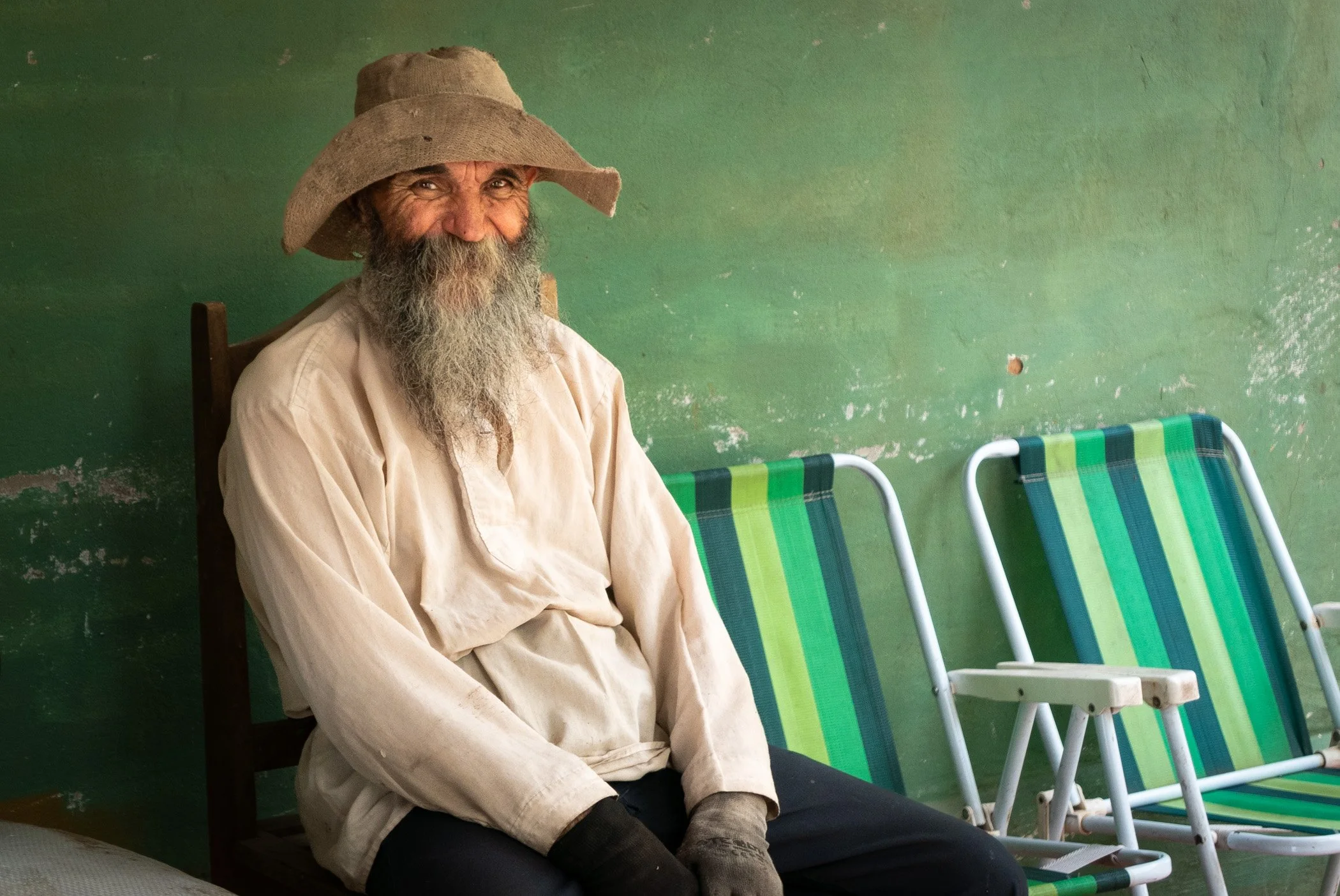
He was average height, with a thick, long grey beard, dressed pretty similarly to the younger guy we’d just seen, who turned out to be one of his sons. He was wearing a striking, wide-brimmed hat with the front brim folded all the way up, thick black work gloves, and walked with a firm, energetic stride.
What a carácter! Said Álvaro, one of my travel buddies.
Since I hadn't put my camera down, the second I saw him I snapped a photo—just as he raised his hand and said, "No photo," with a serious face, though without any real drama.
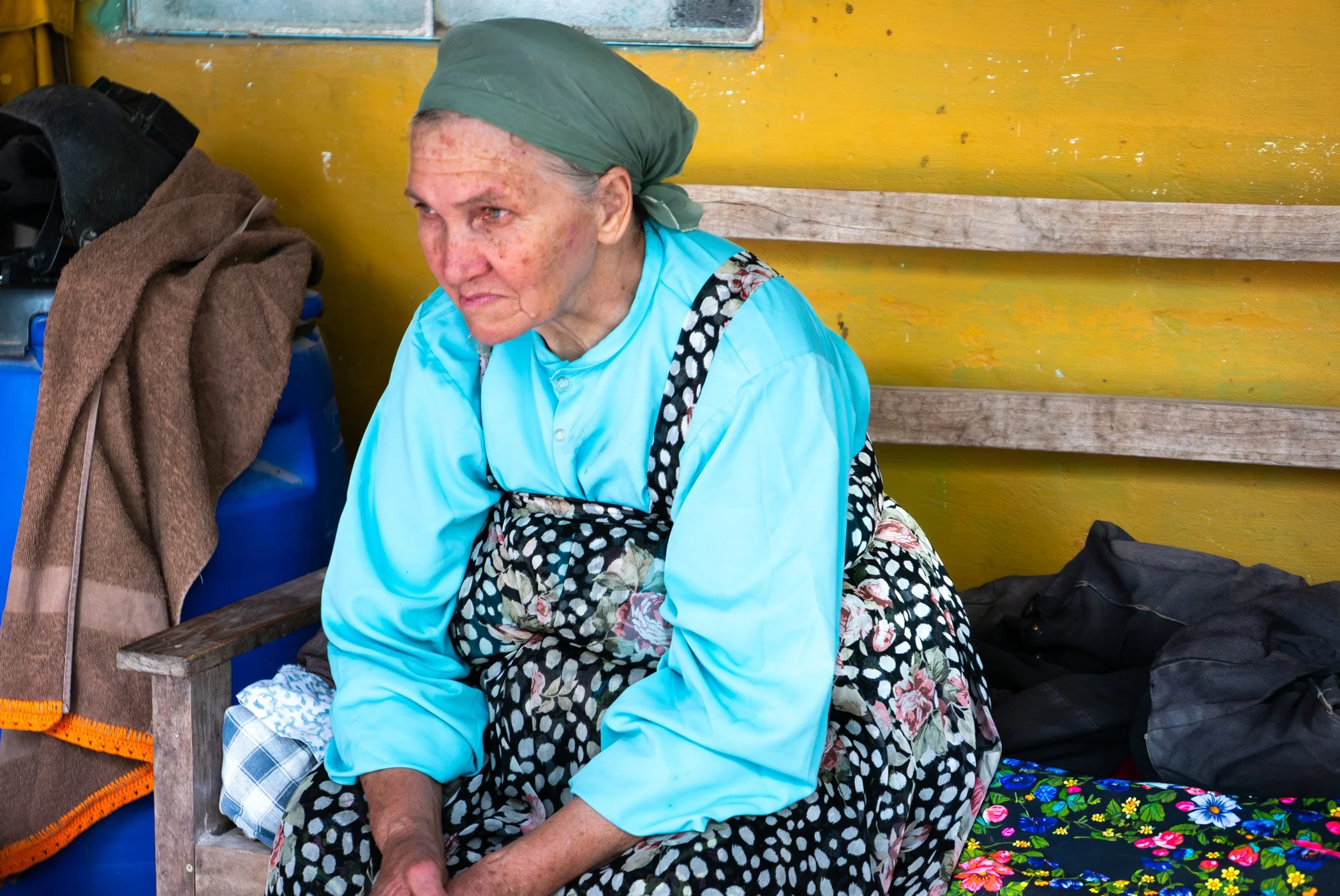
We all got out of the car and walked toward the house while Sergei sat down on one of the porch chairs. His wife brought out the cheese and silently joined the circle. She didn't say a word, and after a little while, went back inside.
To our surprise, Sergei answered our questions super politely. He spoke with a Russian accent, though a few words sounded almost like Portuguese. As he spoke, he’d squint his eyes, and when he looked at us, it felt like he was looking right through us into the distance. He had a fascinating face, weathered by the sun and years, covered in deep wrinkles that served as a roadmap of his life.
He told us he’d emigrated from Russia through Manchuria and ended up in Brazil with his family, where he lived for twenty years in another Old Believer colony. About 58 years ago, he moved to Uruguay with his family and settled in Colonia Ofir.
While he was talking, I adjusted my camera settings, and as soon as we locked eyes, I took a few more pictures of him, my friends, and his wife. Almost in a whisper, without making a scene, he said again: "No photo." "Fair enough," I said, "no more photos." We kept chatting about his work, and he even showed us the small farm plot behind his house.
That was my first interaction with that incredible character, and I left feeling really happy to have gotten his tacit permission for the photos, which had previously seemed impossible.
For a long time, I kept thinking back to those conversations with Sergei. He left a really nice impression on me as a calm, hardworking, down-to-earth guy.
July 2023
For the 110th anniversary of San Javier, we went on another one of our usual road trips with the same group of friends. We visited Fray Bentos, the old Anglo meatpacking plant, and nearby areas like the Las Cañas beach resort, Nuevo Berlín, and Villa Soriano.
In San Javier, we went to a lunch and show at the Máximo Gorki Cultural Center and visited a few places we hadn't seen before. Since we were so close to Colonia Ofir—and because our visit three years prior had left such a lasting impression—we wanted to go back and visit Sergei.
This time, finding the road wasn't nearly as hard. When we pulled up, it was unbelievable to see him standing out front again.
The clutter we’d seen three years before was exactly the same, and he was wearing the exact same style of clothing.
He recognised us right away. We got out of the car, walked onto his property, and he came over to say hello. I noticed he looked thinner, a bit hunched over, and the sad look in his eyes had grown deeper. His hands were trembling, and I realised he had Parkinson's disease. He raised a shaking hand toward us—a stark contrast to the stiffness in his face—and said, "My head wants to work, but my hand won't let me."
After a short visit, we sent our best to his family and left feeling pretty heartbroken. At least for me, during that meeting, "Sergei the character" turned into "Sergei my friend from Ofir ." An ageing, sick, tired man.
There were no photos this time. It was like visiting an old acquaintance. I left feeling sad.
July 2026
We went back to San Javier. It felt like season three of a TV show. The excuse was taking advantage of the town's 113th anniversary to go with my wife, who had never been before, along with a couple of dear friends, Verónica and Álvaro.
It was actually through Álvaro that I had first found out about Colonia Ofir back in 2020, and he was one of the friends who had been there with me the previous times.
This trip was a new chance to visit Sergei. In a colony so isolated from the outside world, we had a friendly connection with one of its oldest settlers.
Actually, Sergei, his wife, and one of his sons were the only people we actually knew in the colony. Not only that, but except for the girl in the green dress, we’d never seen anyone else during our previous visits.
This time, we got a little turned around trying to get there because the roads aren't well signed, and the GPS kept losing signal as we drove deeper into the countryside.
When we finally hit the right road, a house we’d never seen before caught our eye—recently built and really well kept.
On a plot across from the house, four kids between ten and fourteen years old were playing soccer. They were very blonde, wearing loose, colourful shirts over their pants, cinched at the waist with a cloth sash. They looked like they were dressed up for a holiday. We pulled up near them, though there was a good distance between the road and the house. When they saw us, they stopped playing and just stood there watching us in silence. They didn't reply when I waved, but when I asked if they were playing soccer, they said yes and went right back to playing, paying us no more attention.
We kept going a bit further and reached Sergei's house, which was the first one on the left side of the road. A little further up on the opposite side stood a very modest house. Just then, a woman in her early thirties came walking out, dressed in traditional clothing and also looking quite dressed up. She wore a sort of floral headpiece, a white blouse with wide sleeves, and a vibrant blue dress with floral embroidery along the hem that went all the way to her feet. A young boy ran out right behind her; they both got into a fairly new pickup truck and sped off immediately.
They didn't look at us or say hello, even though in the countryside people usually greet each other politely, even if they're strangers.
Following that same road, we came across a wire fence with a gate closing off the path. It had a sign that read "No Entry" with a red line drawn through a hand telling you to stop. Far off in the distance, you could see a house with a short, heavy-set man walking beside it. He had a hat and a long grey beard, dressed very similarly to Sergei. He didn't even look at us. We turned around and drove back to our friend's house.
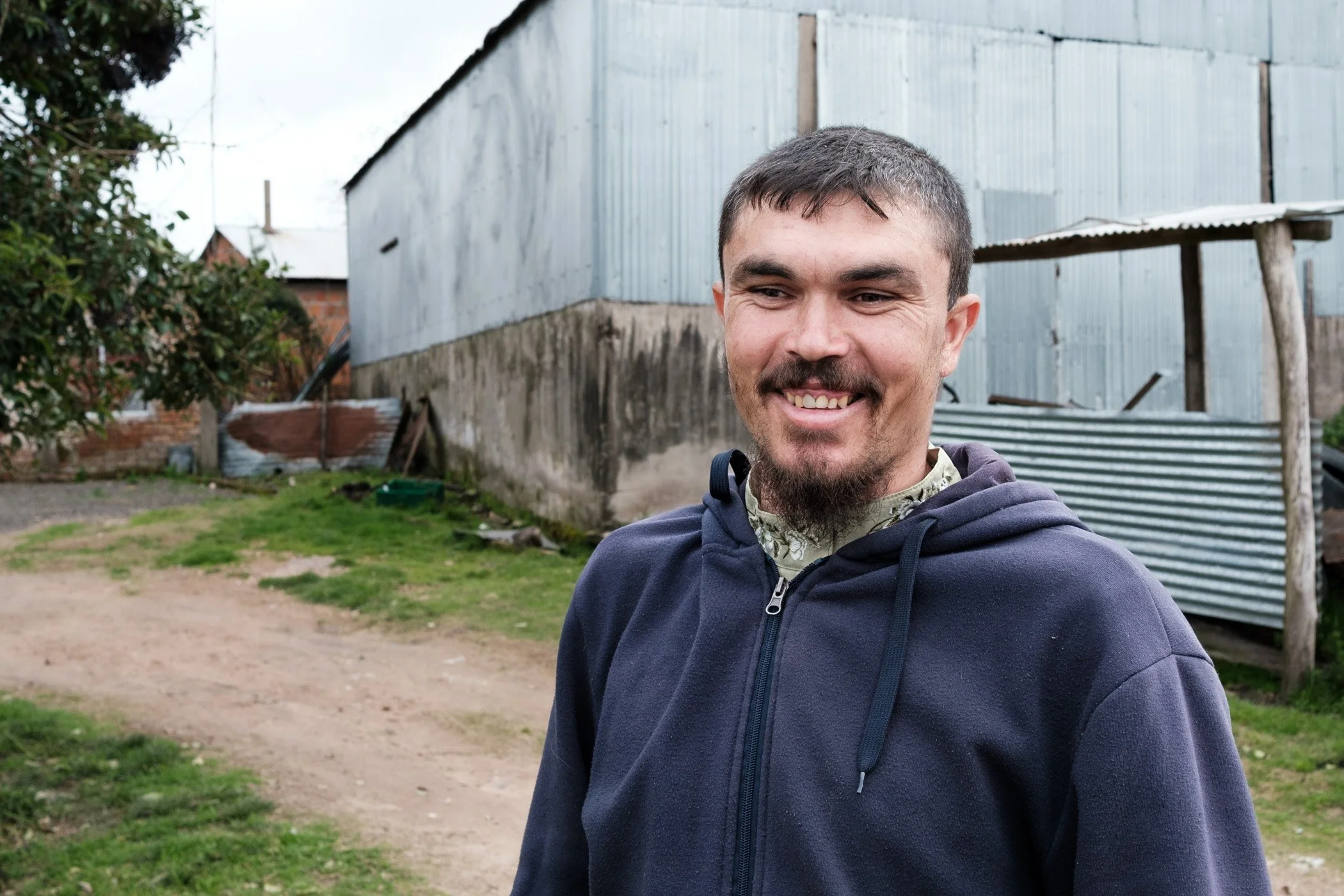
The yard in front of the house was clearer and neater, free of the junk we’d seen years before. Sitting on the porch were two men watching me from afar. I got out of the car, asked if Sergei was around, and one of them walked over. He was tall, with dark hair, a sparse beard and moustache, high prominent cheekbones, a sharp forehead, and dark, almond-shaped eyes. He was wearing jeans and a navy blue hoodie, with the collar of a light green shirt embroidered with white and dark green flowers peeking out at the neck.
I asked again if Sergei was there because we wanted to say hello.
He told me he was his son and that his father had passed away four months ago. He said that despite his illness, his dad was a strong man, but he’d been in a car accident on the highway on his way to Paysandú. Apparently, the car's brakes failed, and he crashed head-on trying to swerve around another vehicle. He spent four months in the ICU in Paysandú before being transferred to Fray Bentos, where he passed away.
Ever since we left Montevideo, I had feared he might have passed, but the possibility of an accident had never even crossed my mind. It made me deeply sad. I told his son about our previous visits and our chats, and I expressed my condolences; he thanked me on behalf of himself and his family.
I asked about his mother, and he said she had gone to Brazil—where there is a larger colony—for medical checkups. He mentioned they were five siblings: four brothers and one sister. His sister had been living in Alaska for 20 years (where there's another community of Old Believers) and had come back for their father's funeral. Out of all the siblings, three were currently living in Uruguay. He himself had worked for two years in Mato Grosso, which explained why his accent and some of his words had a Portuguese sway to them.
To change the subject, I asked if he had any cheese for sale, but he said they didn't keep cows anymore. He mentioned the neighbour might have some, but since it was Sunday, he was probably resting.
Then I asked if I could take a picture of him, and he happily agreed. I grabbed my camera and phone from the car, and we even ended up taking a selfie together.
"Where can I send it?" I asked, and he told me to send it over WhatsApp. His name is Akim, and he asked for my phone so he could type in his last name himself instead of spelling it out.
While these younger generations have started opening up much more to the outside world, six years earlier Sergei himself had warmly welcomed our approach without much hesitation.
He asked if I was there for San Javier's anniversary and if I had stopped by Puerto Viejo (the landing site of the town's founders, where a memorial event was being held). We had gone to check out the site, which now has a small park with a playground where a few families were camping and having barbecues next to their cars.
Those comments reconfirmed just how much the colony's youth were opening up, and I realised that the neighbours we’d seen leaving in the pickup truck, dressed in traditional attire, were probably heading to the festival in San Javier too, where many descendants of the founders were dressed the same way.
I mentioned to him that during my first visit, I had taken some photos of Sergei, but I was never able to send them because I had no idea where or how. "Yeah, he didn't have a phone or internet," Akim said, but he asked me for them so he could share them with the family.
Being able to send those photos to his family—despite that original "no photo"—brought me an immense sense of comfort. I knew they were iconoclastic and didn't care for photos, but having the request come directly from his son, knowing they would be appreciated, made me genuinely happy.
Once we got back, I sent him the pictures I’d taken with my camera, and he asked me to send the phone selfie, too.
I took the opportunity to ask how old he was and how old Sergei had been. "I'm thirty-five, and I think my dad was around seventy-seven or something like that," he replied. When I asked about his mother's health, he said: "It looked like she was doing better."
Our WhatsApp chats were a mix of voice notes and text messages, complete with spelling slips that clearly showed the influence of Portuguese. I asked if he ever came down to Montevideo so we could keep catching up, but he said he’d only been to the capital twice in his whole life.
Time and time again, Sergei kept popping back into my mind—no longer as "the interesting character," but as "Sergei, our friend from Colonia Ofir," who six years earlier had shared a piece of his life story with us.
Ever since meeting Akim, I’ve wondered what it was that drew me to him—why or for what reason I kept going back after meeting him that first time. What was it about Sergei that captivated me?
They were just two brief, chance encounters, but unlike the fleeting nature of today's "liquid" relationships, our connection somehow endured.
At the end, I was far more taken by my friend than by “the character”.
Was it a foolish pride in having managed to take his portrait, despite it being unthinkable to photograph anyone from the colony back then? Whatever the reason, his absence hit me hard.
The fragility of life, its unpredictability... walking out the door one day never knowing you won't come back. It's likely that in those moments, you're forced to face your own mortality. The absolute finality of never again.
"To take a photograph is to participate in another person's mortality, vulnerability, mutability. Precisely by slicing out this moment and freezing it, all photographs testify to time's relentless melt." — Susan Sontag