• ABOUT
  • FACES
  • STAFF
  • ProgressivE-zine
  • Books - PPH
  • SHOP
  • Exhibitions
  • OOB Out Of Bounds
  • Out of bounds-zine
    • First two issues of the magazine
  • FEATURED photographers
    • PROGRESSIVE COVERS
    • PHOTOS OF THE WEEK
    • FAKE WORLF/CONFUSED REALITY
    • STORY TIME
    • CHALLENGES
    • MATCHING MOMENTS
    • VIDEO
    • GALLERIES PDFS
    • INSTAGRAM
  • NOTES From the Streets
  • PROTESTS in the World
    • 2026
    • 2025
    • 2024
  • TIPS
  • Index SEARCH
  • Contact
  • SPOKESPERSONS
  • ProgresFestival MAGAZINE

Progressive Street

  • ABOUT
  • FACES
  • STAFF
  • ProgressivE-zine
  • Books - PPH
  • SHOP
  • Exhibitions
  • OOB Out Of Bounds
  • Out of bounds-zine
    • First two issues of the magazine
  • FEATURED photographers
    • PROGRESSIVE COVERS
    • PHOTOS OF THE WEEK
    • FAKE WORLF/CONFUSED REALITY
    • STORY TIME
    • CHALLENGES
    • MATCHING MOMENTS
    • VIDEO
    • GALLERIES PDFS
    • INSTAGRAM
  • NOTES From the Streets
  • PROTESTS in the World
    • 2026
    • 2025
    • 2024
  • TIPS
  • Index SEARCH
  • Contact
  • SPOKESPERSONS
  • ProgresFestival MAGAZINE

Dispatch From Seoul by Michael Kennedy

Michael Kennedy

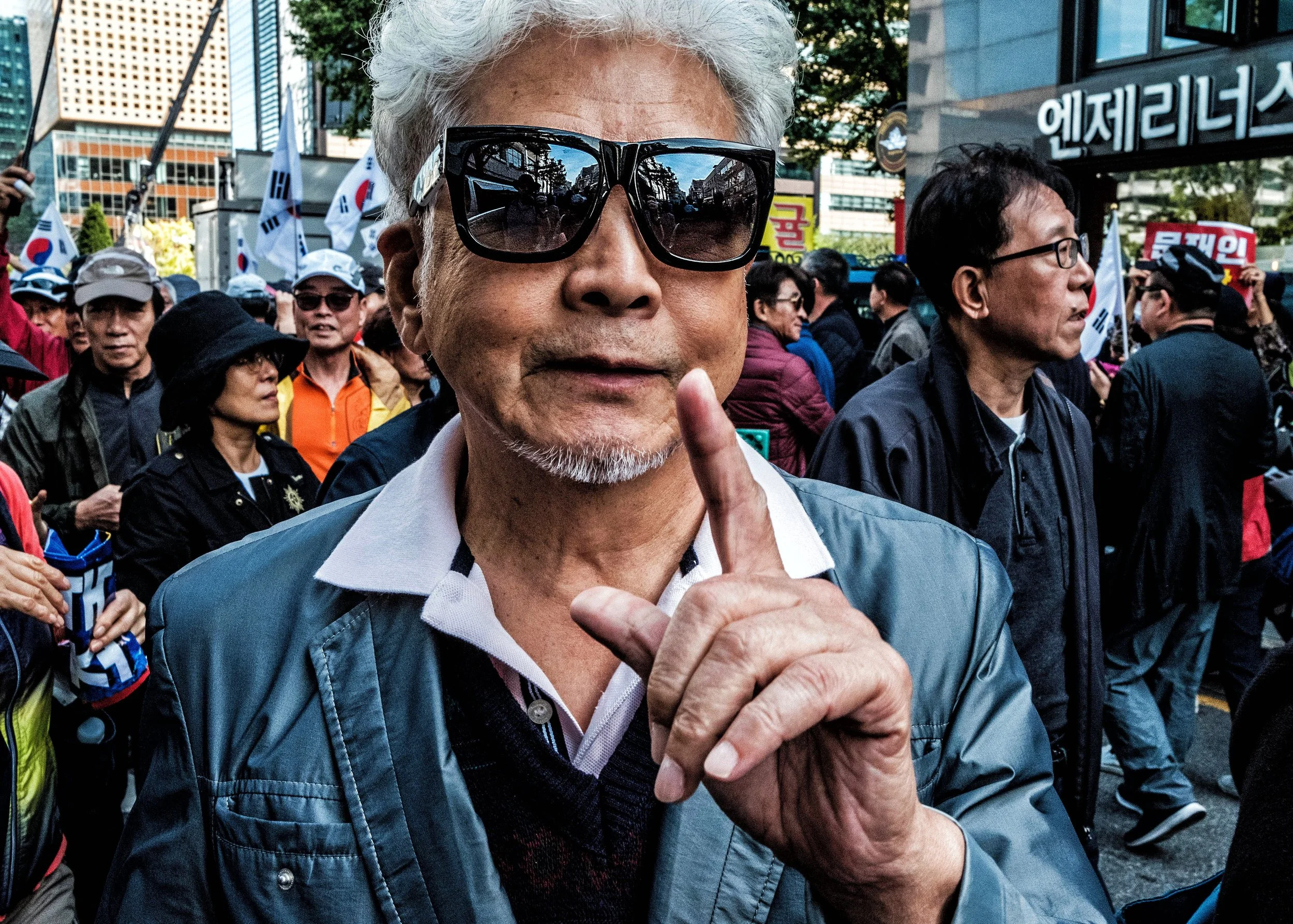
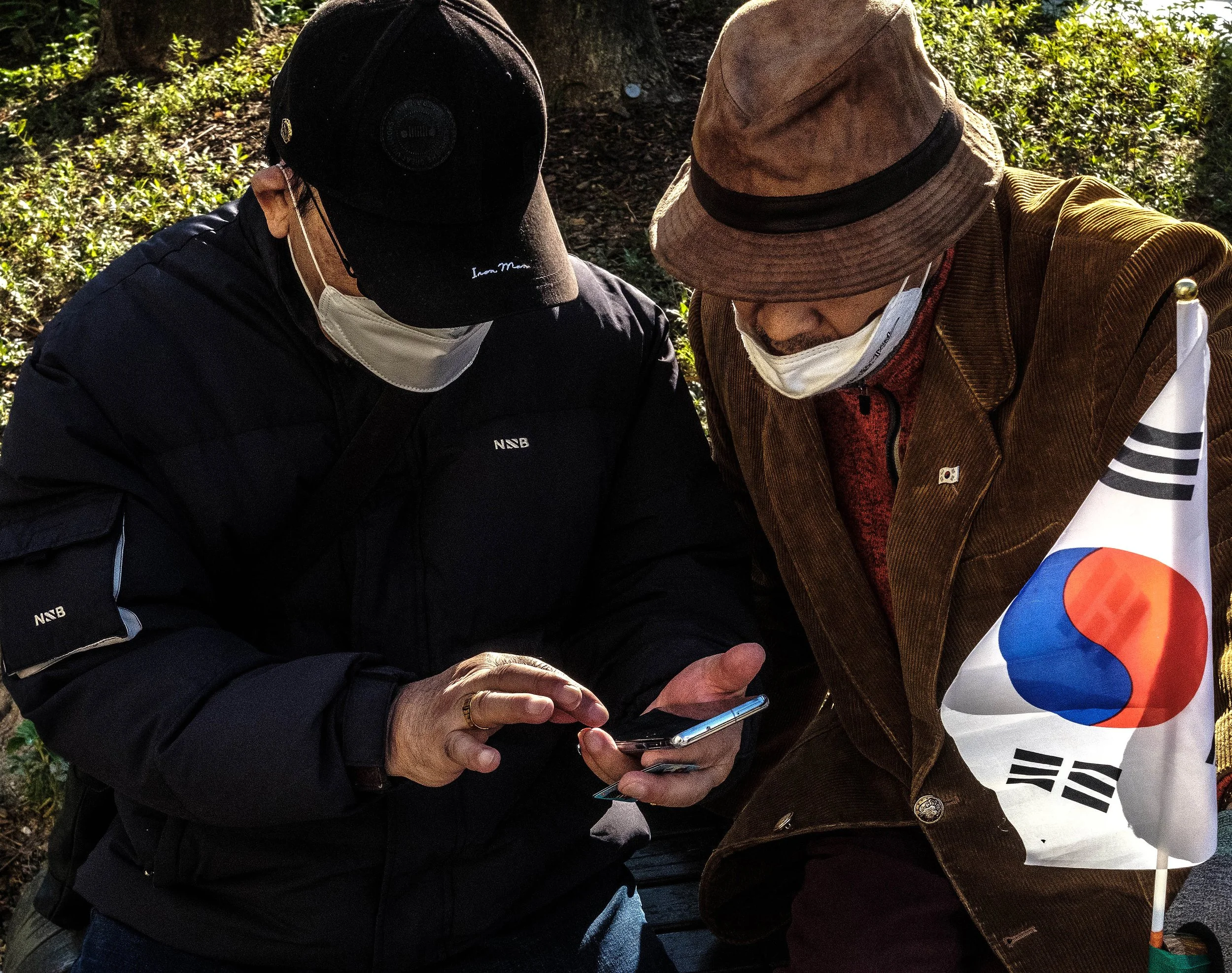
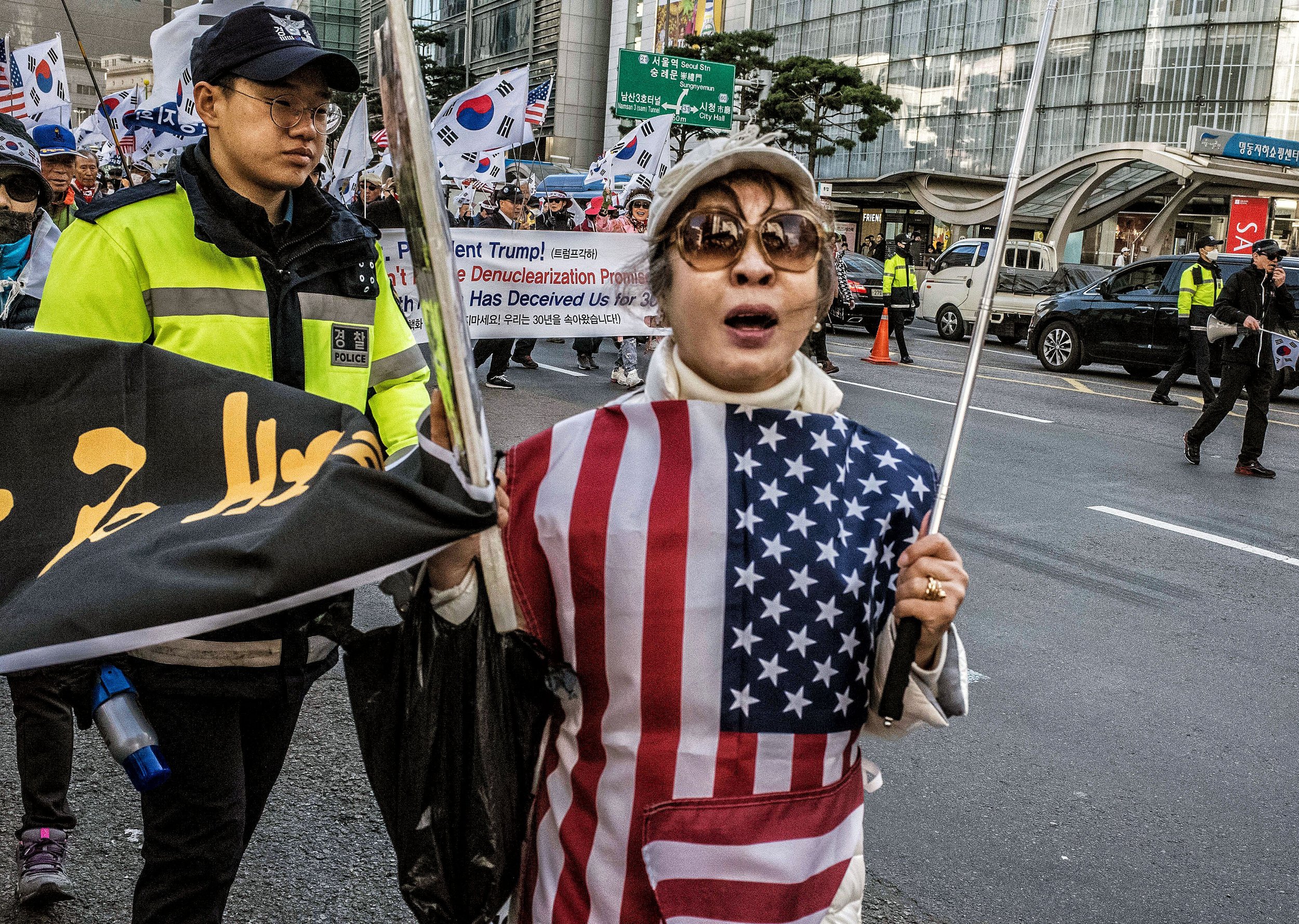
Streets of Seoul: A peaceful noon demonstration at Seoul Plaza against President Yoon Suk-Yeol. The 62-year-old South Korean President has been in office exactly one year, and many people are impatient with his style of leadership.


Our project strives to show the different forms of political and social protests in various countries. Through photojournalism, we hope to gain a better understanding of the political dynamics in different nations.

 This feature by Michael Kennedy offers an intriguing view of Korea, where geography is destiny. Seoul is halfway between Beijing and Tokyo. In fact, Korea is a peninsula of China, a country with 1.4 billion people – and, as Ukraine is a flashpoint in Eastern Europe, Taiwan will soon be the object of similar focus in this part of the Pacific.

We are used to seeing beautiful images by him but now with this analysis, we can understand them better. Arm yourself with patience and wait until you have a moment to read everything.


“What’s required to maintain momentum towards a humane civilization is we first have to transcend our prehistory.” - Christopher Hitchens (1949-2011)

Seoul April 2018

As an expat in this culture, it’s impossible to understand Korea as authentically as the native born. Yet I think it is impossible to even attempt an understanding of Seoul, South Korea and the entire peninsula without an awareness of the momentous changes and horrors and tragedies that visited this place in the first-half of the last century.  M.K.


The relatively new experiment with democracy in Korea is like building an airplane in flight.

 This debate about how to go forward after over five-centuries of the Joseon Dynasty is often displayed with peaceful demonstrations and rallies on Saturday afternoons along Seoul’s version of the King’s Highway.

 To Korean’s, it is Sejong-daero – and this boulevard, so steeped in history, is the heart of the country.

 If during the first-half of the last century your country endured the demise of a royal dynasty from 1392 at the hands of a hostile neighbor, the subsequent 35-year military occupation by that country, a ghastly three-year civil war that virtually destroyed Seoul and has never officially ended, leaving the country divided 70-years later, you might better understand why representative democracy with a side-order of dissent is passionately embraced on the streets of Seoul.

 Traditions based on centuries require little explanation. They are almost encoded in the DNA of a society.  Yet to pursue a new tradition, especially a new political system – a new Squid Game for barely more than three generations is far easier said than done.

 Ask Americans these days about the health of the 236-year-old experiment with representative democracy, and a great many people are braced for The Last Rites, especially if a certified sexual predator is the Presidential nominee for the Fascist Republican Party in 2024.

The Republic of Korea, more commonly known as Korea – which is how the country will be referenced in this dispatch, is where the Phoenix has risen to make this Asia-Pacific country an inspiring showcase of what the human spirit can achieve.

“Geography is destiny.” 

 This maxim suggests Herodotus, the ancient Greek historian and geographer. Other candidates include Confucius, Alexander the Great, Julius Caesar, Genghis Khan, Napoleon, Bismarck, and George Patton.

 Yet credit goes to Ibn Khaldun (1332-1406), the Arab sociologist, philosopher, and historian widely acknowledged to be one of the greatest social scientists of the Middle Ages.

Korea is a peninsula of China.  And the distance between the southeastern Korean port city of Busan and Fukuoka, near Hiroshima, is 218 kilometers or about 136 miles.

 Based on air travel time:

Seoul to Beijing is 2.15 hours;

Seoul to Shanghai is 2.05 hours;

Seoul to Tokyo is 2.20 hours;

Seoul to Vladivostok is 2.40 hours.

Ibn Khaldun was right, and geography is destiny. For Korea this means a never-ending connection with both China and Japan.


2018

Anti-Moon Jae-in protests.  He was President from 2017-2022.
View fullsize April
April
View fullsize April
April
View fullsize April
April
View fullsize September
September
View fullsize  September
September
View fullsize September
September

Part I

Recently, Koreans took to the streets of Seoul because the Japanese government announced that it would discharge contaminated water from the crippled Fukushima nuclear plant into the Pacific Ocean.

 On March 11, 2011 a combination level-seven earthquake and tsunami crippled the Fukushima nuclear power plant, located 130-miles northeast of Tokyo. To date, the earthquake is considered the most powerful in Japanese history – and a level seven earthquake is what destroyed the nuclear facilities in Chernobyl in 1986.

 Protesters in Seoul were wary of Japan’s ability to safely discharge the water, and voiced concerns about the immediate impact on the Korean peninsula – warning that the discharged water from the Fukushima disaster would ultimately impact both sides of the Pacific Rim, from Siberia-to the Philippines on one side, and from Alaska-to-Panama on the other side.

 During the Saturday demonstrations Japan agreed to allow a 21-member inspection team of experts from Korea to visit the Fukushima site on Sunday.

 Yet to understand the edginess of the Koreans about their Japanese neighbors, one must have at least a nominal understanding of what happened on this peninsula at the beginning of the last century.


 Part II

As the Americans expanded the concept of Manifest Destiny in the late-1890s to justify island hopping across the Pacific Ocean to China by taking over the sovereign country of Hawaii, the Japanese did the same with the independent Kingdom of Okinawa.

By 1904, the Japanese had crushed both the Pacific and Atlantic fleets of the Russian Imperial Navy – which in turn triggered the First Russian Revolution a year later and reduced Czar Nicholas II to a constitutional monarch.

U.S. President Theodore Roosevelt brokered the Treaty of Portsmouth in 1905, which ended the Russo-Japanese War. As a result, he was awarded the Nobel Peace Prize in 1906, even though he fomented a revolution in Colombia three years earlier that created the breakaway country of Panama - so Americans could build a canal across the Central American isthmus at a cheaper cost.

The Treaty of Portsmouth in 1905 allowed Japan to go off the chain in the Far East, and exert control over both Korea and southern Manchuria. Roosevelt and the Americans turned a blind eye to this and concentrated on both the Panama Canal and dominating the Philippines, as a further stepping stone to China.

 Roosevelt knew he had unleashed The Dogs From Hell by doing nothing to restrain Japanese aggression in the Far East, yet he had no way of knowing The Day of Reckoning for America would finally occur on December 7, 1941 at Pearl Harbor and Japanese Imperial intentions for an Asian Empire would end in the horrifying ruins of Nagasaki on August 9, 1945 when the U.S. wasted the second city in three days with an atomic bomb known as Fat Man at 11:02 a.m. local time.

 Keep in mind that the Guns of August, the beginning of World War I in 1914, started with a cavalry charge, and 31-years later, World War II ended with Japanese citizens – women and children, and older civilians, being vaporized by an atomic bomb in Nagasaki. And this mind-numbing chronology all happened in the first half of the 20th century

Korean history has no record of aggression toward China or Japan – or any other country. Yet in 1895 – in the opening salvo of things to come, Japanese agents assassinated Joseon Empress Myeongseong - known informally as Empress Min (1851-1895).

Empress Myeongseong’s husband, Emperor Kojong, died suddenly in Deoksu Palace on January 21, 1919, where he was confined by the Japanese – which is to say under house arrest. He was 66-years-old, and because he had no critical health issues, it is assumed the Japanese poisoned him.

With the official annexation of Korea by Japan in 1910:

- the Korean language was banned in schools and universities;

- loyalty to the Japanese emperor was mandatory;

- the Japanese language replaced Korean in public places;

- all films in Korea were in Japanese;

- Japanese authorities burned over 200,000 Korean historical documents, essentially wiping out the historical memory of Korea;

- during the Japanese Occupation, land and wealth were confiscated for the Japanese;

- agricultural products and natural resources were sent to Japan;

- nearly 725,000 Korean men were forced to work as slaves in Japan and its other  colonies;

- and as World War II loomed, Japan forced hundreds of thousands of young Korean women to become “comfort women,” – sex slaves who served in the military  whorehouses for the Japanese army.


In view of the recent dreadful history between Korea and Japan – especially the horror of the “comfort women,” some of who are still alive, yet stigmatized forever as outcasts despite circumstances well beyond their control, it’s easier to understand why Korean protesters gathered Saturday on Sejong-daero because of enormous bitterness and distrust regarding Japan.

For Koreans, Sejong-daero, the 10-block boulevard that stretches through the center of downtown Seoul, literally represents the heart of the country, its very essence and significance to anyone with an ounce of Korean heritage.

The boulevard, named for Sejong (1397-1450), the Joseon monarch best known for his development of Hangul, the phonetic system for writing the Korean language that is still in use, starts from Gyeongbokgung – the largest of the Five Grand Palaces from the Joseon dynasty, and ends at Namdaemun Market, the oldest market in Korea.

Gyeongbokgung is where Japanese agents assassinated Empress Myeongseong in 1895. Sejong-daero passes along Gwanghwamun Square, with Deoksu Palace at midpoint.

This is where Kojong died in 1919 – under Japanese confinement, the last of the Joseon monarchs. 

Seojong-daero represents everything important to Koreans: what it was, what it is, and what it will be.

I walk this path nearly every Saturday in good weather. The street is my university.


2019

Anti-Moon Jae-in protests

View fullsize April
April
View fullsize May
May
View fullsize August
August

October

View fullsize #6._Seoul_-_October_2019.jpg
View fullsize #4._Seoul_-_October_2019.jpg
View fullsize #5._Seoul_-_October_2019.jpg
View fullsize #7._Seoul_-_October_2019.jpg
View fullsize #9._Seoul_-_October_2019.jpg
View fullsize #10._Seoul_-_October_2019.jpg

 Part III

For Koreans, the Baby Boom Generation refers to the large group of people who were born between 1955 when the fertility rate rose sharply after the Korean War (1950-1953) and 1963, when the birth rate slowed due to birth control policies, accounting for over seven-million people - or around 15% of the population. This group is believed to hold a considerable portion of the nation's wealth and consume expensive goods.

Korea is a conservative, patriarchal society with a low divorce-rate. In many ways, life as an American expat is reminiscent of the U.S. in the mid-to-late 1950s – really just before the assassination of John F. Kennedy, which really marks the beginning of the1960s – and ended with Nixon’s fall from grace and self-exile to Southern California in 1974.

 As an example of conservative social policy in Korea, public school teachers are expected to retire at age 62 – to make way for the younger generation into the workforce. This applies to other professions, as well.

There are 188 accredited colleges and universities in Seoul. They are all competitive, with Seoul National University the top university in the country. Yonsei University in Sinchon, a trendy Seoul neighborhood, is best known for the large number of international students – including Maddox Jolie Pitt, who is majoring in Biochemistry.

 His parents are familiar to most people on this planet.

 So there are a growing number of both well-educated senior citizens and younger generations ready to play their parts in a vibrant Korean society.


Part IV

The cycle of life is for the old to make way for the new, and older Korean professionals with national pensions and other investments who are retired have genuine concerns about politics and social conditions in a country still divided by an unsettled war with North Korea, a historical sense of unease about Japan and the threat of China as a rising superpower.

There are a host of other socio-political issues that affect Koreans – and not just the retired set.

Yet this group of Gray Panthers is at the vanguard of the peaceful demonstrations and rallies along Sejong-daero. They do not want to lose what they have worked so hard to achieve – which is common everywhere.

 Yet in a competitive fast-paced city like Seoul, some of the socio-political issues affecting Koreans are: Aging population;

Declining birth rate;

High level of household debt;

High level of youth unemployment;

The influence of chaebols in politics and business;

Geo-political tensions with North Korea and Japan.

Competition from China (steel, shipbuilding, electronics, automotive, domestic appliances);

Teenage suicide rates;

Discrimination against women relative to equal pay in the workforce;

Discrimination against the LBGT community.


The word chaebol is not familiar to most people beyond the Asia-Pacific region.

 In the West, Napoleon is given credit for eliminating the thousand-year-old feudal system in Europe. Maybe this is true. Maybe the feudal system simply adapted to the Industrial Revolution, and instead of the serfs reporting to the fields surrounding the castle, they moved to the cities and reported to the factories and still existed on the edge of hope, riding the train to nowhere every day, promised the deferred gratification of heaven with a celestial deity and his son, born of a married Jewish woman.

 In Korea, a chaebol is a large industrial conglomerate run and controlled by an individual or family. Several dozen large Korean family-controlled corporate groups fall under this definition.

 While the founding families do not necessarily own majority stakes in the companies, the descendents of the founders often retain control by virtue of long association with the businesses.

 Among the largest chaebols are Samsung, LG, Hyundai, and the Lotte Group.

In America, those morbidly rich white families who enjoy generations of inherited wealth and corporate welfare in tax write-offs, less taxes or no taxes, have deep connections with each other that involve a road that goes through Choate Rosemary Hall, a private secondary school and usually leads to Harvard or Yale.

 Debutante Balls in America are passé – yet it used to be an occasion for morbidly rich white men to offer up their well-bred daughters to promising well-bred sons of other morbidly rich white men.  

 To regard this longtime annual ritual as sophisticated slave auctions is too crass and too cynical. These were business arrangements that were good for the two families, the basis for virtually all marriages for thousands of years, before the fleeting notion of Romantic Love screwed with that time-honored business model.

Arranged marriages among upper-class Arabs is still the norm, and this is sometimes the case in India.

In 1954, Joseph Kennedy (1888-1969) offered Jacqueline Bouvier (1929-1994) $1m to marry his son, John (1917-1963). She took the money. This is a fact.

“A rose by any other name is still a rose.”

From New York City’s Times Square-to-La Vida Loca en Juarez-to Bangkok’s Nana Plaza, there is a name for a woman who takes money for sex, and it’s not Rose.

In Korea, the chaebols wield enormous influence over business and political affairs, and the families have deep connections with each other by attending the same private schools and universities, and marrying within the same class system.

This is to say the chaebols in Korea invest heavily in the politicians of the National Assembly to advance their agendas.

“A rose by any other name is still a rose,” and this version of corrupt Squid Game politicians is called Congress in America, the House of Parliament in the United Kingdom, the Knesset in Tel Aviv and the Diet in Tokyo. Same as it ever was.

As American street philosopher George Carlin (1937-2008) said: “Forget the politicians. They are put there to give you the idea that you have freedom of choice. You don’t. You have no choice. You have owners. They own you. They own everything.”


Part V

Since 2018, I have covered political demonstrations and rallies in Seoul as a freelance photojournalist.  I’m a retired American living in Seoul with my Korean wife. I’m not interested in generating money from my photography. There are any number of reasons why I use a camera to document life, and every reason becomes the same: it’s the way I’m wired.

 I can more or less acquit myself on any charge of having a serious knowledge about Korean culture and politics. I’m still a work-in-progress, and have no authority on any subject – including the ones that resulted in two different American college degrees.

 As Peter O’Toole (1932-2013) once said with wonderful Irish eloquence: “I’m here because I’m not there.”

 I live in Seoul, and have called the city home for over a dozen years.  Yet I still cannot master enough of the language to express myself in a simple sentence. I could admit to some diminished intellectual capacity, though to say I experience bouts of mental ennui is more to the point. Thankfully, my fate was to be born an American at a time when English is accepted as the unofficial international language.

It is important to note that in the Orient, which is commonly referenced as China, Japan and Korea, a person’s family name precedes a given name.

 Until recently, former President Moon Jae-in was a lightning rod for weekly demonstrations in Seoul. He served as the 12th president of Korea from 2017-2022. In Korea, the president is directly elected to a five-year term, with no possibility of re-election. If a presidential vacancy should occur, a successor must be elected.

Moon inspired countless protests in Seoul because of his advocacy of reconciliation with Kim Jong-un and the subsequent reunification of the Korean peninsula.  It didn’t help that Moon Jae-in’s family is from what is regarded as North Korea. The Koreans south of the DMZ – the 38th parallel, regard the north as a Communist country, which is hardly the case. Kim Jong-un operates a totalitarian gangster state that routinely performs cyber bank robberies to finance his regime.

Kim Jong-un had his older half-brother killed by VX nerve agent at the Kuala Lumpur International Airport on February 13, 2017. These things happen among freedom-loving dictators in Asia.

 Putin’s adversaries, critics and enemies – a clumsy lot, keep falling out of windows from the upper floors of apartments and hotels around Europe, like a scene from Atomic Blonde (also 2017).

“Clean up on Desolation Row.”

Yet any man who hangs out with a certified freak like Dennis Rodman and a certified sexual predator like Donald Trump is truly a Black Belt Loser.


January 2020 Anti-Moon Jae-in

View fullsize #6._Seoul_-_January_2020.jpg
View fullsize #1._Seoul_-_January_2020.jpg
View fullsize #2._Seoul_-_January_2020.jpg
View fullsize #4._Seoul_-_January_2020.jpg
View fullsize #7._Seoul_-_January_2020.jpg
View fullsize #5._Seoul_-_January_2020.jpg
 

Part VI

What never endeared President Moon to many of the older, conservative Koreans and fueled their contempt for him is that he seemed to take office at the expense of a political scandal that resulted in the impeachment, conviction and imprisonment of President Park Geun-hye, his immediate predecessor.   

For the unfamiliar, the 71-year-old Park Geun-hye is a woman, the first female President in Korean history. Park broke the glass ceiling of the chaebols, and was always going to have to pay a price.

Sometimes our story is foretold. Sophocles examined this theme through Oedipus Rex. The Arabs were no doubt influenced by Hellenistic values when Alexander’s generals stayed behind in Egypt to rule. Arab fatalism is expressed as: “It is written.”

 David Lean’s Lawrence of Arabia (1962) features Gasim murdering a member of Auda Abu Tayi’s tribe (played by Anthony Quinn), and T.E. Lawrence (Peter O’Toole) is forced to kill him with his own hands to prevent a blood feud on the eve of a successful operation. Auda Abu Tayi’s comment says it all: “It is written.”

Yet in the case of Park Geun-hye, there is more to a story perhaps foretold.

 Her father, Park Chung Hee (1917-1979), is considered the single most influential figure in South Korean politics during the 20th century. He ruled the Republic of Korea from 1961-1979, leading the country through a period of rapid economic development and transforming South Korean society. 

Park was a high-ranking general and his resume includes a military coup in 1961, when he ruled briefly as an authoritarian dictator, before becoming elected as President in 1963.

There is much more to this story, which fits the mould of a classic Shakespearian tragedy.

On October 29, 1979, in a meeting with Korean Central Intelligence Agency (KCIA) Director Kim Chaegyu, an argument broke out between Kim and Park with the President criticizing the KCIA for not doing enough to end political demonstrations critical of him. Frustrated with the criticism, Kim pulled out a pistol and shot Park dead on the spot. The KCIA Director also killed the President’s bodyguard.

Five years before Park’s assassination by his KCIA Director, the President’s wife, Yuk Young-soo, was shot dead by Mun Se-gwang, a Korean born in Japan who was a North Korean sympathizer. He arrived in Seoul on a Japanese passport to assassinate President Park, but missed and killed his wife instead.

It is against this background that Park Geun-hye came of age, gained leadership experience and was elected as the first woman President of Korea in 2013.


 November 2021 Anti-Moon Jae-in

View fullsize #3._Seoul_-_November_2021.jpg
View fullsize #2._Seoul_-_November_2021.jpg
View fullsize #1._Seoul_-_November_2021.jpg
View fullsize #4._Seoul_-_November_2021.jpg
View fullsize #7._Seoul_-_November_2021.jpg
View fullsize #6._Seoul_-_November_2021.jpg

Part VII

Most people have experienced a turning point, a serious peripeteia when they realize ideals are not going to be borne out in reality.

Yet despite this harsh truth, people “beat on, boats against the current,” like Nick Carraway muses foolishly about the elusive butterfly – our unattainable dreams at the end The Great Gatsby (1925).

In 2013, Koreans were optimistic about the return of a Park political family member as President. This was not exactly the Kennedy Camelot illusion, but close enough. 

 However, within four-years, Park had completely squandered her political star on corruption, kick-backs, a horribly mishandled national tragedy (the 299 deaths in the Jeju ferry sinking), and she was impeached and tossed out of office.

The sins of the father.

 Park’s troubles had only just begun.

 Moon Jae-in was elected President following Park’s downfall, and he ordered an investigation into her alleged corruption. Moon appointed Yoon Suk Yeol as special prosecutor.  Yoon had served in Park’s administration, yet was demoted for pursuing corruption among the KCIA for helping her win the election in 2013.

Ultimately, Park was sentenced to 25-years in prison.

Politically, Park was a conservative and took a tough stance against North Korea. Moon upended that approach in favor of reconciliation with Kim Jong-un, the third generation of the Kim family to rule the northern part of the divided peninsula since 1953, which is essentially one large prison camp.

Kim Jong-un likes to posture and threaten to destroy Seoul, yet the city – and the rest of the southern peninsula is a cash cow for him. Every time Kim Jong-un threatens destruction in the south, property taxes in Seoul increase and the north simmers down for a while. There’s no reason to solve for X, the government in the south sends some shut-the-fuck-up money north to the Kim dynasty, a very pale and sixth-rate imitation of the Joseon dynasty.

By 2018, the combined circumstances of Park’s lengthy imprisonment and Moon’s overtures toward Kim Jong-un are when more and more demonstrations started to occur in Seoul on Saturday afternoons. The group was primarily older, retired Koreans who favored Park Geun-hye for her firm stance against Kim Jong-un.

While many Koreans can speak English, the ability to read English is not always on the same par. Yet the demonstrators – both men and women, carried placards in English that called for Moon’s resignation, called for his imprisonment, even called for his execution.

Other signs – in English, called for the Americans to kill Kim Jong-un.

In Korea, public demonstrations can only occur with advance planning, and this means a parade permit. Once approved by the city government, a large contingent of police is assigned to the event to maintain security.

Unlike the United States, guns are outlawed in Korea. There are no gun shops, no gun sales on the parking lots of a strip mall, no mass shootings, and school classrooms are not used as shooting ranges by deranged males with AR-15 style rifles.

Korean police carry batons, yet I have never seen any used anywhere at any time.

Korea maintains a strict policy of mandatory military service, which requires all able-bodied men between the ages of 18-and-28 to serve in the armed forces for about 18-to-21-months. This obligation includes K-Pop idols like BTS, despite how much money the group generates for the national treasury.

If the military ranks have met their quota, Korean men fulfilling their military obligations often serve with the local police units in an auxiliary capacity. While unconfirmed, it’s frequently assumed that for a generous contribution to an influential political fund, the families of young men can arrange for assignments with police units rather than the military.

No surprise: A Korea Times article noted that young chaebol men have a disproportionate number of exemptions compared to the general public. About 35.1 percent of chaebol family members from the top 11 conglomerates do not serve in the military.

This was common among American patricians during the Vietnam War era. The phrase that best explains this entitlement: “Money talks, and bullshit walks.”


Part VIII

The cast of characters

Park Geun-hye was sentenced to 25-years in prison for corruption. She refused to attend her trial or her sentencing, claiming she was being framed and unjustly accused.

Moon Jae-in continued a policy of reconciliation with North Korea, and higher taxes that squeezed the middle-class. Moon’s detractors continued to denounce him as a Communist stooge, a traitor and all-round loser.

Anti-Moon demonstrations continued until the COVID Pandemic put the brakes on crowd gatherings in Korea.

Even though Moon could not run for a second term, he ultimately sprung Park from prison after five-years with a full pardon. Moon was just using Park, hoping this would “chill out” the Gray Panthers who took to the streets so often to express their contempt for him. Moon also hoped this would cement his party’s hold on the presidency.

After three months in a hospital gobbling colorful meds, Park returned home, labeled as “the disgraced former president.” 

Moon’s attempt at altruism, benevolence and charity of heart fooled no one. His party lost the National Election, and there is still an outburst of “Two-Minutes of Hate,” at small rallies across from Gwanghwamun Square on Saturday afternoons. This is no different than when the Party directed a similar campaign against the non-existent Goldstein in 1984.

The small rallies across from Gwanghwamun Square on Saturday afternoons alternate between a well-dressed older man on stage exhorting the mostly geriatric folks to “accept Jesus into your heart,” reminding those still alive in their seats that the Jewish zombie died for their sins.

This message of someone dying for our sins 1,992-years-ago is delivered in both Korean and English, and remains bewildering and contradictory regardless of language. And then it’s back to two-minutes of hate for Moon Jae-in, everyone’s favorite whipping boy.

Yoon Suk Yeul, the prosecutor demoted by Park Geun-hye for investigating her cronies that helped her become President, went on to become Moon Jae-in’s handpicked special prosecutor who advocated a harsh 25-year prison sentence for “the disgraced former president.”

Moon out, Yoon in.

Last May, Yoon Suk Yeul was sworn in as the 13th President of Korea. Six months is the usual “honeymoon” period for a President elected directly by the people in a democracy.

There was the heartbreaking Itaewon crowd crush late last October that shocked the world.  But so far, President Yoon has not become the object of dissent, disgust and pure white hate, like Moon Jae-in.

Kim Jong-un is still in control of North Korea, and still acting out like a petulant madman. A few months ago he dispatched a drone that was spotted flying near the Blue House – the name for the Korean Presidential residence. 

People who pay attention to politics in the Orient know that the centennial of the People’s Liberation Army (PLA) is 2025.

With Putin’s effort to re-establish Imperial Russia in Ukraine – and later the Baltic States, people here are bracing for Xi Jinping to finally put his boot on the throat of Taiwan in 18-months with precise cyber attacks on that country’s banks, media and transportation networks, reinforced by a naval blockade. 

There is the 80-year cycle view of American history, and it goes like this:

1. 1781 – 1861;

2. 1865 – 1945;

3. 1945 – 2025.

 The American Century – starting with the end of World War II in 1945, will be hard pressed to last until 2045.

Richard Nixon and that monstrous war criminal Henry Kissinger may have opened the door with Mao Tse Tung and Chou En-lai in 1971 – but it was Ronald Reagan, that third-rate Hollywood actor, right-wing stooge and one of Miss Cleo’s favorite clients, who kicked in the door and helped fuel Chinese’s rise as a superpower.

The Reagan Revolution of the 1980s, which destroyed the unions, decimated the car and steel industries, gutted the middle-class and helped create an exclusive billionaire-class of 400-elite families that enjoy corporate welfare with an average federal individual tax rate of just 8.2 percent.

Our Day of Reckoning with Japan has come and gone: nearly 80-years in the rearview mirror. Yet Our Day of Reckoning with China may be our Appointment in Samarra.

We are 18-months from China’s centennial of the PLA, as Mao’s Revolution started to get serious. We are 18-months from potentially conforming to another major turning point in American history.

 Geography is destiny, and Seoul is half-way between Beijing and Tokyo.  And the largest build-up of U.S. military forces in the Pacific are stationed at Camp Humphreys in Pyeongtaek, about 44-miles or 70-kilometers south of Seoul – out of range of North Korean artillery.

It stands to reason that spies from America, China, North Korea, Japan and Russia pass each other on the streets of Seoul. 

Where is George Smiley when you need him?

And yet demonstrations continue on most Saturday afternoons in downtown Seoul, with approved parade permits, because freedom of speech matters.


2022

View fullsize April – Anti-Abortion
April – Anti-Abortion
View fullsize April – Anti-Abortion
April – Anti-Abortion
View fullsize May – Anti-Moon Jae-in
May – Anti-Moon Jae-in
View fullsize May – Anti-Moon Jae-in
May – Anti-Moon Jae-in
View fullsize May – Driver's union – Safety Conditions
May – Driver's union – Safety Conditions
View fullsize May – Driver's union – Safety Conditions
May – Driver's union – Safety Conditions
View fullsize May – Driver's union – Safety Conditions
May – Driver's union – Safety Conditions
View fullsize August – Anti-Moon Jae-in
August – Anti-Moon Jae-in
View fullsize October – Advocating climate control
October – Advocating climate control
View fullsize October – Advocating climate control
October – Advocating climate control

2023

View fullsize March – March Anti Abortion
March – March Anti Abortion
View fullsize March – Disturbance at Anti-Abortion rally
March – Disturbance at Anti-Abortion rally
View fullsize March – Salary and Equity
March – Salary and Equity
View fullsize March – Anti-MoonJae-in
March – Anti-MoonJae-in
View fullsize March – Protest Against Tokyo-Seoul Summit
March – Protest Against Tokyo-Seoul Summit
View fullsize March – Protest Against Tokyo-Seoul Summit
March – Protest Against Tokyo-Seoul Summit
View fullsize March – Protest Against Tokyo-Seoul Summit
March – Protest Against Tokyo-Seoul Summit
View fullsize May – Anti-Japanese rally about nuclear contaminated water
May – Anti-Japanese rally about nuclear contaminated water

May – Anti-Japanese rally about nuclear contaminated water

Fini

I will be 72-years-old in a few months, and I still don’t know what I want to be when I grow up. I’m not sure if I’ve learned any valuable lessons in life – except one:

 “Do what makes sense to express a passion for life, and the money will follow.”

What makes sense for me is to express my passion for life through writing, photography and travel.



Tuesday 05.30.23
Posted by Progressive-Street
 

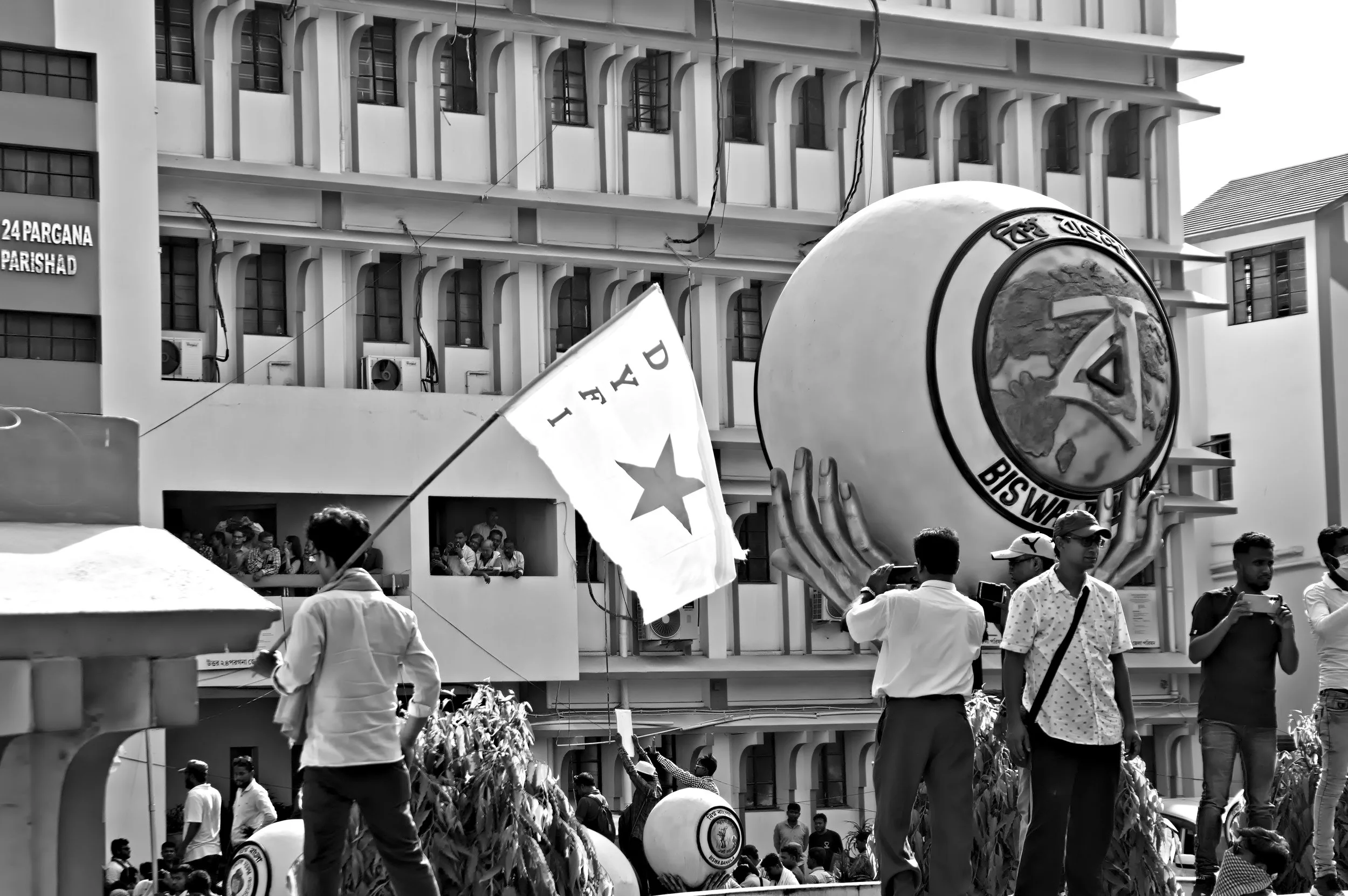
Protest March for Justice against corruption in the state education system of West Bengal, India. May 2023.

by Debguru Chatterjee

People of Bengal are becoming more concerned centring the extreme corruption and mayhem in the state education system. Besides inaptly administering the school education system, the government here is accused of taking bribes to appoint teachers bypassing the merit list of teacher selection exams. For two years, teachers who passed eligibility tests and enlisted in the official panel but did not get posted, are demonstrating in the streets of Kolkata (the capital of Bengal province). Failed examinees who bribed ministers and officers for getting appointments as school teachers are losing their jobs by the ruling of the high court. Ongoing CBI enquiry regarding this scam has not much yield except a few arrests and freezing accounts in doubt. So, civilians taking charge. They are gathering under the umbrella of leftist activist organizations and trying to pressurise the government to be righteous. Rallies and protest marches are being organized all over Bengal.


On 5th May this year, I was in Barasat (a district of Bengal). As I walked over a bridge, I found a rally conducted by the Democratic Youth Federation of India ascending it with flags, festoons banners and badges. I interacted with some activists in motion and came to know they are walking towards the district magistrate’s office to submit a memorandum demanding ‘arrest all thieves sitting in the government and put them into jail’; in Bengali language CHOR DHORO JAIL VORO. I had another affair to attend, also, I had my camera in my side bag. So I instantly captured a few shots of their protest march. While returning from Barasat I came to know from people’s gossip, the marching youths had a rude confrontation with police, barricades, tear gas shells. With much effort they achieved their goal of the day and at present they are surrounding the DM Office. Soon I walked towards the DM office and captured a few more shots of these activists. That was not much. Still I regret not having exquisite shots of their confrontation with police. But what I have captured is the spirit of a youth movement that presently is shaking the government of Bengal by its roots.  

 
View fullsize DSC_1744.jpg
View fullsize 5 th May, this year. Democratic youths of Bengal (a state of India), arranged an rally to demand justice against a huge corruption in the state school service commission..jpeg
View fullsize DSC_1713.jpg
View fullsize DSC_1739.jpg
 
 
Debguru Chatterjee
Monday 05.29.23
Posted by Progressive-Street
 

The Cry of the People

by Neta Dekel

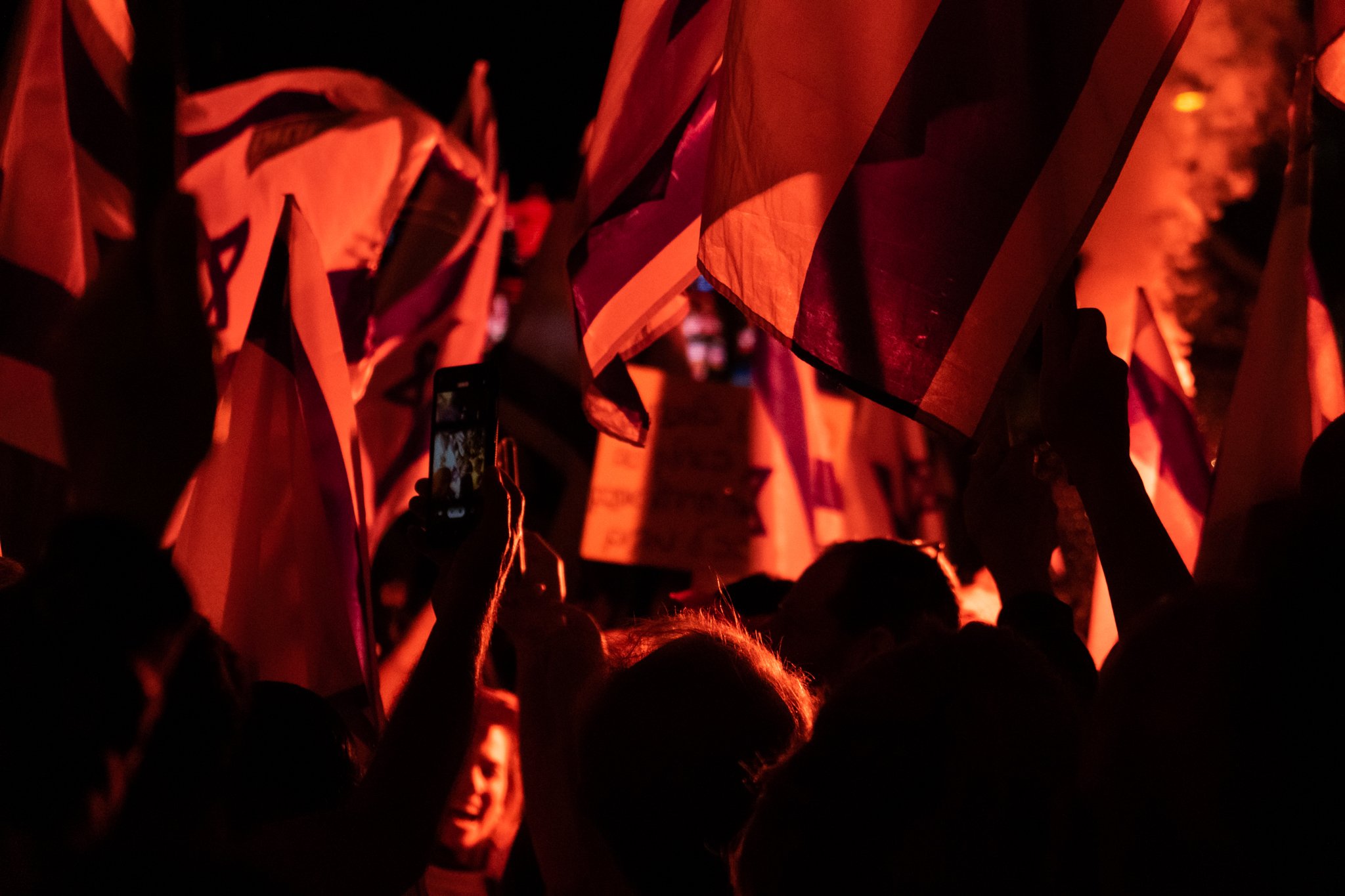
The cry of the people rises from the streets with an intensity not heard before in Israel. Hundreds of thousands of worried and frightened people are fighting for their future and the future of their children.

The people of Israel are sizzling and raging. Tens and hundreds of thousands go out to the streets every week and demonstrate against the government, against the regime coup, against the unilateral and unjust steps and laws. We are worried about the future of the Democracy of Israel.

These demonstrations are mass, loud. Everyone is shouting, drumming, beeping, and playing trumpets. The demonstrators use everything they can to express their turbulent feelings. The cry and creativity burst out of anger, fear, and frustration. This is a historical period in the making, which will be taught in civics and history classes.

When I decided to accompany and document the demonstrations, I thought about how to bring about a certain aspect of the demonstration. You can take pictures of signs or people; you can take pictures from above or general photographs. But walking inside the demonstration, mingling with the crowd – one thing stands out. There is a lot of noise.

How do you express feelings and sounds through still photography? A picture is a freeze of a moment, without sound, without smell. Just light.

So how do you capture sound? Voice photography was my challenge, beyond other photographic challenges. The demonstrations were held in the evening, in the absence of natural light. Most of the crown were waving flags, which were a contributing factor to the atmosphere but also disturbing and concealing. There was a very large crowd, and the crowd was constantly moving and moving. That is, the environment was unstable and certainly not controlled.

The method I chose was to constantly walk in crowds, which wasn't easy considering how crowded it was. Look for the interesting people, the special moments in which they express their feelings.

Photograph from eye level the moment when the voice is heard. Mouth wide open with a scream coming out of the heart, hoping it will be heard on the other side. The moment when you can hear the voice is the decisive moment.

This is a long project that requires perseverance. It is possible that from every exit to the demonstration, I will return with one or two pictures. Hopefully a little more. There will always be failures. A great picture, out of focus, the background getting in the way, or even a situation I couldn't approach from the right direction.

In my opinion, the pictures presented here express the appropriate moment. The moment when the emotion is expressed powerfully, loudly.

View fullsize Neta_Cry_of_the_People_02.jpg
View fullsize Neta_Cry_of_the_People_06.jpg
View fullsize Neta_Cry_of_the_People_07.jpg
View fullsize Neta_Cry_of_the_People_08.jpg
View fullsize Neta_Cry_of_the_People_10.jpg
View fullsize Neta_Cry_of_the_People_14.jpg
View fullsize Neta_Cry_of_the_People_11.jpg
View fullsize Neta_Cry_of_the_People_05.jpg
View fullsize Neta_Cry_of_the_People_01.jpg
View fullsize Neta_Cry_of_the_People_04.jpg
View fullsize Neta_Cry_of_the_People_09.jpg
View fullsize Neta_Cry_of_the_People_03.jpg
 
 
Neta Dekel
Thursday 05.25.23
Posted by Progressive-Street
 

Stand Up To Racism Scotland Erskine Rally

by Cameron Scott

In early 2023 around 200 asylum seekers were housed in the Muthu Hotel, Erskine, which lies a short drive west of Glasgow. Since then, every Sunday has seen a demonstration held outside the hotel by the right-wing fascist group Patriotic Alternative, who have also engaged in a campaign of disinformation targeting local residents where the asylum seekers were generally painted as thieves and rapists. This was countered by a weekly demonstration made up of various left-wing groups forming an anti-racism alliance. Both groups were kept apart by police, and exchanges were verbal rather than physical. On 20th April, the date of Hitlers birthday, Patriotic Alternative fractured and a new group called Homeland was launched, which was described as “a distillation” of the former’s “most dangerous elements into something harder, more serious and better organised”. Members of this new group continued to protest each Sunday outside the hotel, still countered by the anti-racism alliance.

On Sunday 21st May, Stand Up To Racism Scotland and the Scottish Trades Unions Congress held a joint rally in the grounds of the hotel in a show of solidarity and as a means of unification between both the hotel and the local residents. Over 400 supporters attended and came from as far afield as Dundee and Edinburgh. Speakers included union leaders, various faith leaders and refugee rights activists, and there was also a delegation of local residents from Erskine. These speeches were an education for me. In an era where there is so much negative rhetoric and misinformation from both the UK government and the mainstream media, it was good to hear the real details of the plight that asylum seekers endure today, especially at the hands of the UK immigration system. Rather than rapists and thieves, we have doctors, engineers and many others who could make a valuable contribution to any society.

The highlight of the day for the organisers was the fact that for the first time since the demonstrations started none of the fascists appeared, which meant that the large police presence could be stood down, leaving the activists and many of the asylum seekers who had joined the audience to end the event chatting and enjoying the delights of the largest barbeque I have ever seen.  

View fullsize CScott_ErskineSTUR004.JPG
View fullsize CScott_ErskineSTUR003.JPG
View fullsize CScott_ErskineSTUR007.JPG
View fullsize CScott_ErskineSTUR008.JPG
View fullsize CScott_ErskineSTUR006.JPG
View fullsize CScott_ErskineSTUR001.JPG
 
Cameron Scott
Monday 05.22.23
Posted by Progressive-Street
 

Demonstrations for the democracy in Israel

Yoav Loeff

A small selection of photographs from the last demonstrations in Israel. Work in progress

Tel Aviv, May 2 - 2023

View fullsize Yoav Loeff_TLV_6523_2 copia.jpg
View fullsize Yoav Loeff_TLV_6.5.23_1 copia.jpg

Jerusalem, April 29 - 2023

View fullsize Yoav Loeff_JLM_29.4.23_1 copia.jpg
View fullsize Yoav Loeff_JLM_29.4.23_2 copia.jpg
 
 
Yoav Loeff
 
Tuesday 05.09.23
Posted by Progressive-Street
 

Scottish Independence March Glasgow 6th May 2023

by Cameron Scott

Following the death of England’s Queen Elizabeth I in 1603, and in the absence of any direct heirs, her cousin King James VI of Scotland ascended the English throne to become James I of England. Both countries continued as separate states who shared a monarchy for just over the next hundred years, until the Acts of Union of 1706 and 1707 unified both parliaments, thus forming the United Kingdom of Great Britain. In this case ‘Great’ actually means large, the lesser Britain being Brittany in France.

Fast forward to the 21st century and the union still exists, although the issue of home rule for Scotland has remained ever present since that unification three hundred years ago and has gained ground in the last half century. This came to a head in 2014 when a referendum was held in Scotland over whether it should be an independent country. The No campaign won the day with 55% of the vote. Many thought that this would settle the matter, however the result saw a change at the top of Scottish politics, with incumbent First Minister and Scottish National Party (SNP) leader Alex Salmond standing down to make way for his then protégé Nicola Surgeon. Both very capable politicians, Ms Sturgeon went on to build on the popularity of the SNP in Scotland, who continued to dominate political representation in both the Scottish and UK governments, indeed at one point support for independence reached 55% in many polls. The campaigning and result of that referendum saw independence supporters adopt the word Yes as an identifier, although Indy is still also used. It also caused divisions within some friends and family circles that to this day haven’t healed.

In February 2023, to everyone’s surprise including seasoned political journalists and commentators, Ms Sturgeon announced her resignation, an event which sent shock waves through the political classes, and indeed for many heralded the start of a decline in the independence movement. Her reasons were explained, but the more likely real reason became clear weeks later when her husband and former chief executive of the SNP was arrested by police investigating irregularities in party finances, an investigation that is ongoing.

From a photographer’s perspective, I had made some previous attempts at starting a documentary project on the independence movement, not through personal beliefs or preferences, but because it represented an important part of the fabric of life in Scotland. However, the marches and rallies that I covered were very poorly attended and I struggled to build the necessary archive of images, so eventually abandoned it. The main reason for the poor attendance seemed to be division within the movement itself. Social and other online media sources made clear that many independence supporters felt that the SNP were not moving fast enough, and indeed were not truly representative of the movement itself.

On Saturday May 6th 2023 an umbrella organisation for the independence movement called All Under One Banner held a march in Glasgow. This coincided with the coronation of King Charles III in London, an event which largely passed unheralded in Scotland. Once again social and other online media sources suggested that this march was becoming more than just another independence publicity gathering, this was the chance to show that the movement was alive and well with the various factions involved finally coming together in unity, despite the SNP’s current woes following Ms Sturgeon’s resignation. Also, for the first time, I noticed republican sentiments creeping into the mix, something that was never really prevalent before.

So, while the Coronation spectacle was kicking off in London, I was desperately defending my vantage point on the bridge above Glasgow’s Charing Cross as the crowd of media and supporters grew around me. Eventually the police vehicles in the distance gave way to a sea of Scottish Saltire flags and the sound of bagpipes. As the march drew closer it became clear that this was a big one, the organisers might actually have got the ten thousand that were on the procession planning application. A few shots from above then it was time to join said procession as it made its way through the city to Glasgow Green on the opposite side from the start at Kelvingrove. Photographing the marchers was the usual exhilarating experience, although on this occasion the procession was just too big to cover all of it, so I worked the area relatively near the front, only catching the stragglers as they finally made their way down through Saltmarket, about half an hour after the leading pipers had passed the guard of honour formed by the Yes Bikers on the entrance to Glasgow Green.

In Scotland we have our own legal and judicial system and in addition matters such as transport, health, social welfare and taxation are devolved to the government in Edinburgh. Therefore, the appalling Public Order Act that was recently passed by the UK government does not apply here. This law negates the right to peaceful protest and allowed the Metropolitan Police in London to arrest leading republican activists before any peaceful protest had taken place during the Coronation of Charles III, as a preventative measure. Meanwhile, in Glasgow the city centre streets resounded to repeated choruses of ‘You Can Stick Your Coronation Up Your Arse’. A tale of two cities indeed.  

 
View fullsize CScott_Glasgow_Indy_March_003.JPG
View fullsize CScott_Glasgow_Indy_March_004.JPG
View fullsize CScott_Glasgow_Indy_March_005.JPG
View fullsize CScott_Glasgow_Indy_March_006.JPG
View fullsize CScott_Glasgow_Indy_March_007.JPG
View fullsize CScott_Glasgow_Indy_March_008.JPG
View fullsize CScott_Glasgow_Indy_March_009.JPG
View fullsize CScott_Glasgow_Indy_March_010.JPG
View fullsize CScott_Glasgow_Indy_March_011.JPG
View fullsize CScott_Glasgow_Indy_March_012.JPG
View fullsize CScott_Glasgow_Indy_March_017.JPG
View fullsize CScott_Glasgow_Indy_March_019.JPG
View fullsize CScott_Glasgow_Indy_March_020.JPG
View fullsize CScott_Glasgow_Indy_March_018.JPG

Monday 05.08.23
Posted by Progressive-Street
 

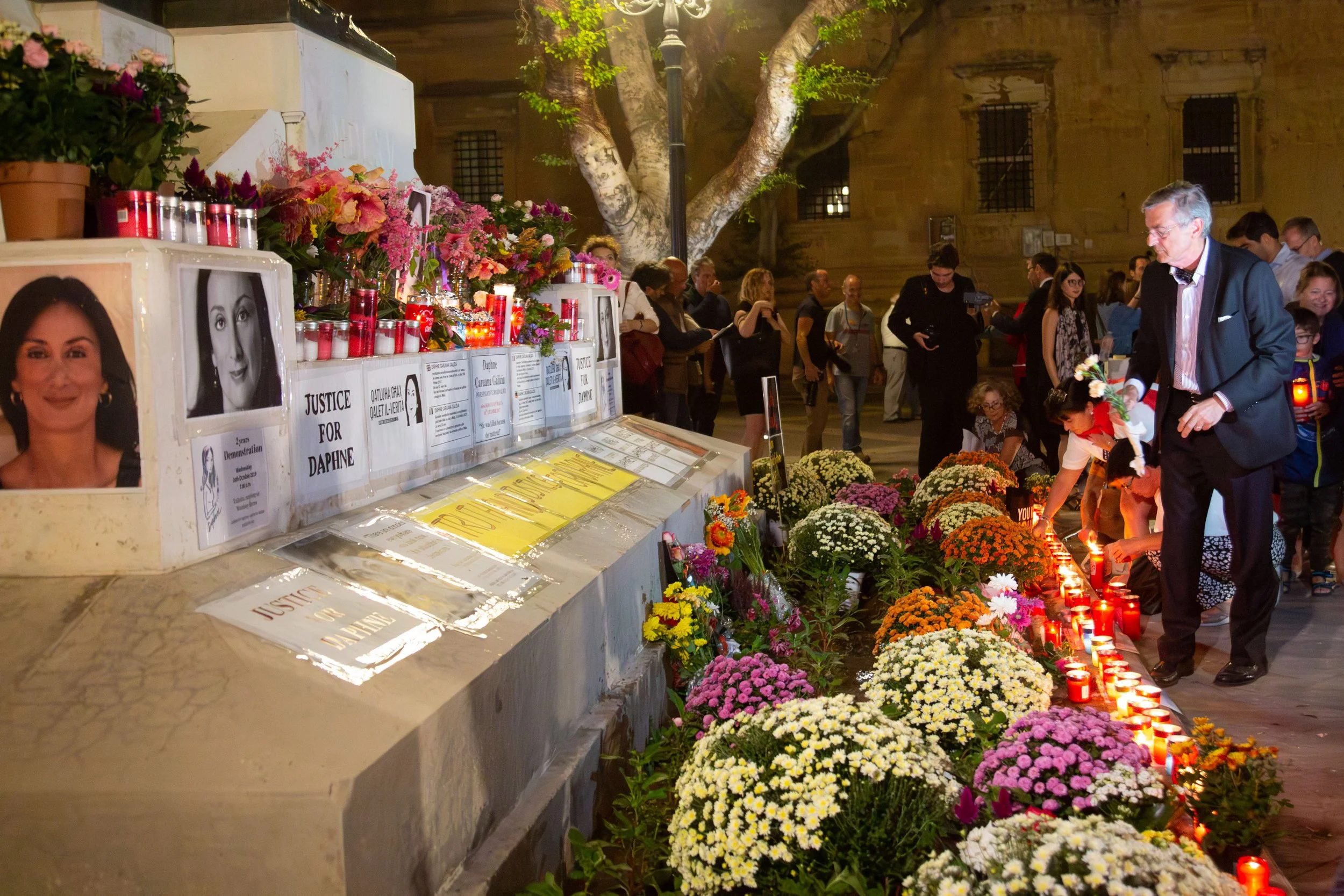
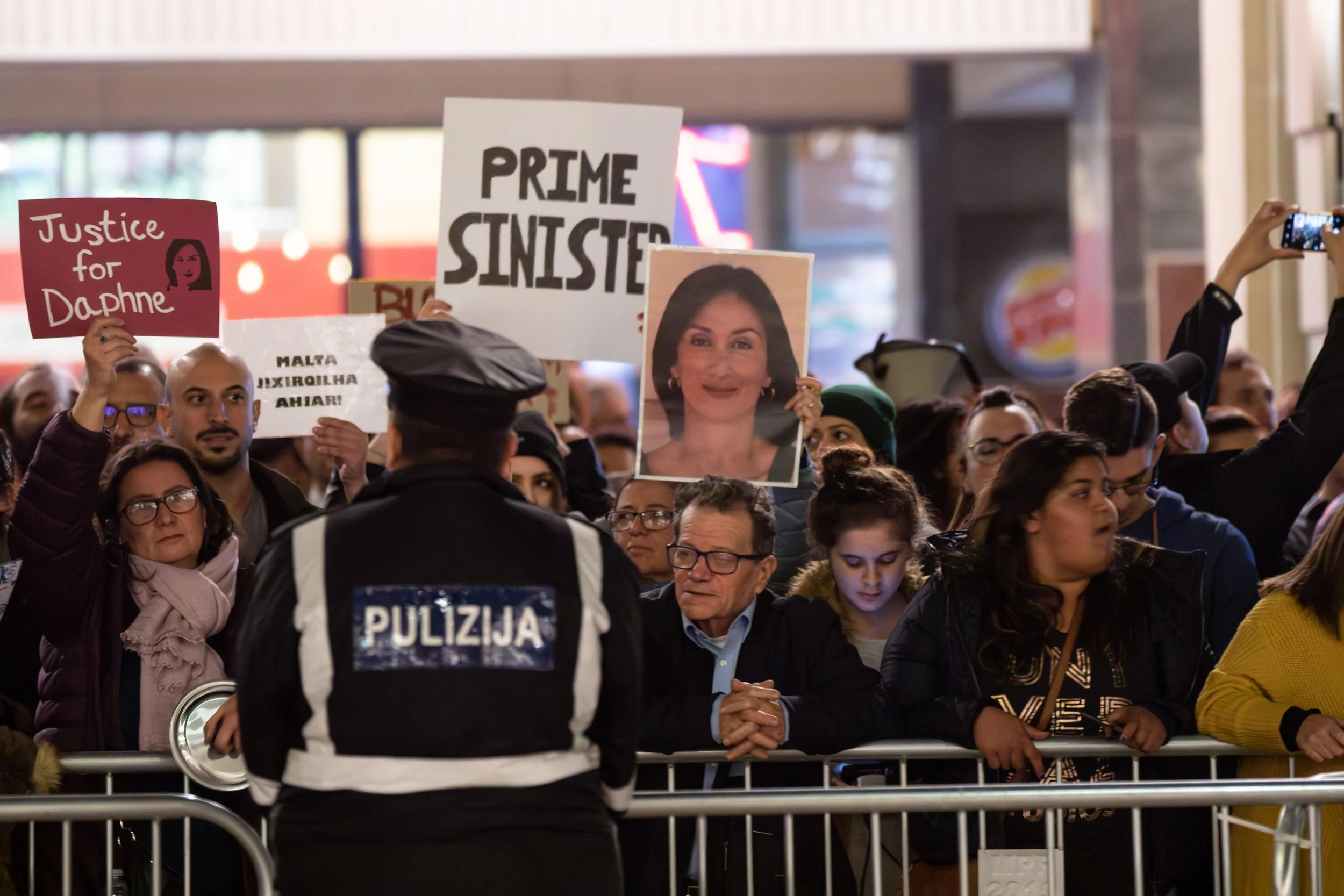
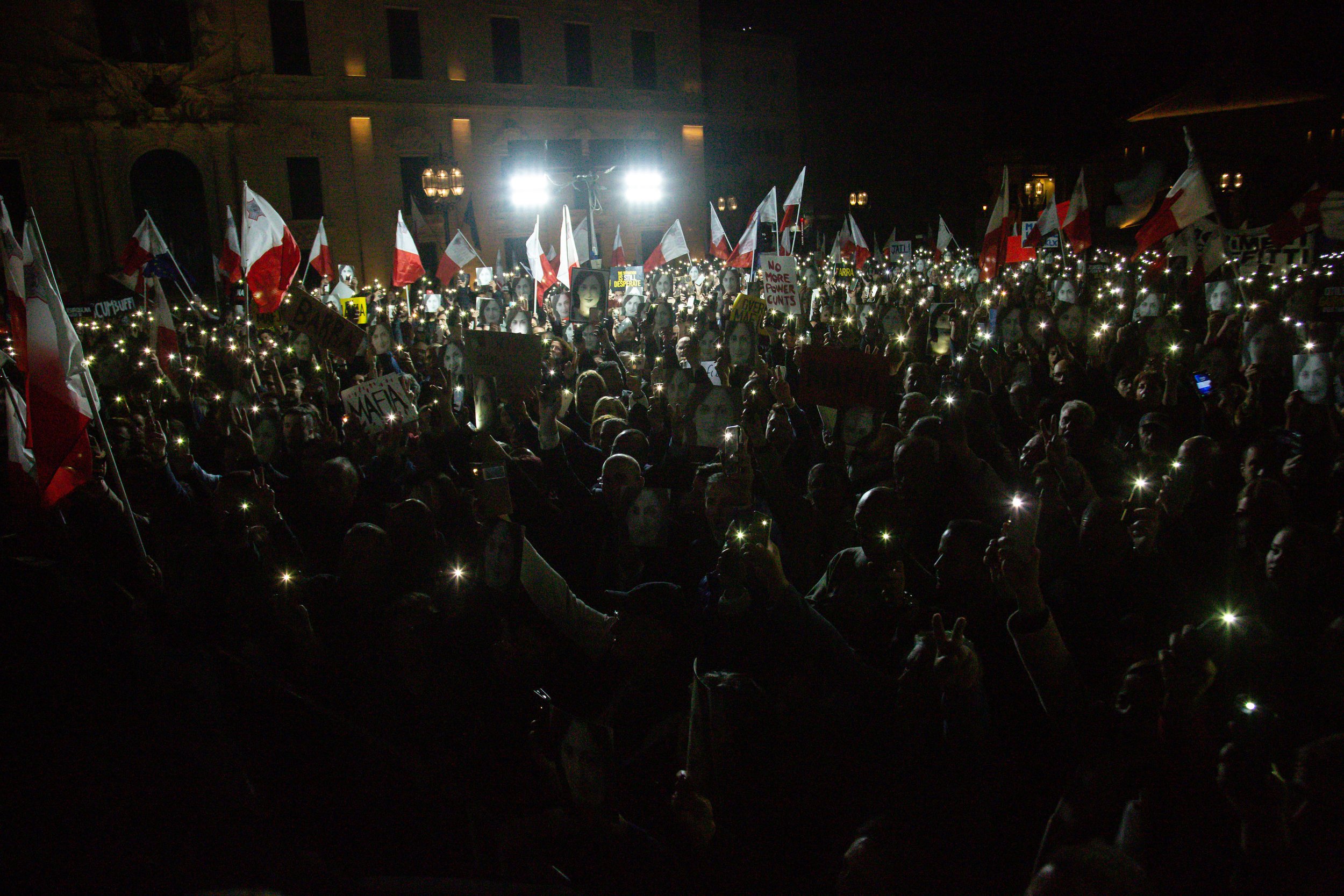
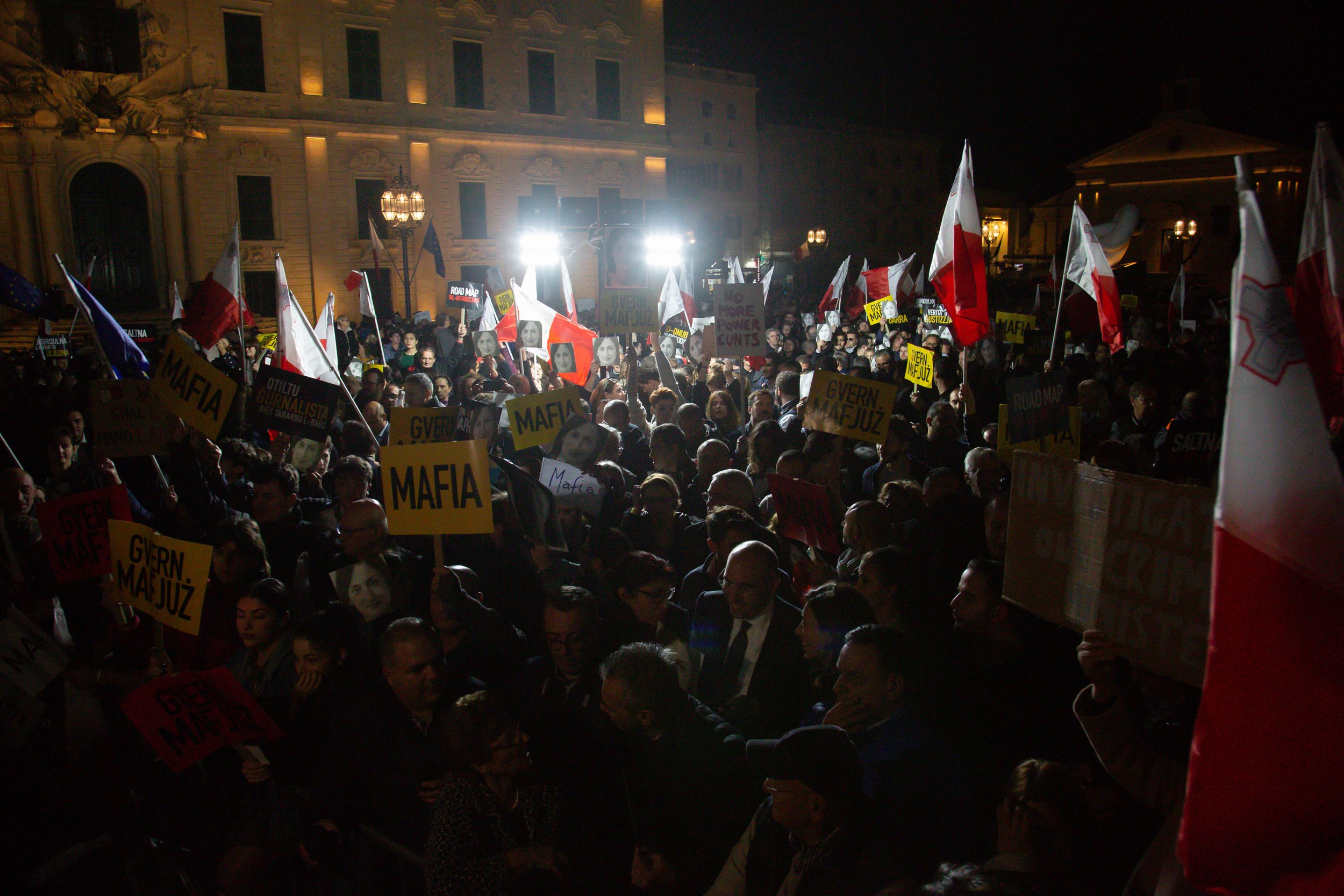
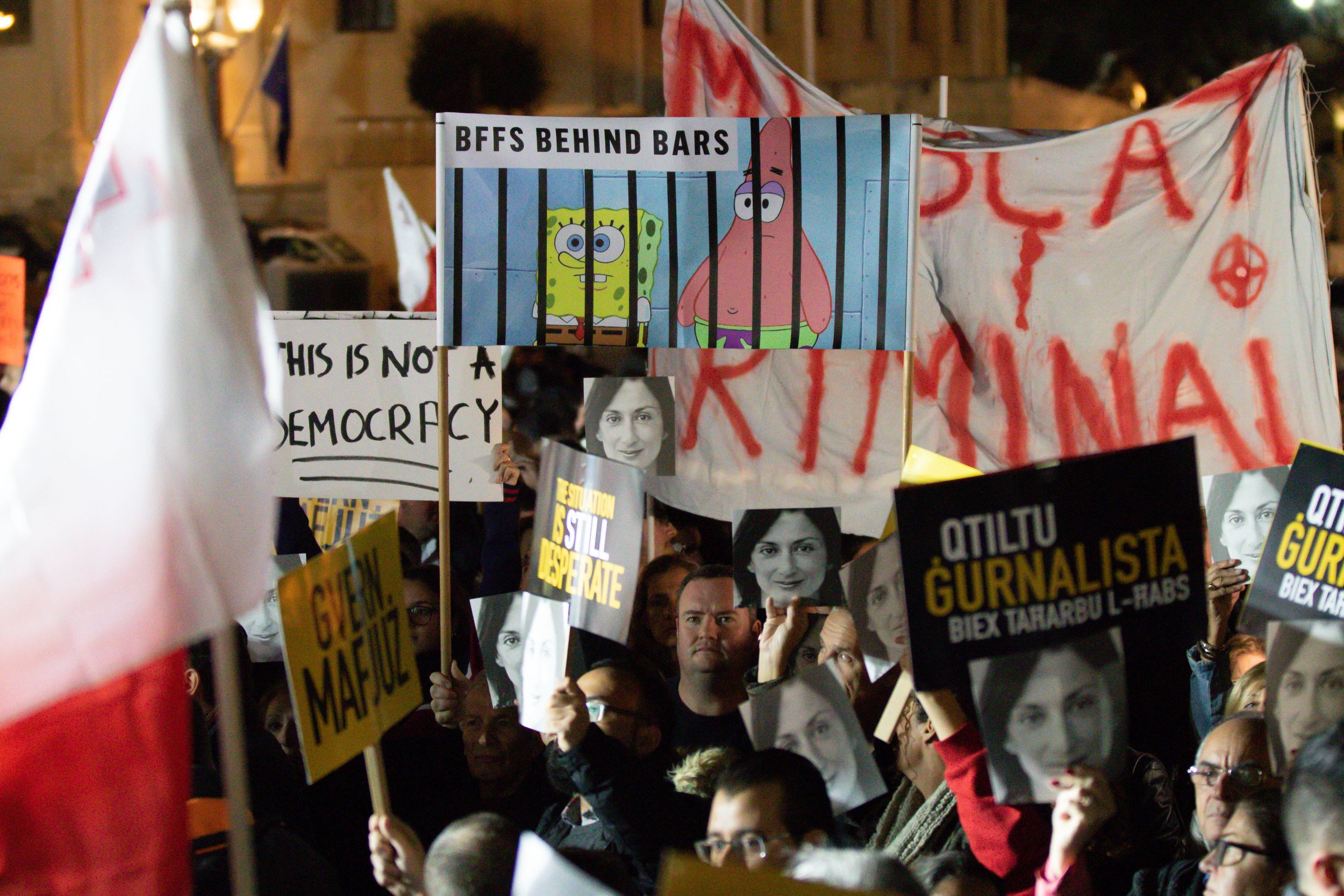
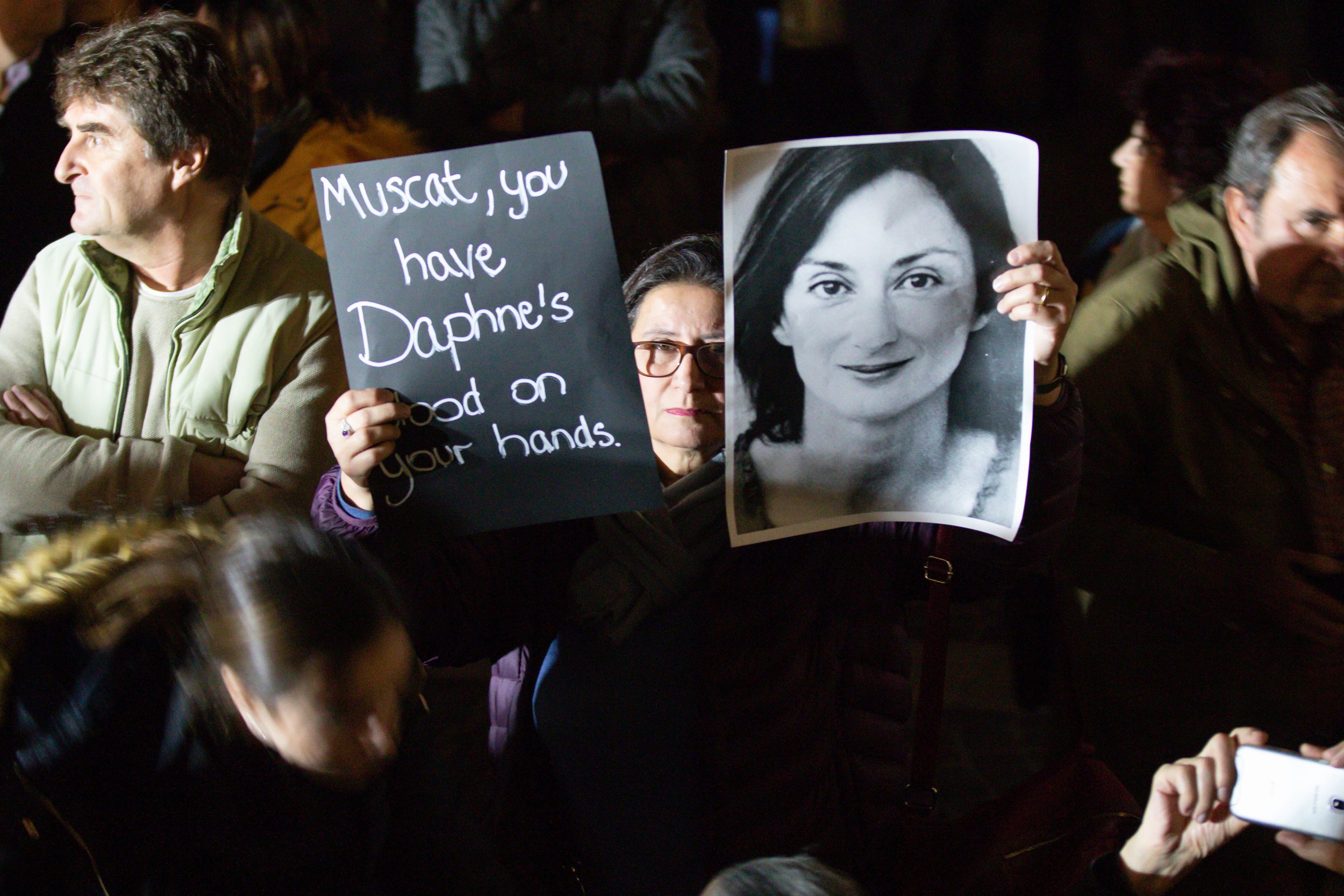
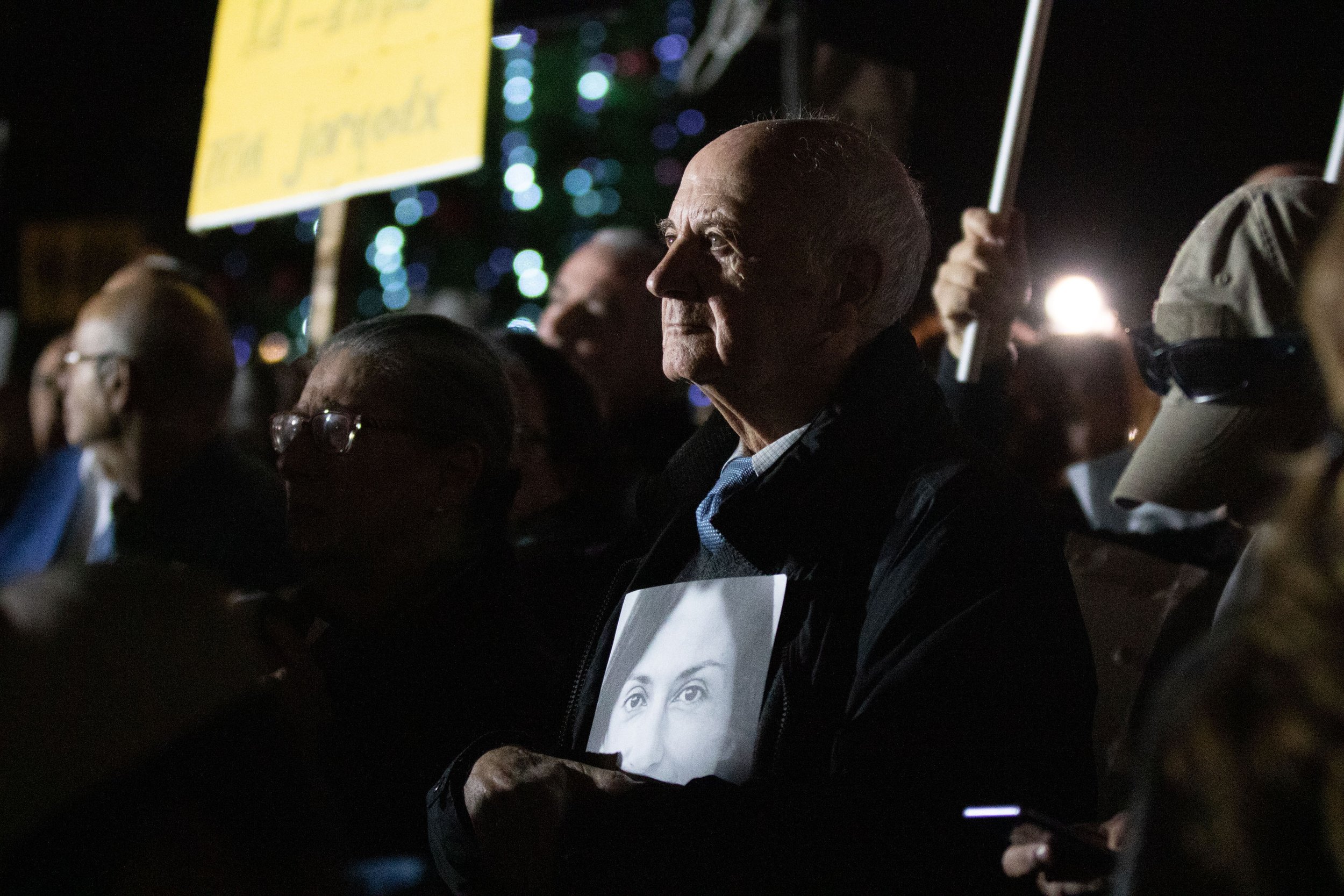
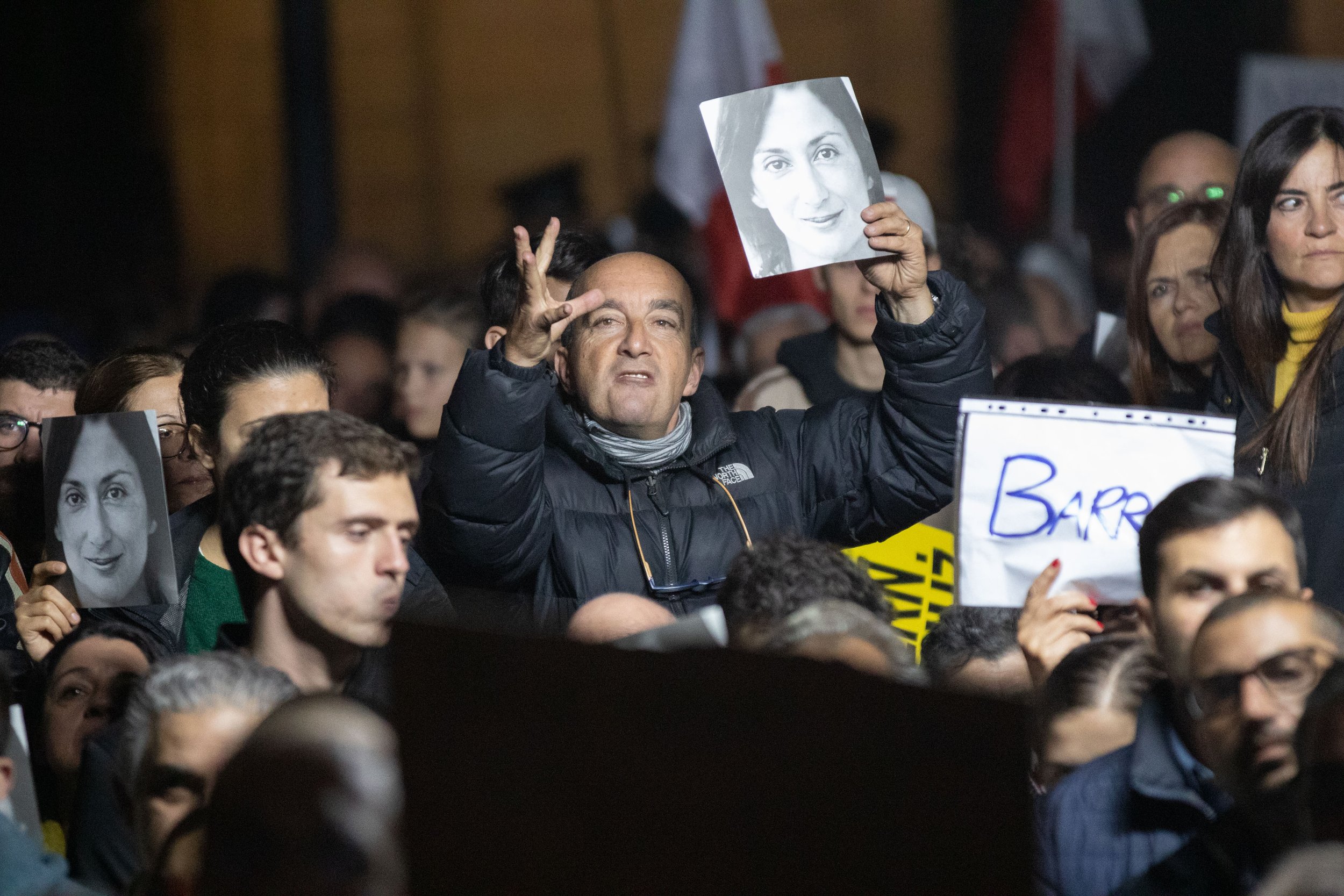
Murder of Journalist Daphne Caruana Galizia

by Martin Agius

The Car Bombed

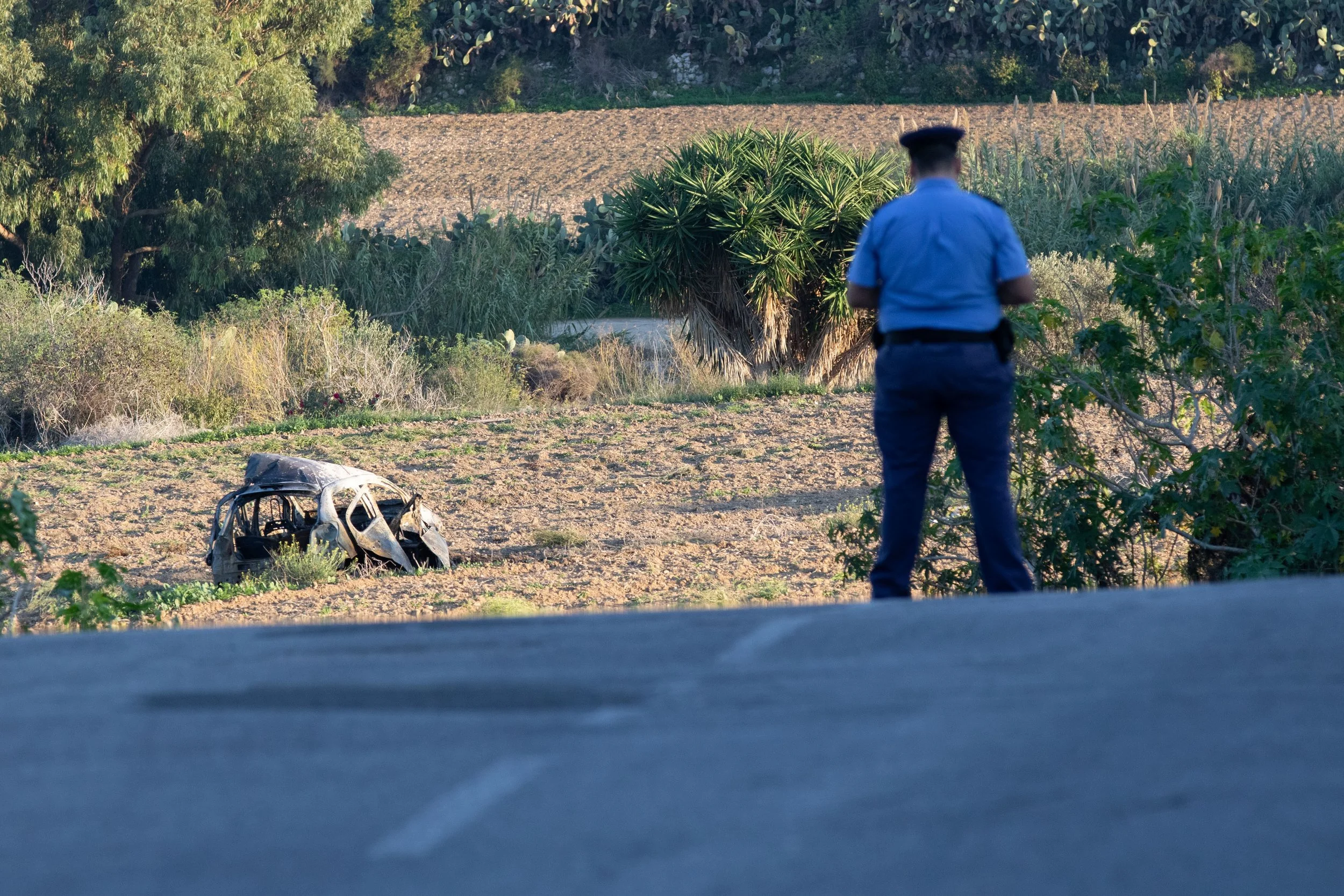
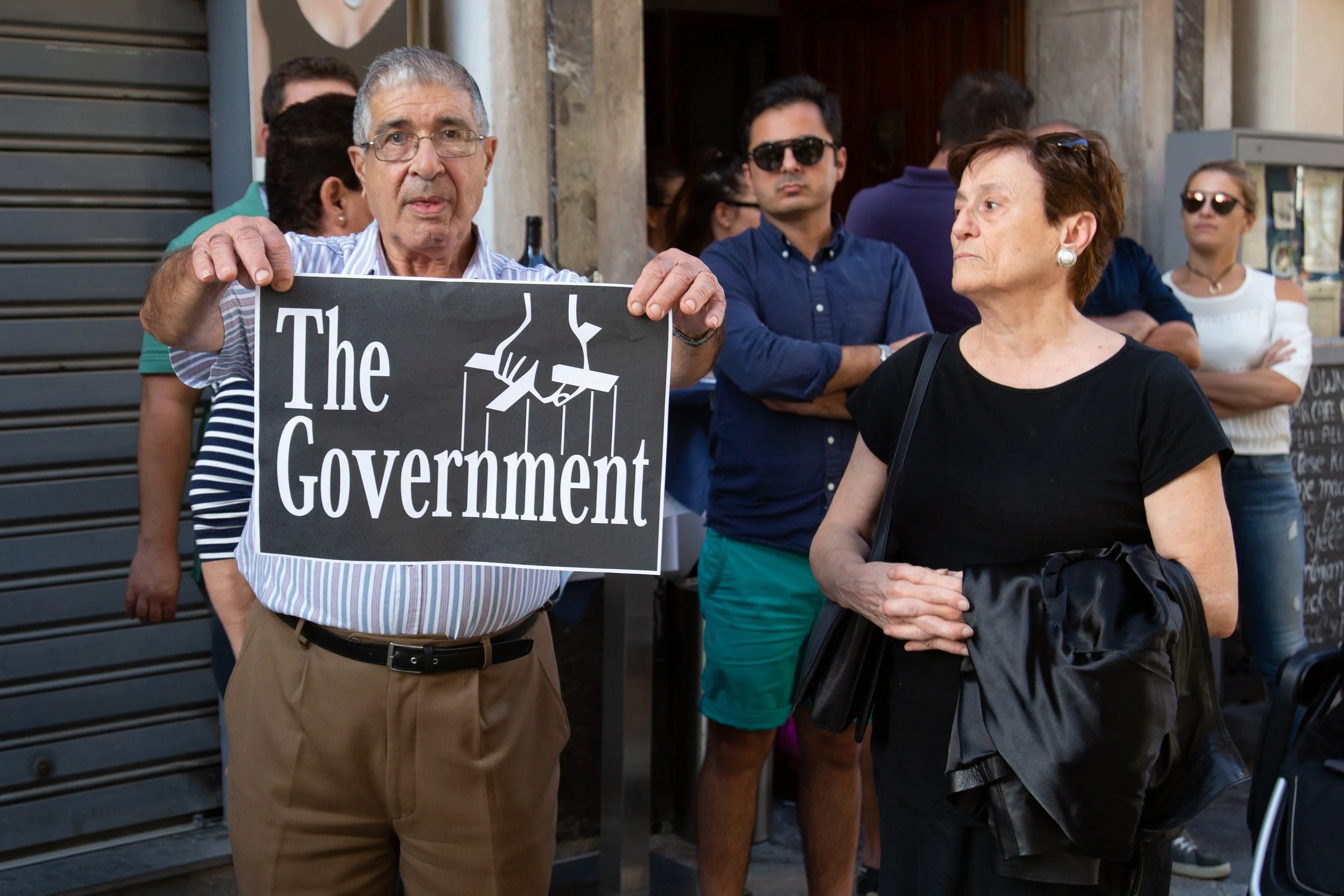
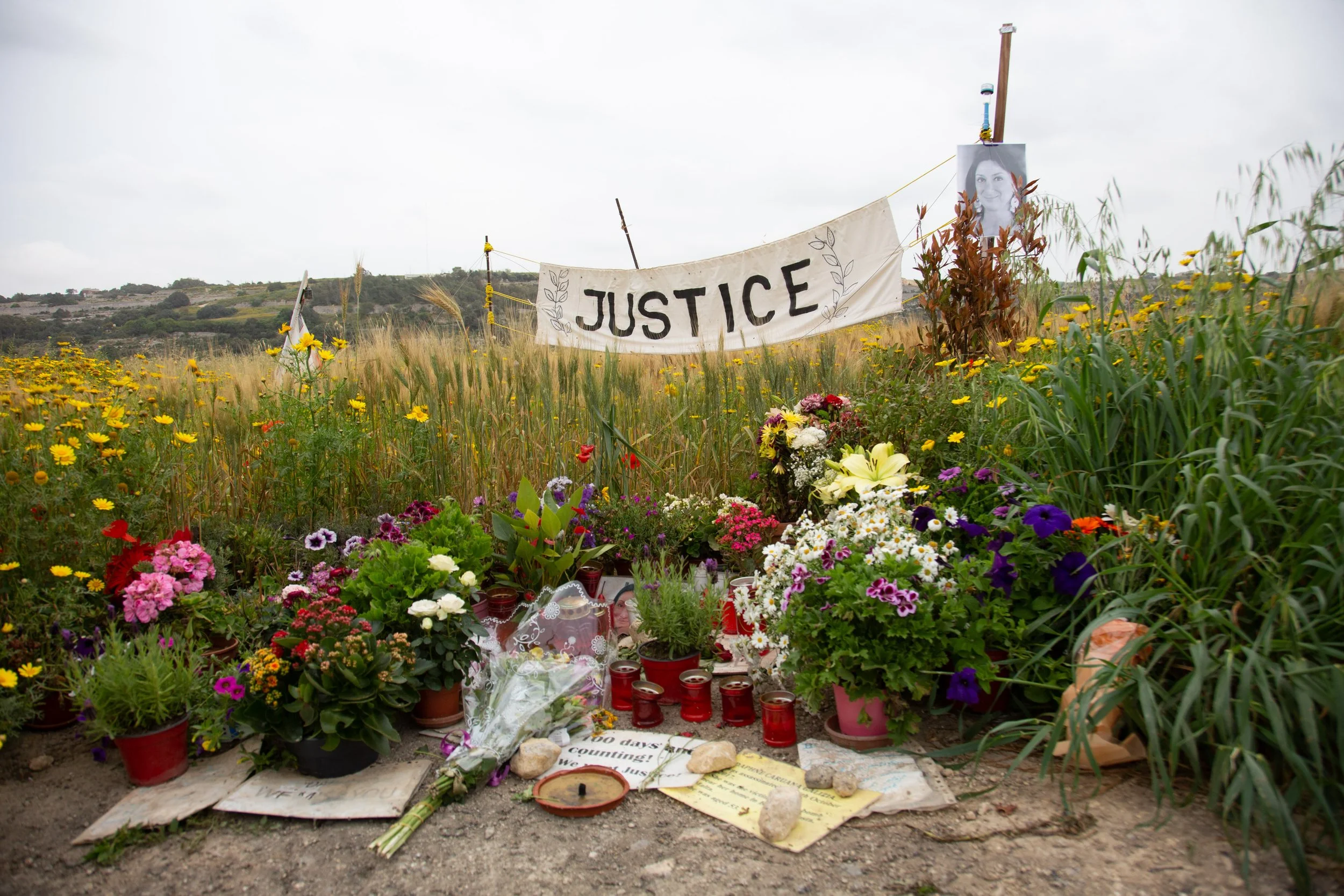
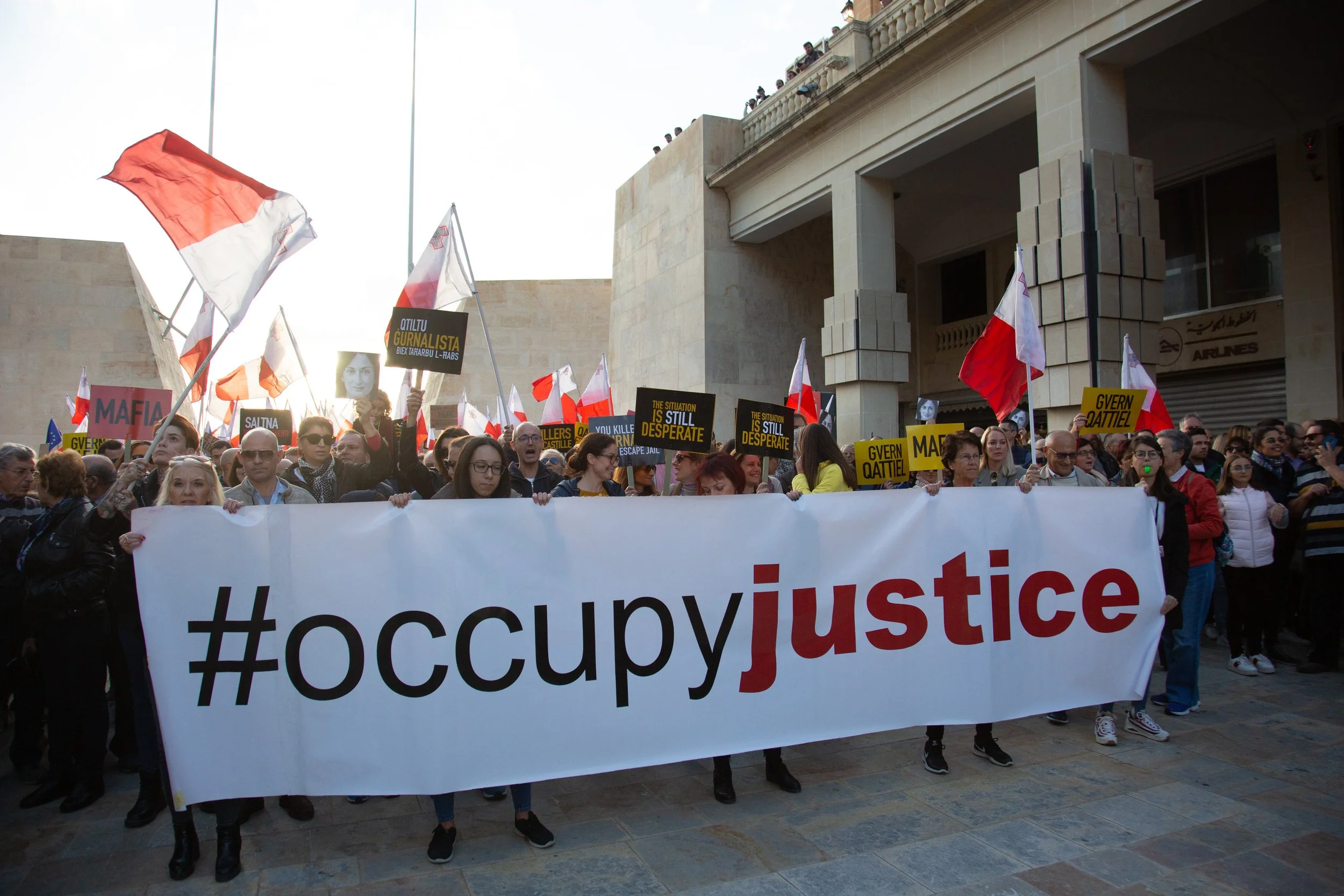
On October 16, 2017, a car bomb outside the home of Maltese investigative journalist and blogger Daphne Caruana Galizia in Bidnija, Malta, killed her. She covered political scandals and corruption in Malta, and her death stunned both the nation and the world.

As a result of Caruana Galizia's research, Malta's political elite, including the country's then-Prime Minister Joseph Muscat and his close circle, were involved in a number of high-level corruption scandals. She also focused on the financial services sector in Malta, which has a large economic impact on the nation.

Widespread indignation and demands for justice in Malta and other countries followed her death. In Malta, a public inquiry was started to look into the events leading up to her murder. Three men were detained and accused of killing her in 2019, but the trial has been plagued by delays and controversy.

Critics of the Maltese government and court system have charged that they were hesitant to address the systemic corruption and abuse of power that Caruana Galizia's reporting had shown, as well as the failure to adequately investigate and prosecute those guilty for the murder.

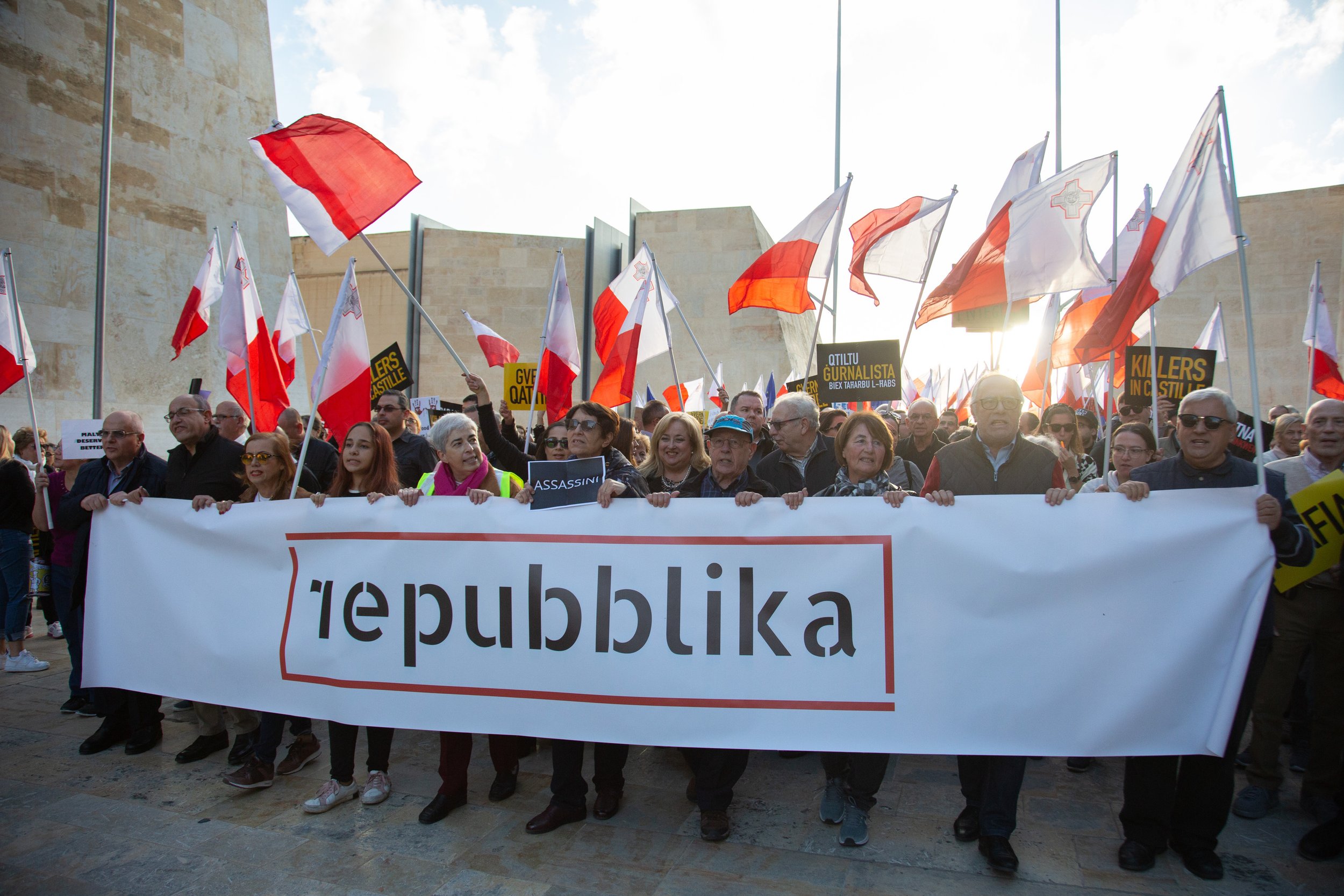
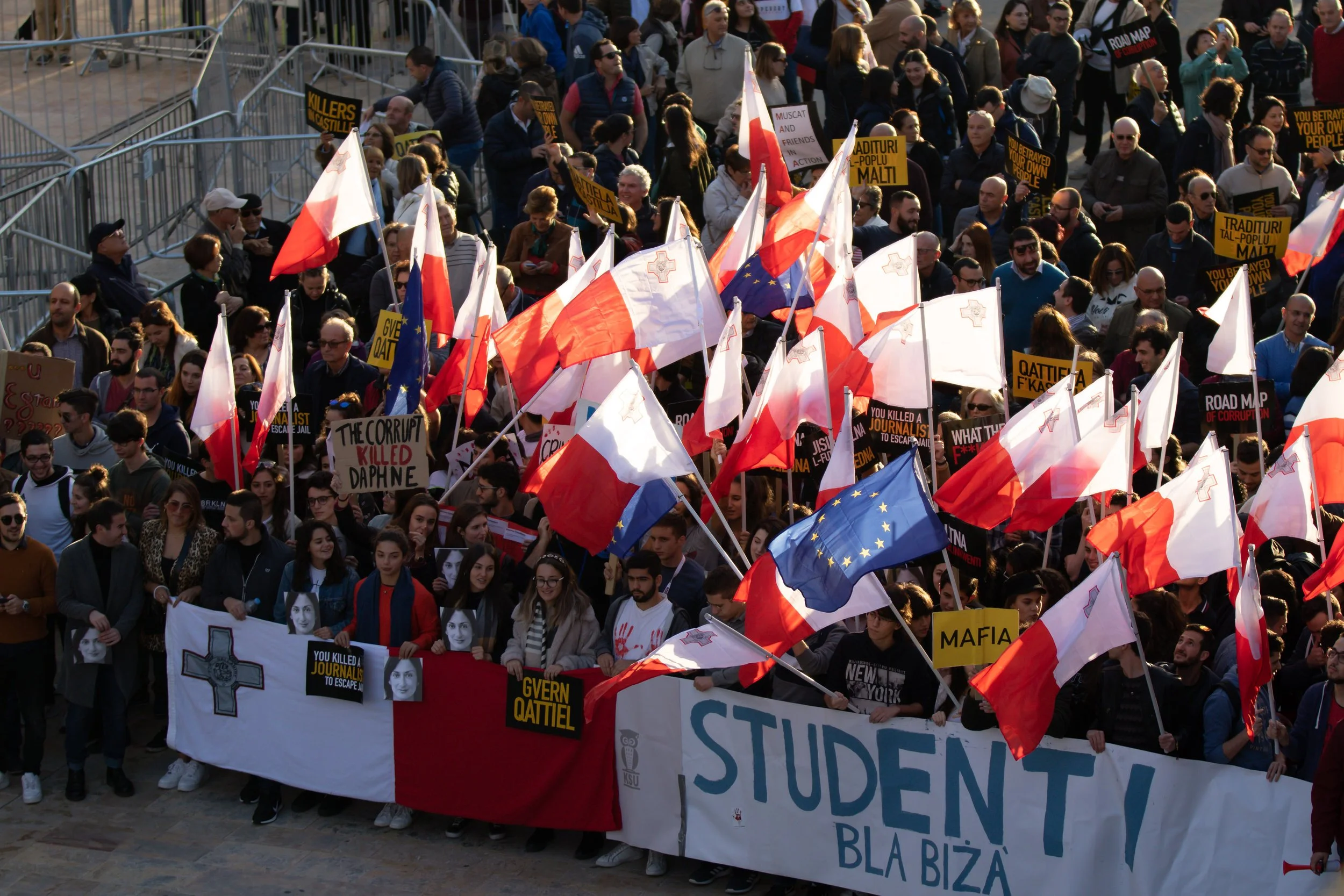
In Malta, there have been numerous protests both in the years since Daphne Caruana Galizia's murder and in response to the controversies surrounding her case. Following Caruana Galizia's murder, there has been a movement in Malta for greater accountability and transparency, and there has been pressure on the government to act to address the systemic corruption that plagues the nation.

To look into the events leading up to Caruana Galizia's murder and the efficiency of the police investigation into her death, a public inquiry that is independent of the government was started in Malta in 2019. The investigation's conclusions, which were released in July 2021, were extremely scathing of how the Maltese authorities handled the situation.

A wealthy businessman named Yorgen Fenech was detained in November 2019 in connection with the slaying of Daphne Caruana Galizia. He was also a former director of the Maltese energy firm Electrogas. Fenech was stopped as he tried to board his yacht and leave Malta; he was then accused of participating in the murder.

As of May 2023, Fenech's trial is still continuing on despite his denial of any participation in the crime. Prosecutors claimed during the trial that Fenech collaborated with the three individuals who are charged with committing the murder and gave them money and other benefits in exchange for their assistance.

Many people in Malta and beyond have paid close attention to the case against Fenech because they believe it could lead to a breakthrough in the homicide investigation of Caruana Galizia. Given his connections to some of the highest levels of Maltese politics and business, Fenech's arrest and subsequent charges were seen as a significant development in the case.

It should be noted that Fenech's trial is still ongoing, and he has not yet been found guilty of any crimes connected to the murder. Daphne Caruana Galizia's murder is still a hotly debated topic in Malta, and her legacy as a daring investigative journalist and anti-corruption advocate continues to serve as an example to people all over the world.

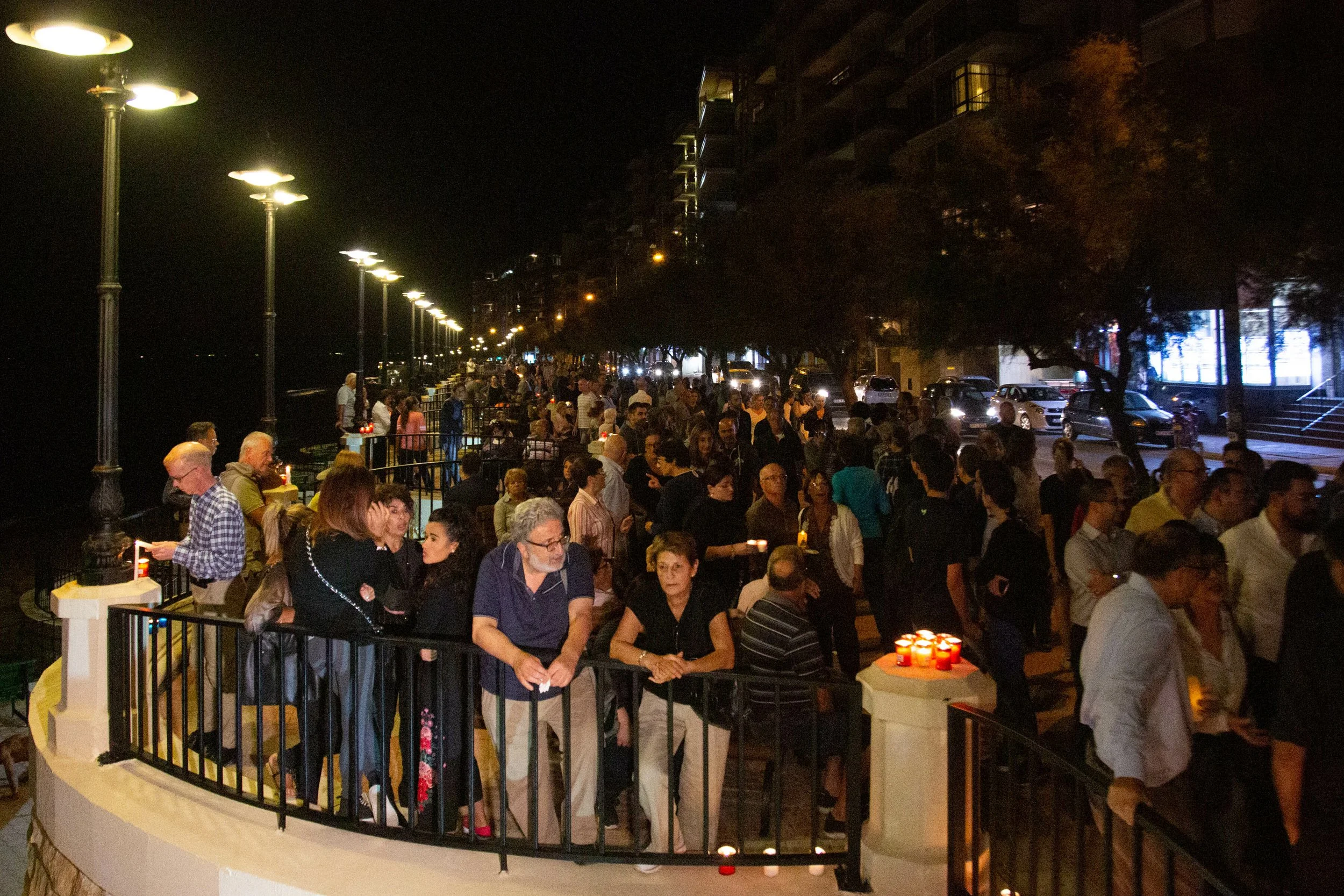
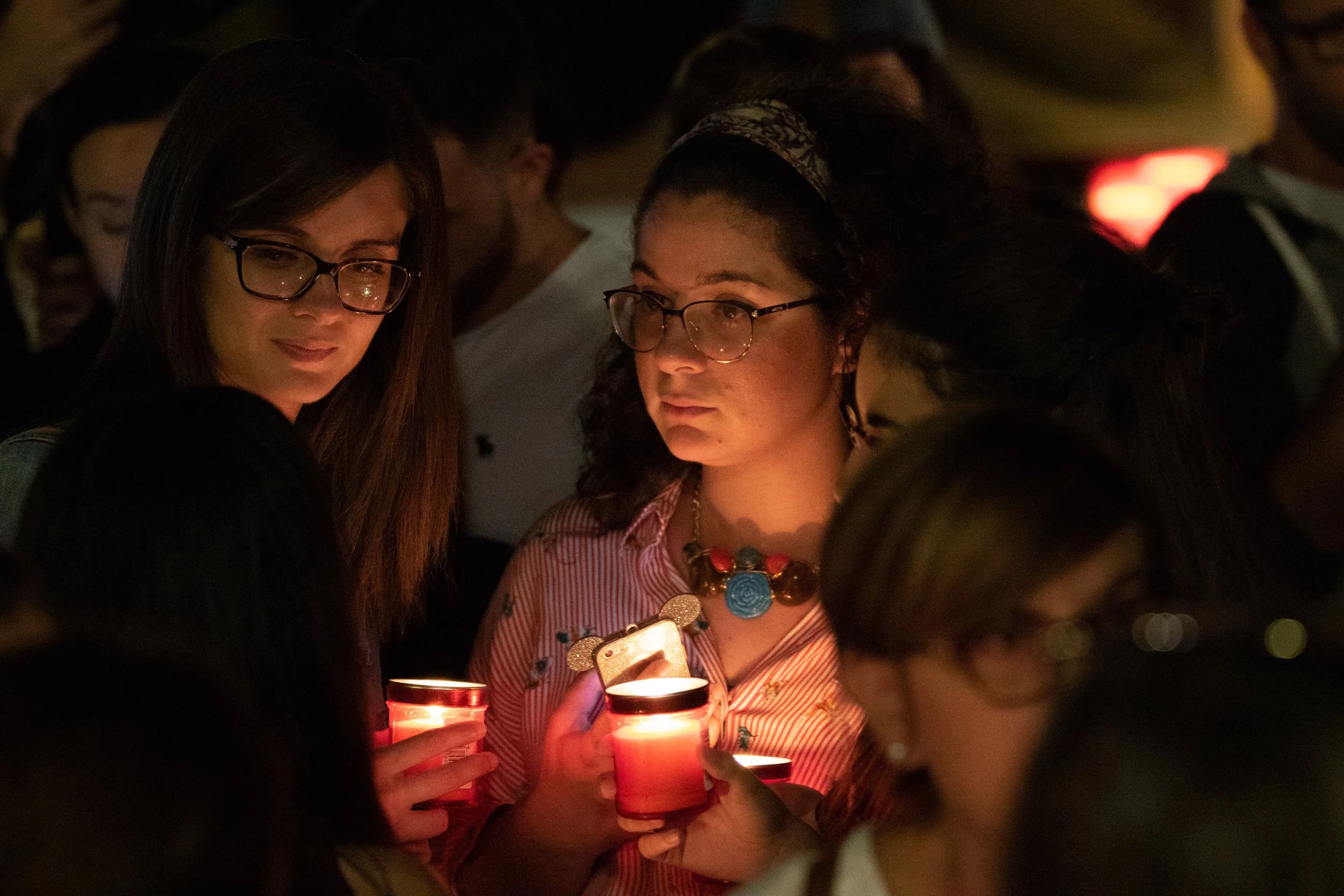
View fullsize 16 October 2017 Vigil from Sliema to St Julians
16 October 2017 Vigil from Sliema to St Julians
View fullsize 03_-_16_Oct_17_-_DCG_Vigil_from_Sliema_to_St_Julians.jpg
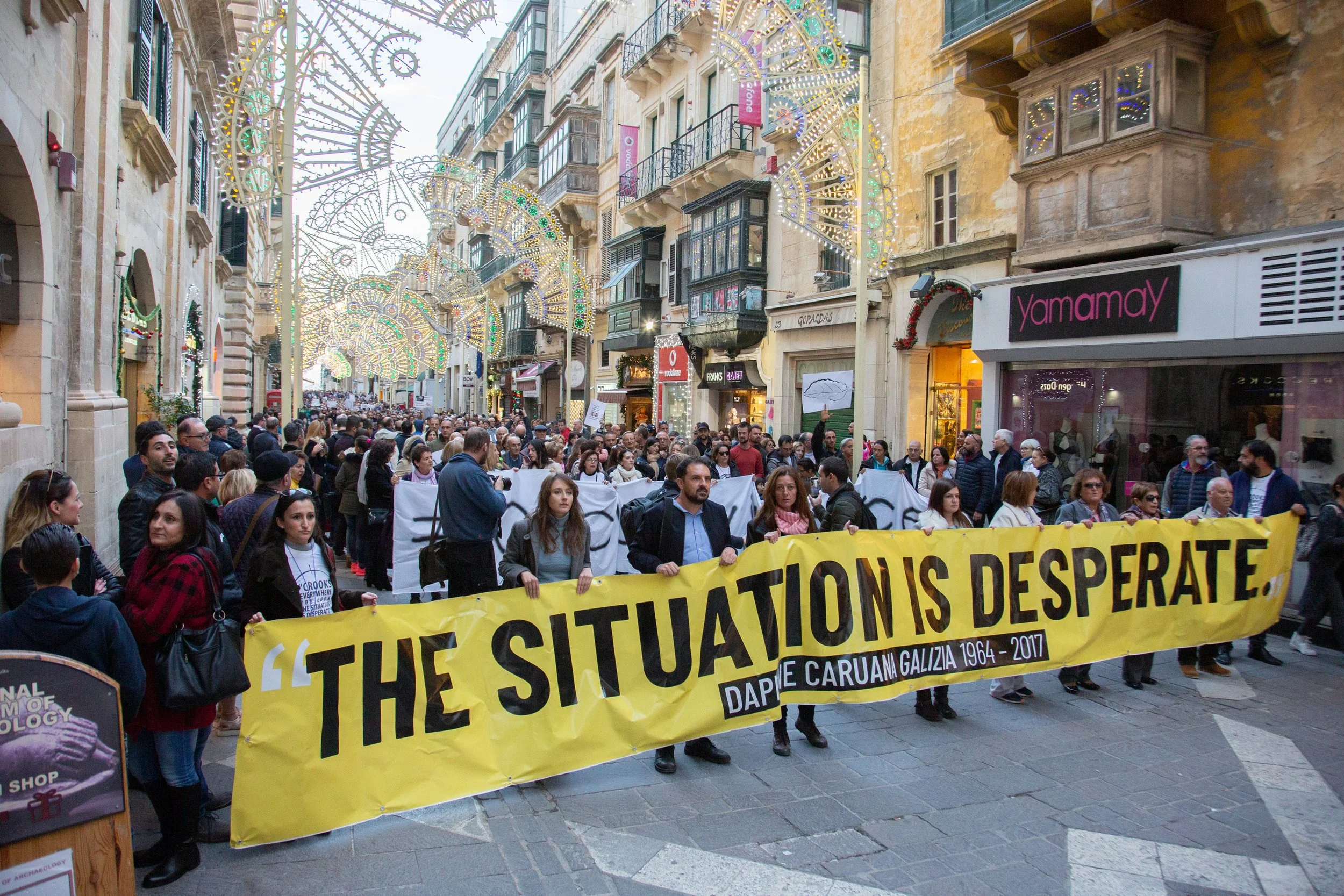
View fullsize 22 October 2017-National Protest Valletta
22 October 2017-National Protest Valletta
View fullsize 05_-_22_Oct_17_-_National_Protest_Valletta_Police_Commissioenr_Banner.jpg
View fullsize 06_-_22_Oct_17_-_National_Protest_Valletta_-_Banner.jpg
View fullsize 07_-_22_Oct_17_-_National_Protest_Valletta_-_Banner.jpg
View fullsize 08_-_22_Oct_17_-_National_Protest_Valletta__People_Gathering_Walk.jpg
View fullsize 09_-_22_Oct_17_-_National_Protest_Valletta_-_Banner.jpg
View fullsize 10_-_22_Oct_17_-_National_Protest_Valletta_-_Banner.jpg
View fullsize 11_-_22_Oct_17_-_National_Protest_Valletta_-People_Gathering.jpg
View fullsize 12_-_22_Oct_17_-National_Protest_Valletta_-_Police_Commissioner_Banner_with_Courts_Gate.jpg
View fullsize 13_-_22_Oct_17_-_National_Protest_in_Front_of_Police_HQ_with_Police_Commissioner_Banenr.jpg
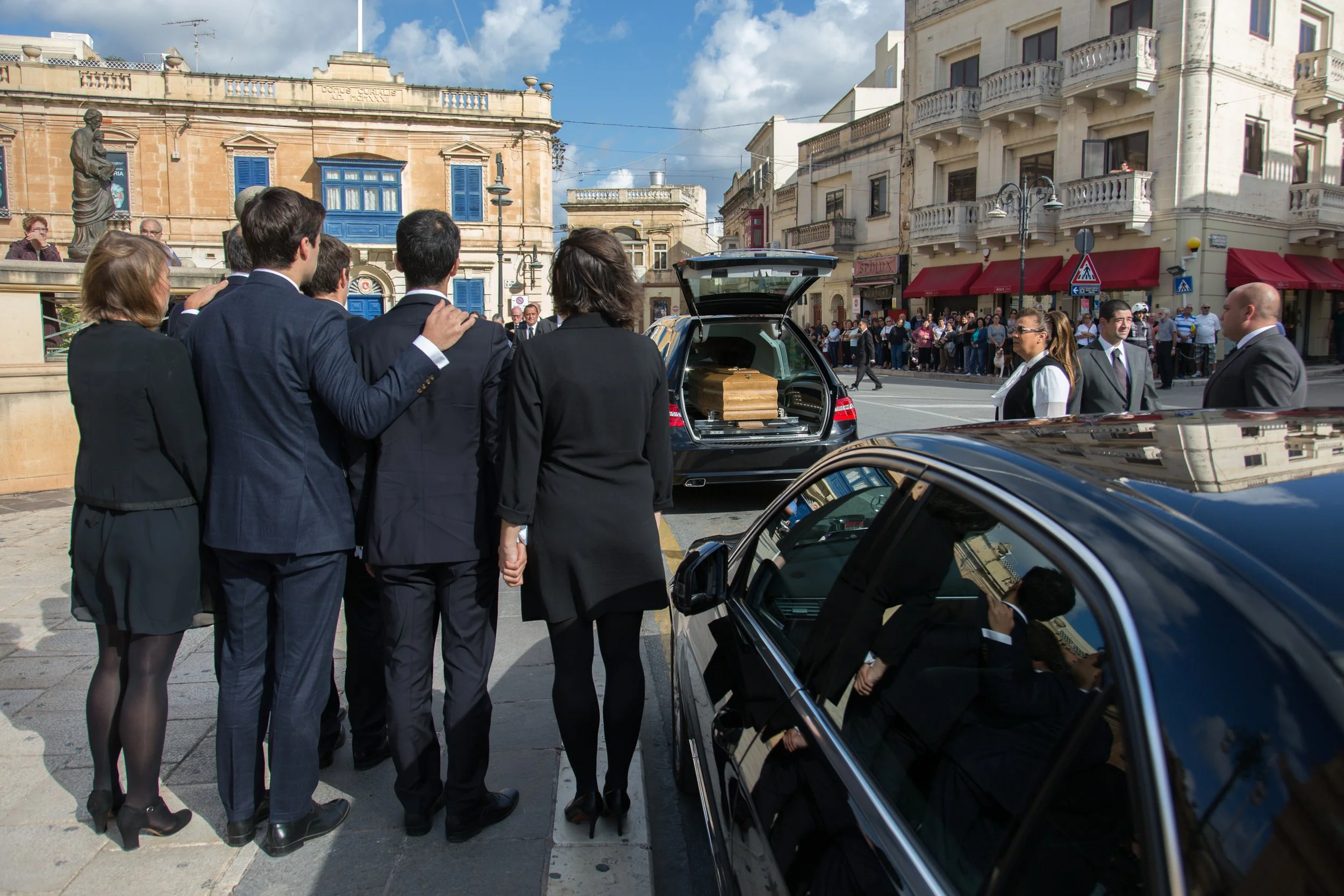
View fullsize 3 November  2017 - Funeral Daphne Caruana Galizia
3 November 2017 - Funeral Daphne Caruana Galizia
View fullsize 3 December 2017 - National Protest Valletta
3 December 2017 - National Protest Valletta
View fullsize 16_-_03_Dec_17_-_National_Protest_Valletta_-_Banner.jpg
View fullsize 18 April 2018 - Flowers On Site of DCG Murder
18 April 2018 - Flowers On Site of DCG Murder
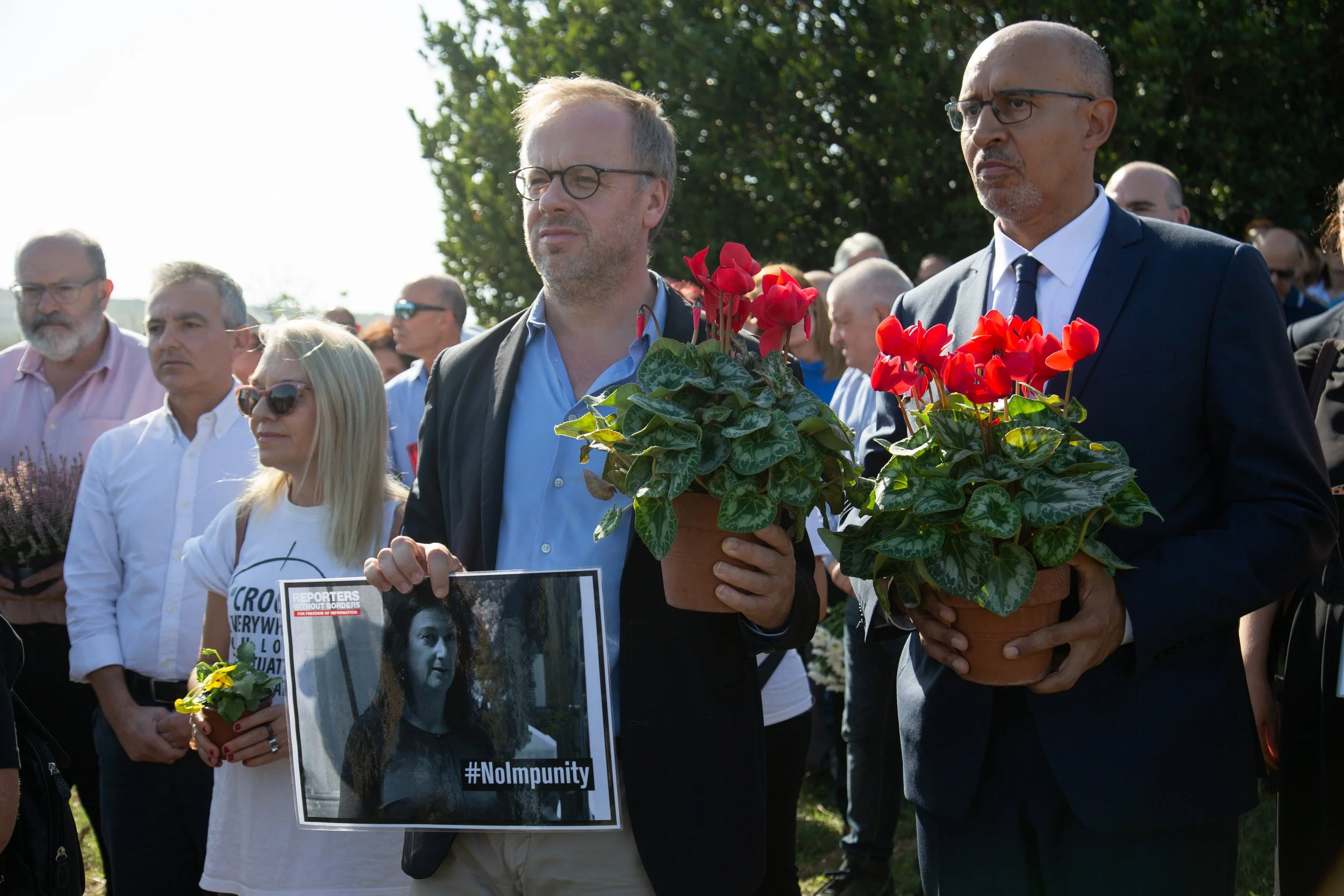
View fullsize 16 October 2019- Crowd Honours DCG at the Site of Murder
16 October 2019- Crowd Honours DCG at the Site of Murder
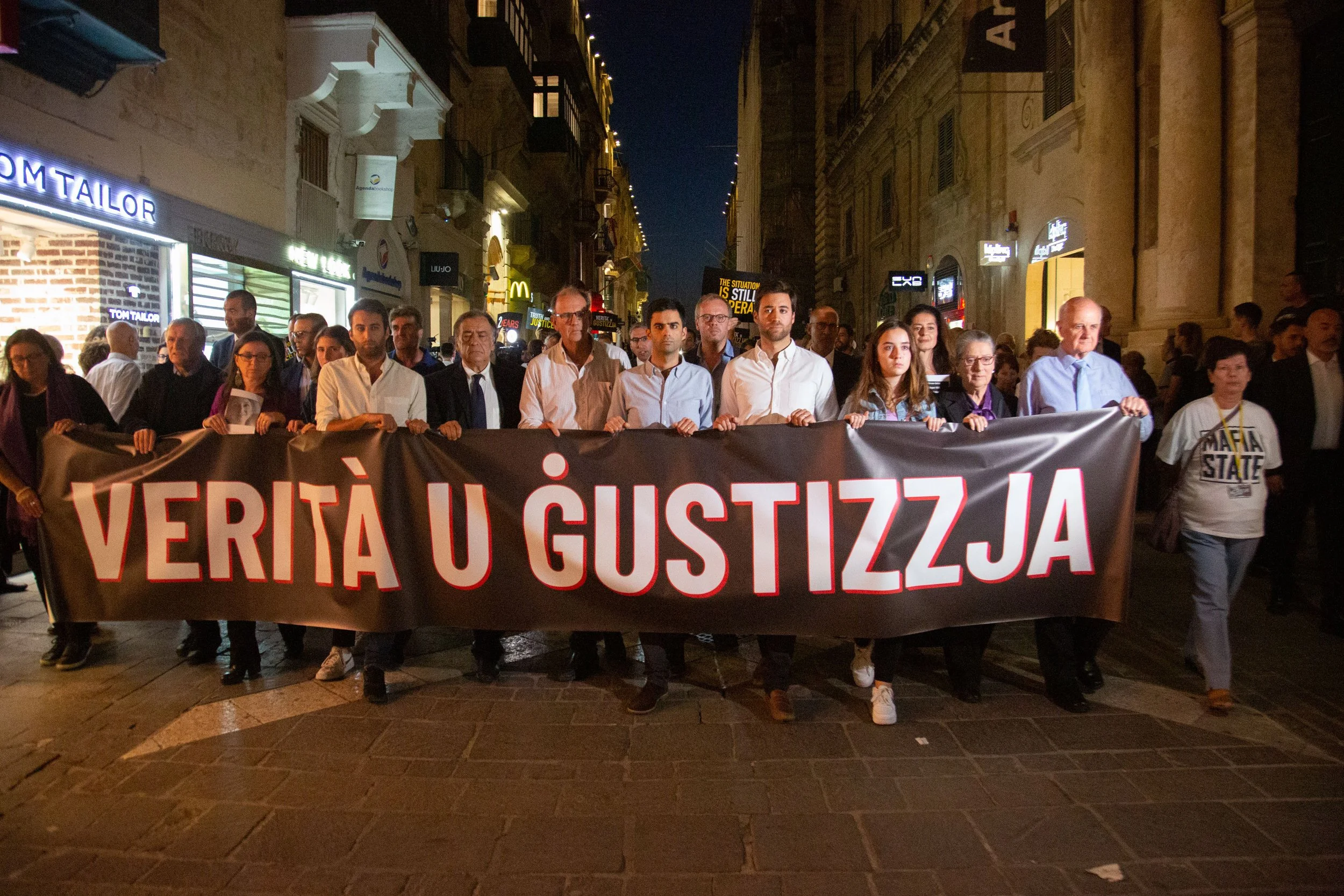
View fullsize 16 October 2019- Hundreds Gather in Valletta to Commemorat 2 Years Anniversary from DCG Murder
16 October 2019- Hundreds Gather in Valletta to Commemorat 2 Years Anniversary from DCG Murder

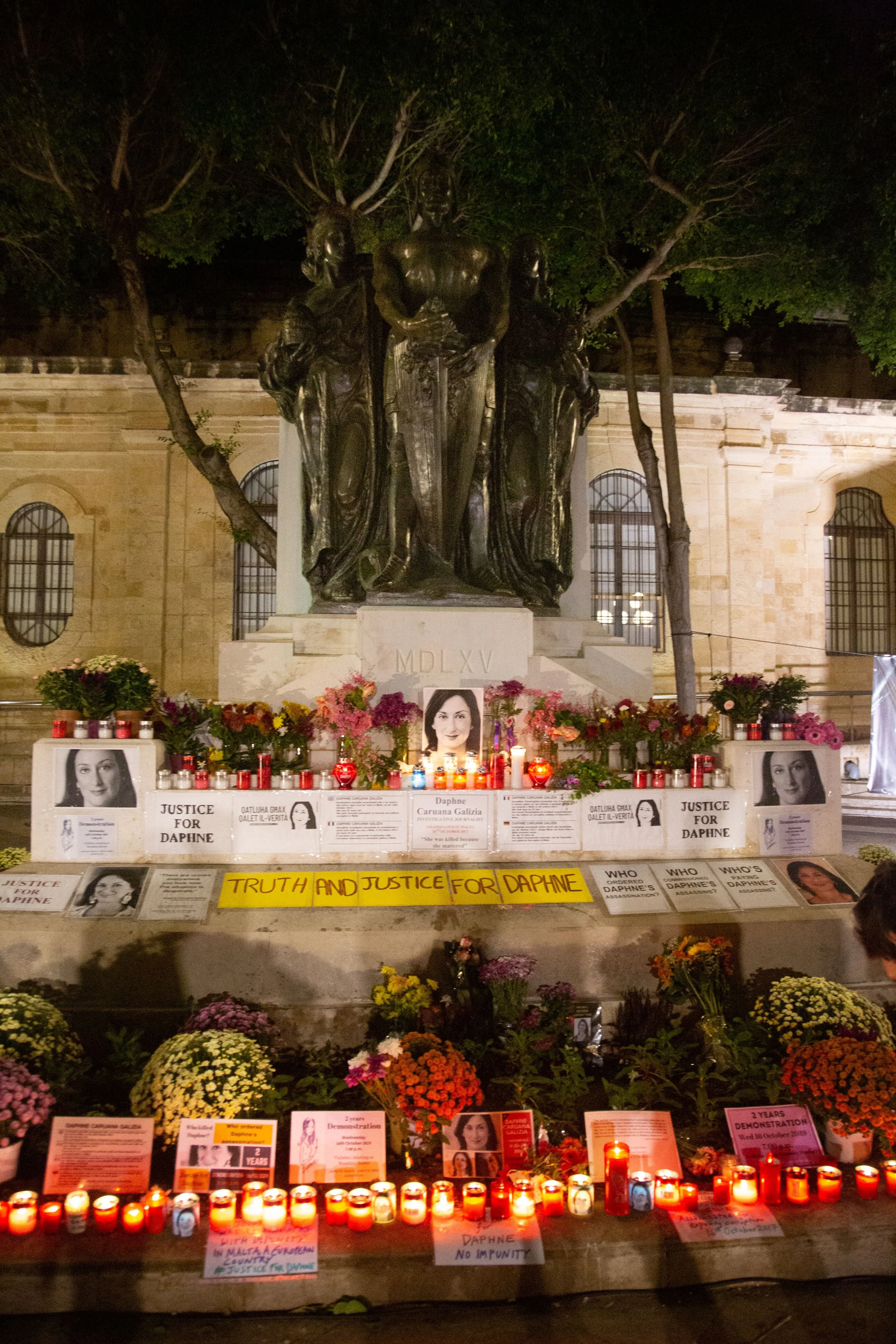
16 October 2019 - Flowers and Candles Placed On Great Siege Monument

View fullsize 21_-_16_Oct_19_-_Flowers_and_Candles_Placed_On_Great_Siege_Monument.jpg
View fullsize 16 October 2019 - Parents and 2 Sisters of DCG During 2 Year Anniversary Commemoration
View fullsize 27 November 2019 - Protesters Gather in Front of Parliament Calling for DCG Justice
27 November 2019 - Protesters Gather in Front of Parliament Calling for DCG Justice
View fullsize 29 November 2019- University Students Protes tfor DCG Justice  and Close a Major Busy Road in Msida
29 November 2019- University Students Protes tfor DCG Justice and Close a Major Busy Road in Msida
View fullsize 29 November 2019 - Yorgen Fenech After the Court Hearing
29 November 2019 - Yorgen Fenech After the Court Hearing
26 - 29 Nov 19 - Protestors Gather in Front of Castille the Prime Minister's Officer.jpg
27 - 29 Nov 19 - Protestors Gather in Front of Castille the Prime Minister's Officer.jpg
28 - 29 Nov 19 - Protestors Gather in Front of Castille the Prime Minister's Officer.jpg
29 - 29 Nov 19 - Protestors Gather in Front of Castille the Prime Minister's Officer.jpg
30 - 29 Nov 19 - Parents of DCG in Front of Castille the Prime Minister's Officer.jpg
31 - 29 Nov 19 - Protestors Gather in Front of Castille the Prime Minister's Officer.jpg
26 - 29 Nov 19 - Protestors Gather in Front of Castille the Prime Minister's Officer.jpg 27 - 29 Nov 19 - Protestors Gather in Front of Castille the Prime Minister's Officer.jpg 28 - 29 Nov 19 - Protestors Gather in Front of Castille the Prime Minister's Officer.jpg 29 - 29 Nov 19 - Protestors Gather in Front of Castille the Prime Minister's Officer.jpg 30 - 29 Nov 19 - Parents of DCG in Front of Castille the Prime Minister's Officer.jpg 31 - 29 Nov 19 - Protestors Gather in Front of Castille the Prime Minister's Officer.jpg

29 Nov 19 - Protestors Gather in Front of Castille the Prime Minister's Officer - Her mother and father with her portrait


View fullsize 32_-_01_Dec_19_-_Protesters_Gather_in_Valletta_Demanding_DCG_Justice.jpg
View fullsize 33_-_01_Dec_19_-_Protesters_Gather_in_Valletta_Demanding_DCG_Justice.jpg
View fullsize 34_-_01_Dec_19_-_Protesters_Gather_in_Valletta_Demanding_DCG_Justice.jpg
View fullsize 35_-_01_Dec_19_-_Protesters_Gather_in_Valletta_Demanding_DCG_Justice.jpg
View fullsize 36_-_01_Dec_19_-_Protesters_Gather_in_Valletta_Demanding_DCG_Justice.jpg
View fullsize 37_-_01_Dec_19_-_Protesters_Gather_in_Front_of_Court_Demanding_DCG_Justice.jpg
View fullsize 39_-_01_Dec_19_-_Family_of_DCG_with_Protesters_Gathering_in_Front_of_Court_Demanding_DCG_Justice.jpg
View fullsize 40_-_01_Dec_19_-_Protesters_Gather_in_Front_of_Court_Demanding_DCG_Justice.jpg
View fullsize 37 - 01 Dec 19 - Protesters Gather in Front of Court Demanding DCG Justice.jpg

1 December 2019 - Protesters Gather in Valletta Demanding DCG Justice

View fullsize 41_-_01_Dec_19_-_Sister_of_DCG_Kissing_Her_Mother_During_the_Protesters_Gathering_in_Front_of_Court_Demanding_DCG_Justice.jpg
View fullsize 38_-_01_Dec_19_-_Mother_of_DCG_with_Protesters_Gathering_in_Front_of_Court_Demanding_DCG_Justice.jpg

9 December 2019 - Graffiti Movement Activistis in the Doorway of Castille Prime Minsiter's Office

9 December 2019 - Graffiti Movement Activistis Protesting in the Rain near one of the Entrances of Castille Prime Minsiter's Office

 
Martin Agius
Friday 05.05.23
Posted by Progressive-Street
 

Glasgow Trade Unions Council May Day Parade 2023

by Cameron Scott


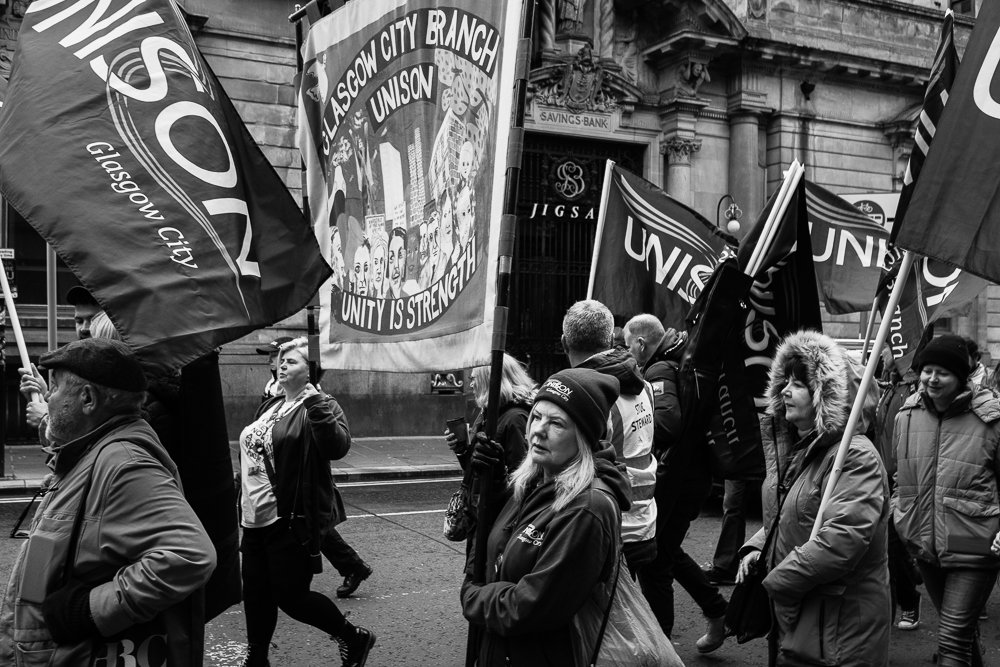
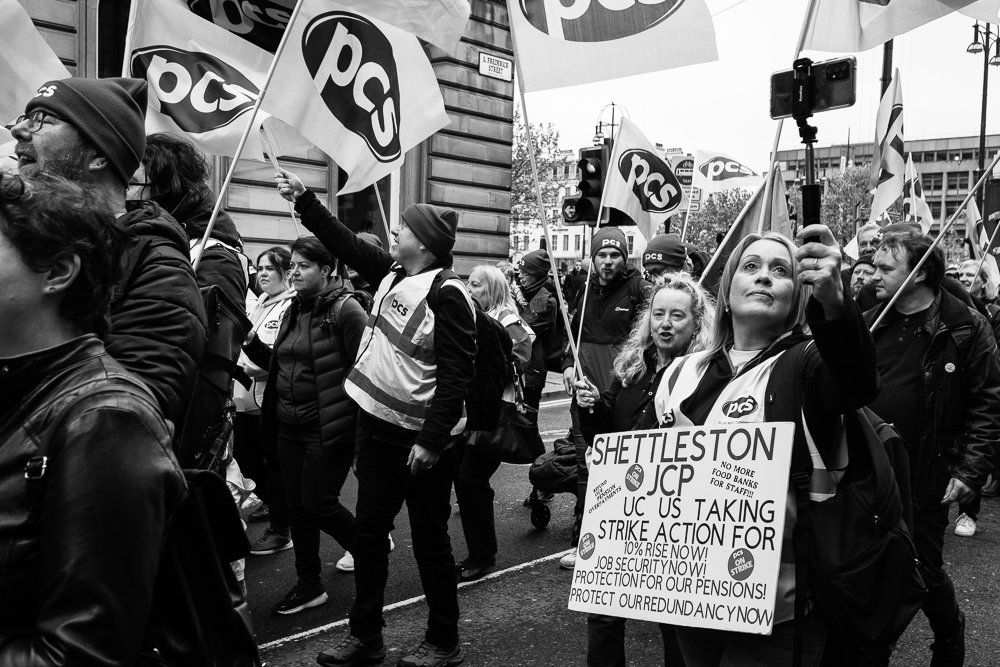
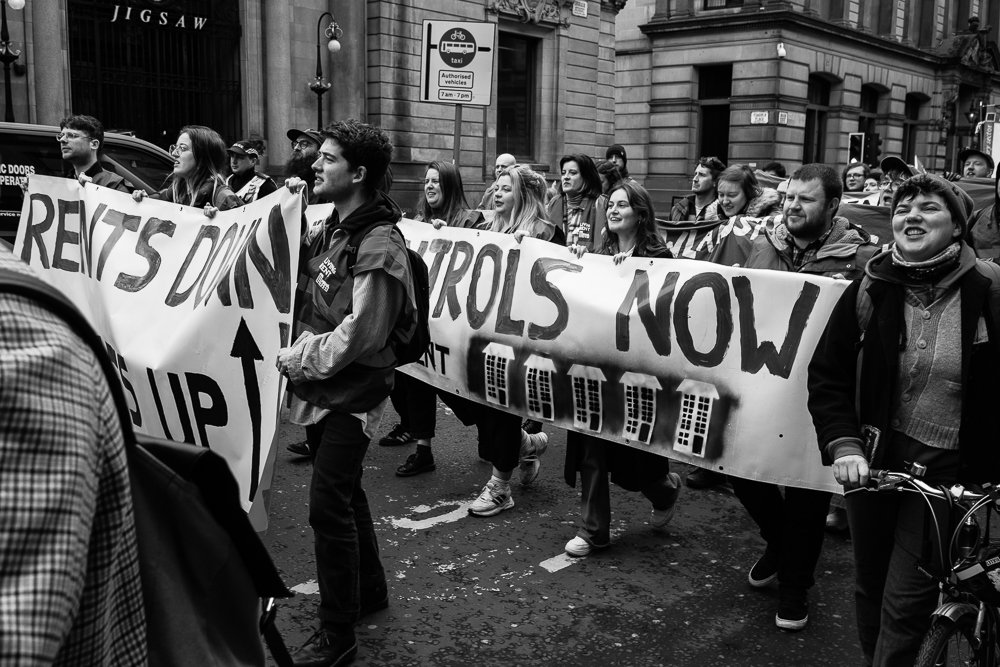
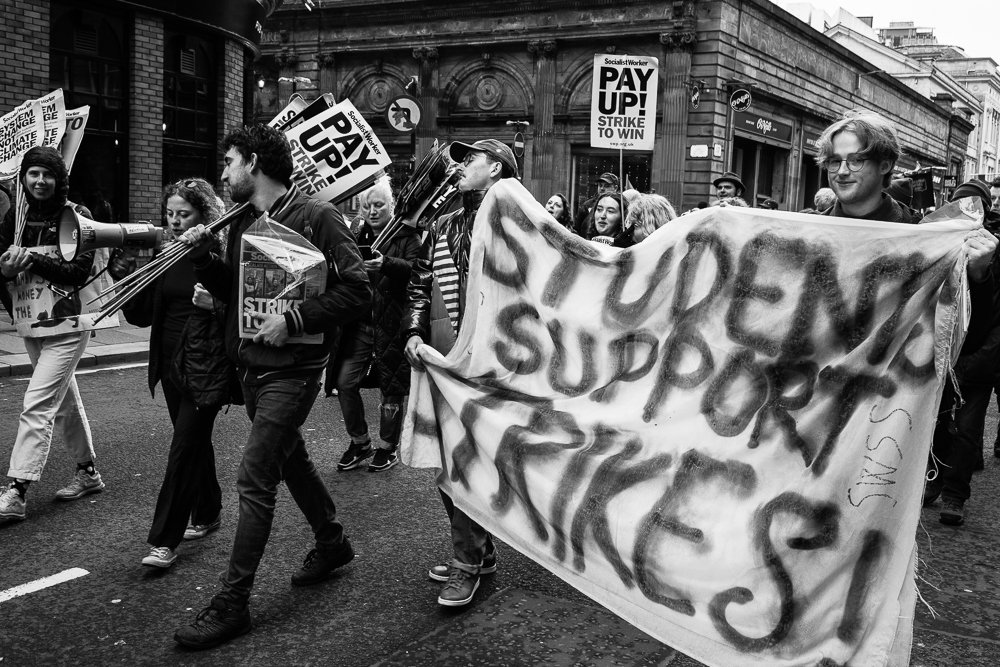
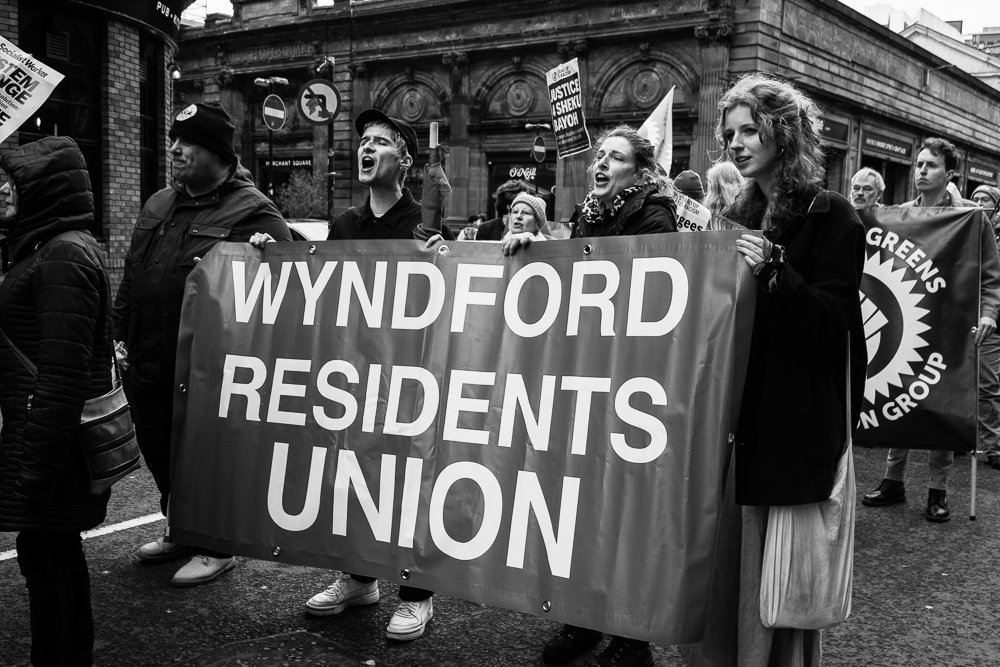
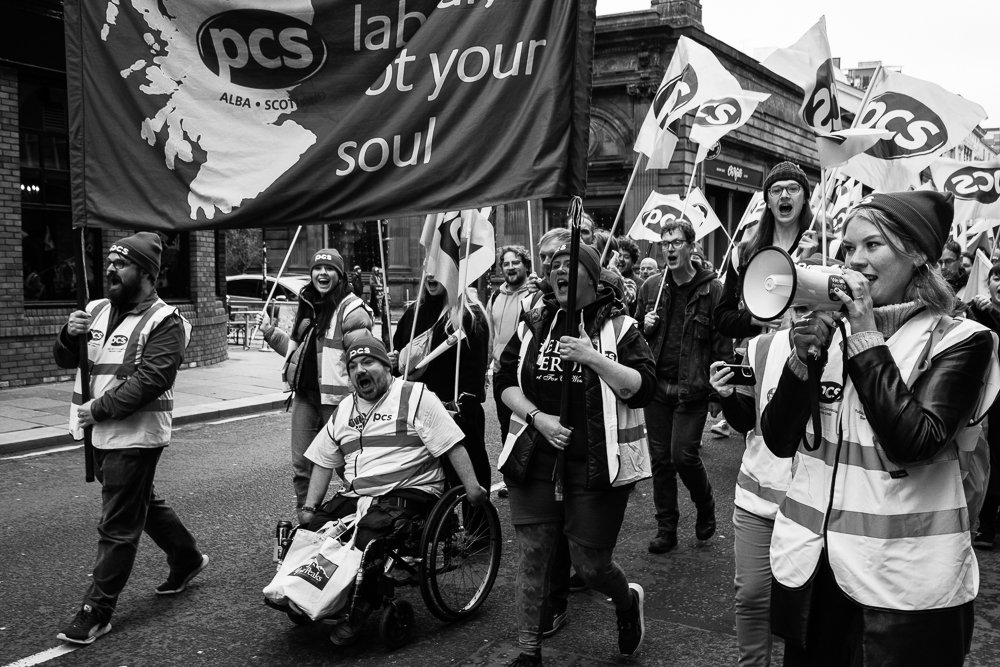
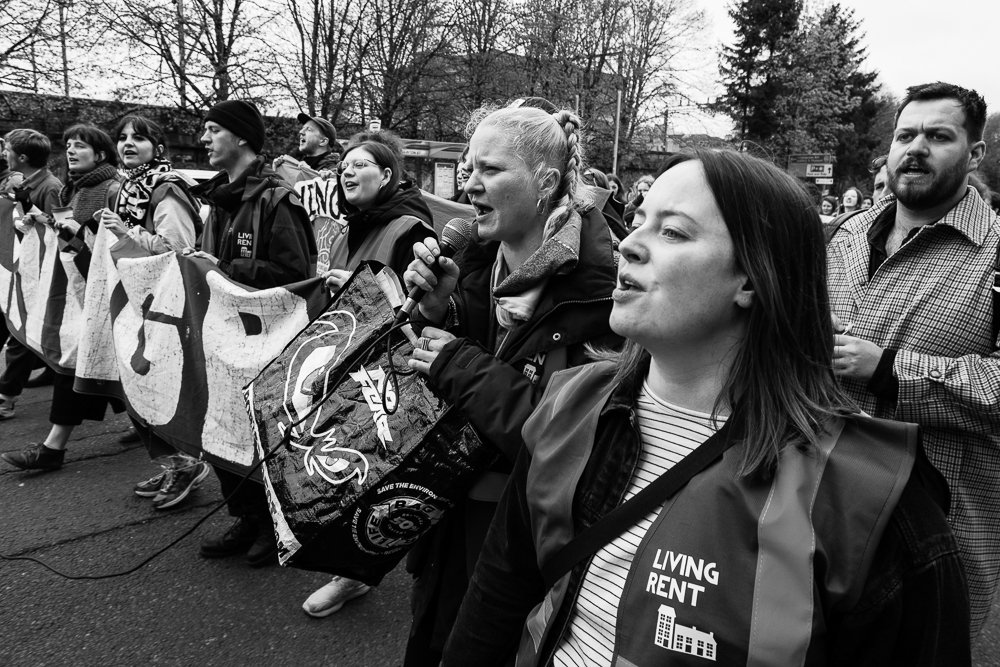
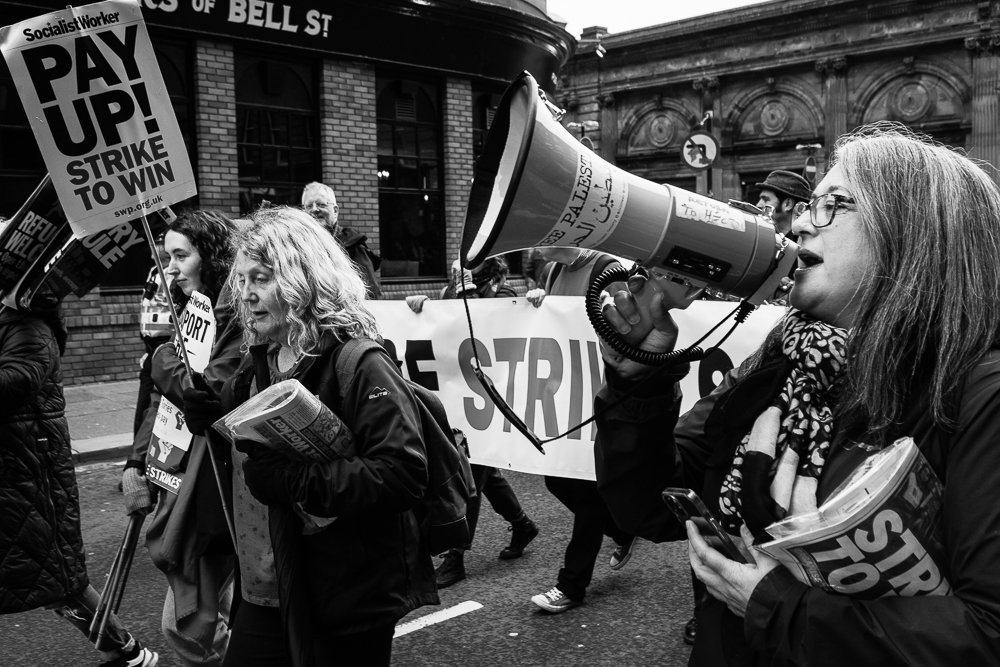
Celebrating May Day is an ancient tradition that goes back centuries, marking the beginning of Summer, and also signifying rebirth and new beginnings. Since 1889 it has also been the date for International Workers’ Day and is therefore celebrated by trade unions and other workers’ movements in major cities worldwide. Glasgow’s Trade Unions Council, established in 1858, has long held an annual May Day procession through the city. This year’s event started in the city centre at George Square, then followed a route south, through the Gorbals to Queen’s Park where a rally took place. This year members of the Public and Commercial Services Union, or PCS, which represents civil servants who are currently in dispute with the UK government over wage claims, had the honour of leading the parade. Other marchers following behind represented various unions, political parties and community groups, including the Educational Institute of Scotland, Unison, Living Rent Glasgow and Wyndford Residents Union, both of whom campaign for fair conditions for housing tenants, the Young Communist League and Glasgow universities students groups, in total numbering around one thousand marchers. 


CScott_Glasgow_May_Day_Parade_003.jpg
CScott_Glasgow_May_Day_Parade_001.jpg
CScott_Glasgow_May_Day_Parade_002.jpg
CScott_Glasgow_May_Day_Parade_008.jpg
CScott_Glasgow_May_Day_Parade_007.jpg
CScott_Glasgow_May_Day_Parade_006.jpg
CScott_Glasgow_May_Day_Parade_012.jpg
CScott_Glasgow_May_Day_Parade_009.jpg
 
Cameron Scott
Sunday 04.30.23
Posted by Progressive-Street
 

"Essen Kessel"

by

Gisbert Hadamitzky

December 1994: European Council in Essen - a meeting of the heads of state and government of the European Union. Here, dozens of demonstrators were encircled by the police for hours. This became known throughout Germany as the "Essen Kessel".

View fullsize 1994-12-06-23_eurofahne.jpg
View fullsize 1994-12-07-05_eugipfeldemo1.jpg
View fullsize 1994-12-08-15_eu_gipfel.jpg
View fullsize 1994-12-09_polizistin.jpg
View fullsize 1994-12-09-02_eugipfel_festnahmen.jpg
View fullsize 1994-12-09-22_eu_gipfel.jpg
 
Gisbert Hadamitzky
youtube
Thursday 04.27.23
Posted by Progressive-Street
 

George Floyd murder

by Bruce Saille

These are some images from some peaceful rallies after the murder of George Floyd. On June 6th 2020, rally was organised for children's voices to be heard in front of the Milwaukee Police Department. The following day, also in Milwaukee there were peaceful protests in support of George Floyd and the Black Lives Matter movement.


View fullsize 27.jpg
View fullsize 28.jpg
 
View fullsize 31.jpg
View fullsize 32.jpg
 
 
Bruce Saille
american protest
Wednesday 04.26.23
Posted by Progressive-Street
 

The ground beneath our feet is burning!

by Eduardo Storch

We were with my wife in Israel a couple of weeks ago. We spent Passover with my sister and friends.

At Passover, the liberation of the people of Israel from slavery in Egypt is celebrated. Currently, the people are fighting again for liberation, but in this case, it is about the new government headed by religious and nationalist extremists.

For 16 weeks, people have taken to the streets across the country on Saturday nights and sometimes even twice a week to fight in an attitude unprecedented in its 75-year history against a judicial coup. They protest against gender segregation, the LGBT community, other minorities and the creation of paramilitary militias led by racist and extremist ministers.

I was aware of these protest demonstrations that have come to summon up to 750,000 people through the news, the newspapers and the messages or videos that family and friends in Israel send me.

However, the publications of many Israeli photographers whom I follow on the networks allow us to capture better the reality of the climate in the streets. I have recently read and seen the excellent photographs that Corinne Spector and Shimi Cohen and many others have attached to their stories.

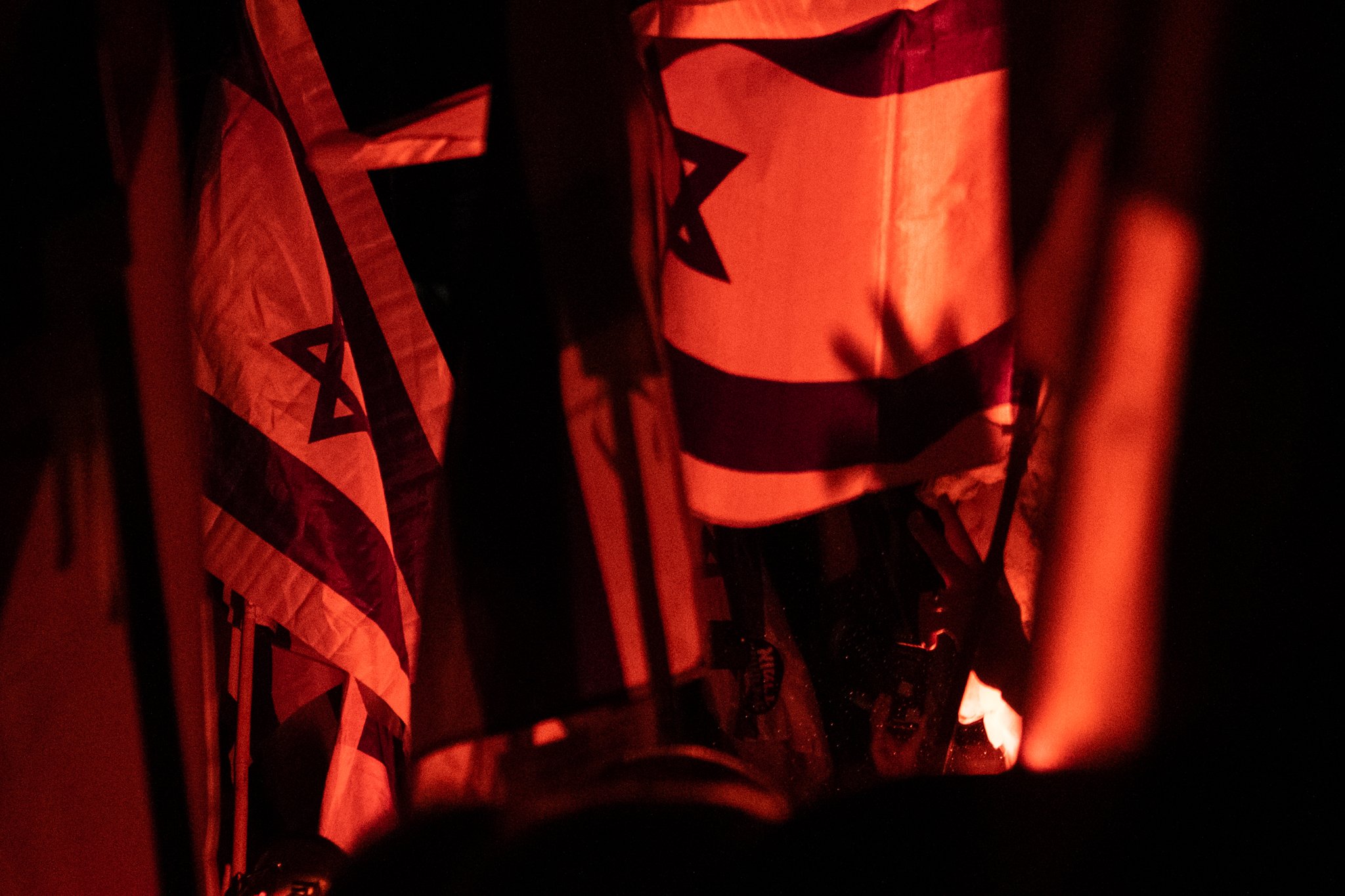
Thus, two days after arriving, I attended a demonstration that took place in Habima Square, a square located in the heart of Tel Aviv and surrounded by important buildings dedicated to culture, which I will tell you about later. On this occasion, I want to tell you about my experience in the demonstration on Saturday night on Kaplan Street, which has become an icon of the protests. We left the car parked far away because otherwise, it is impossible to get to that place due to a large number of people. It was exciting to see how children, women and men, young and old, some even in wheelchairs were gathering in the street and on the bridges carrying flags, t-shirts and allusive posters.

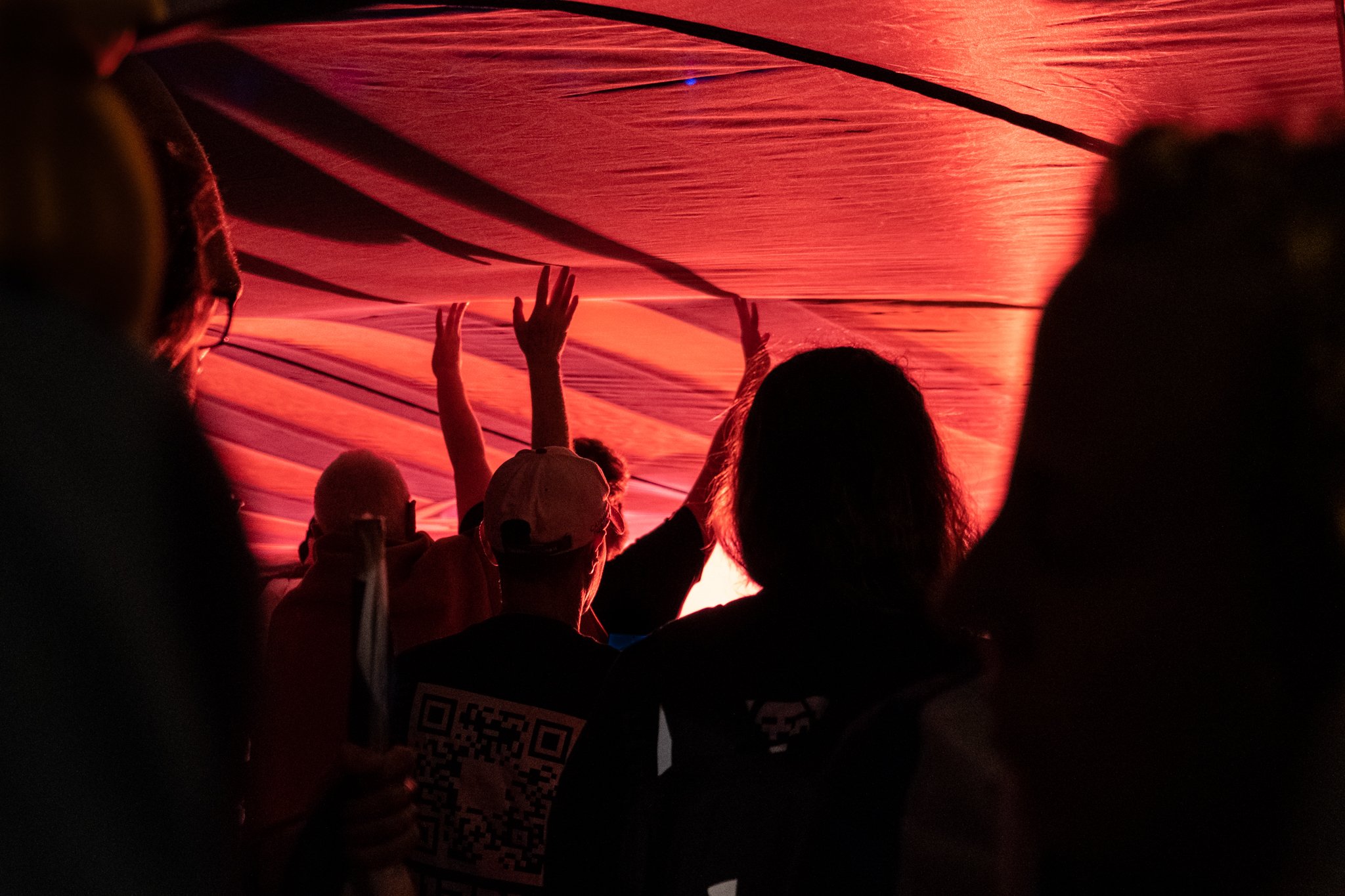
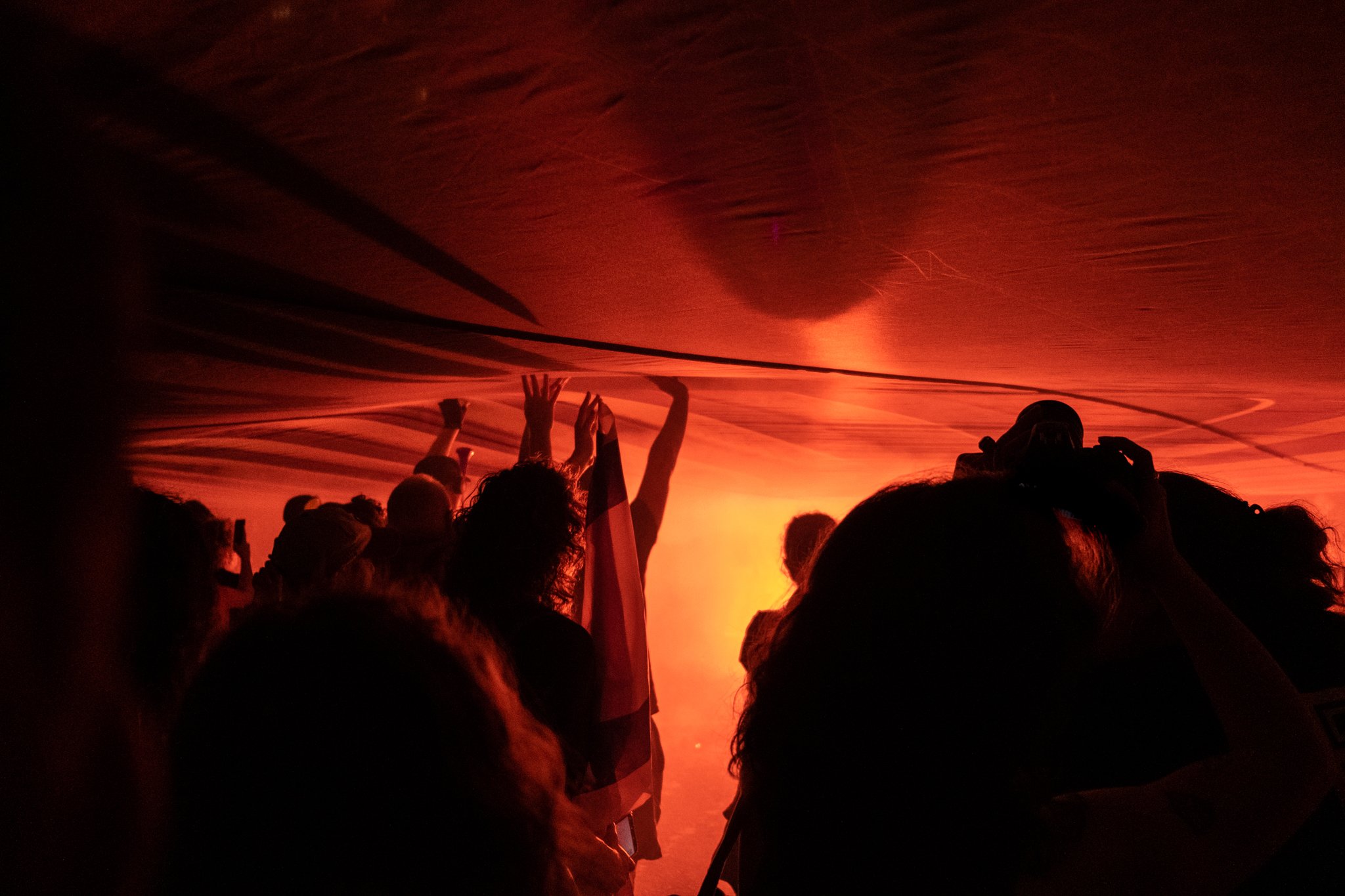
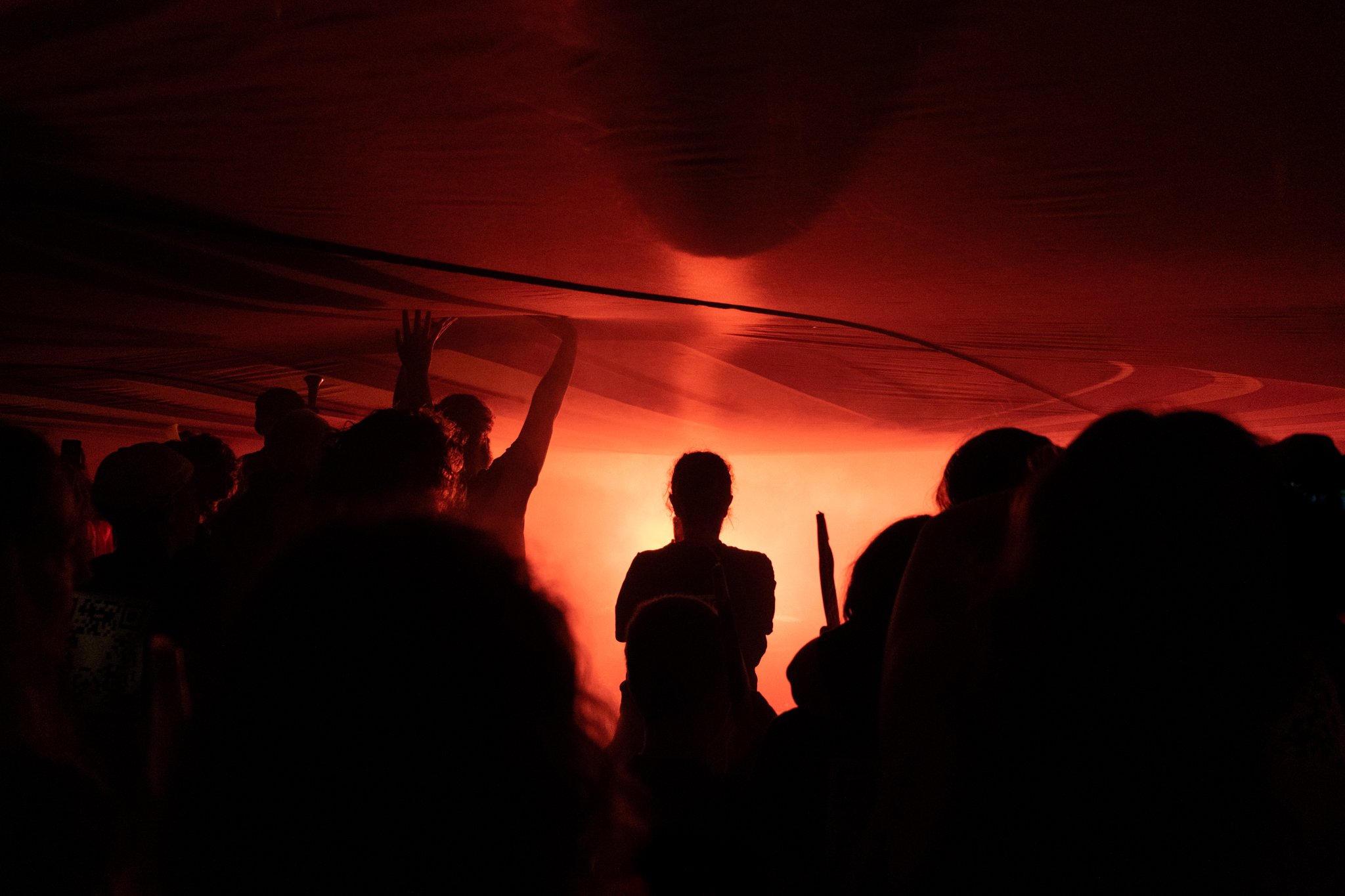
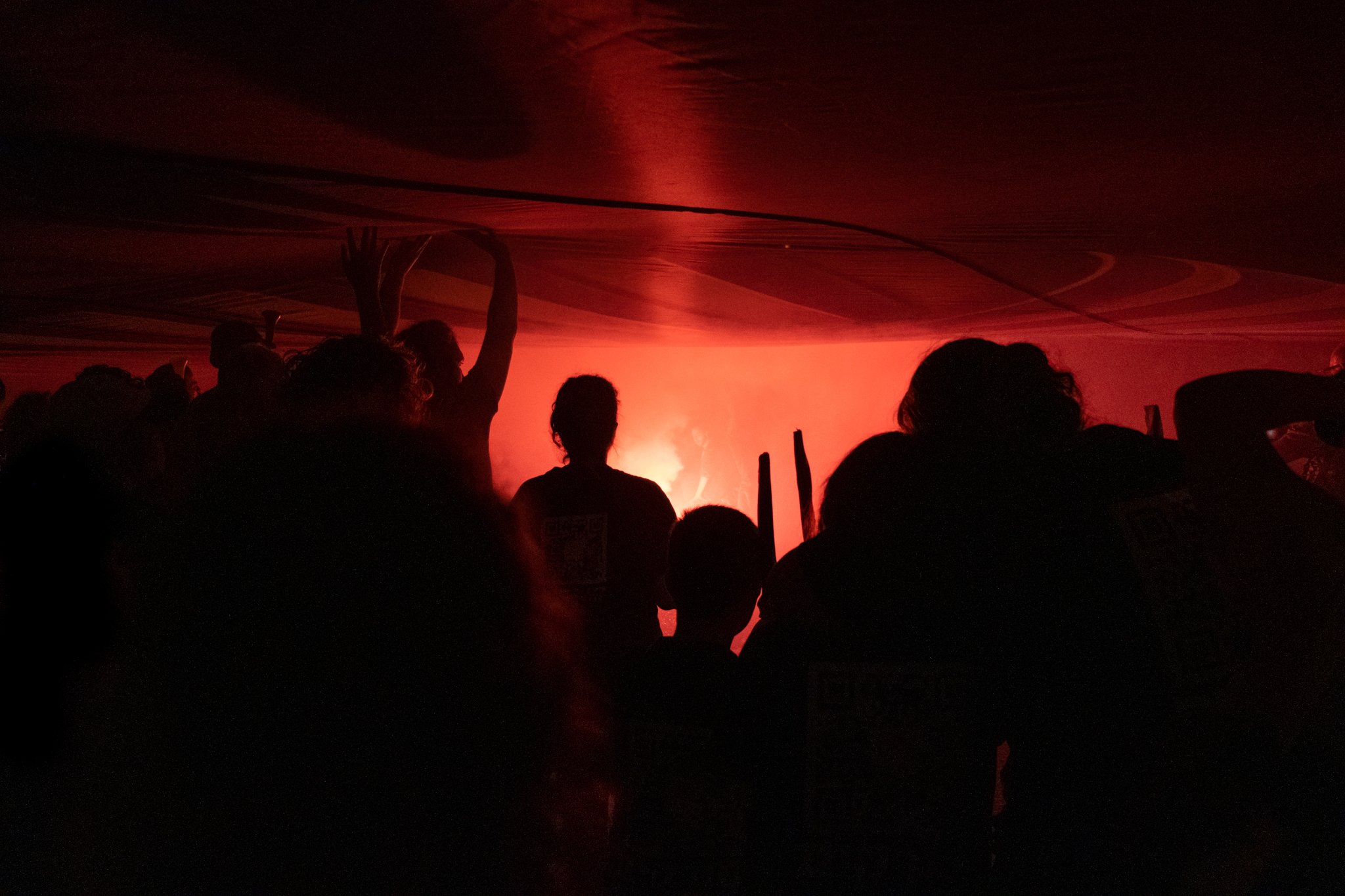
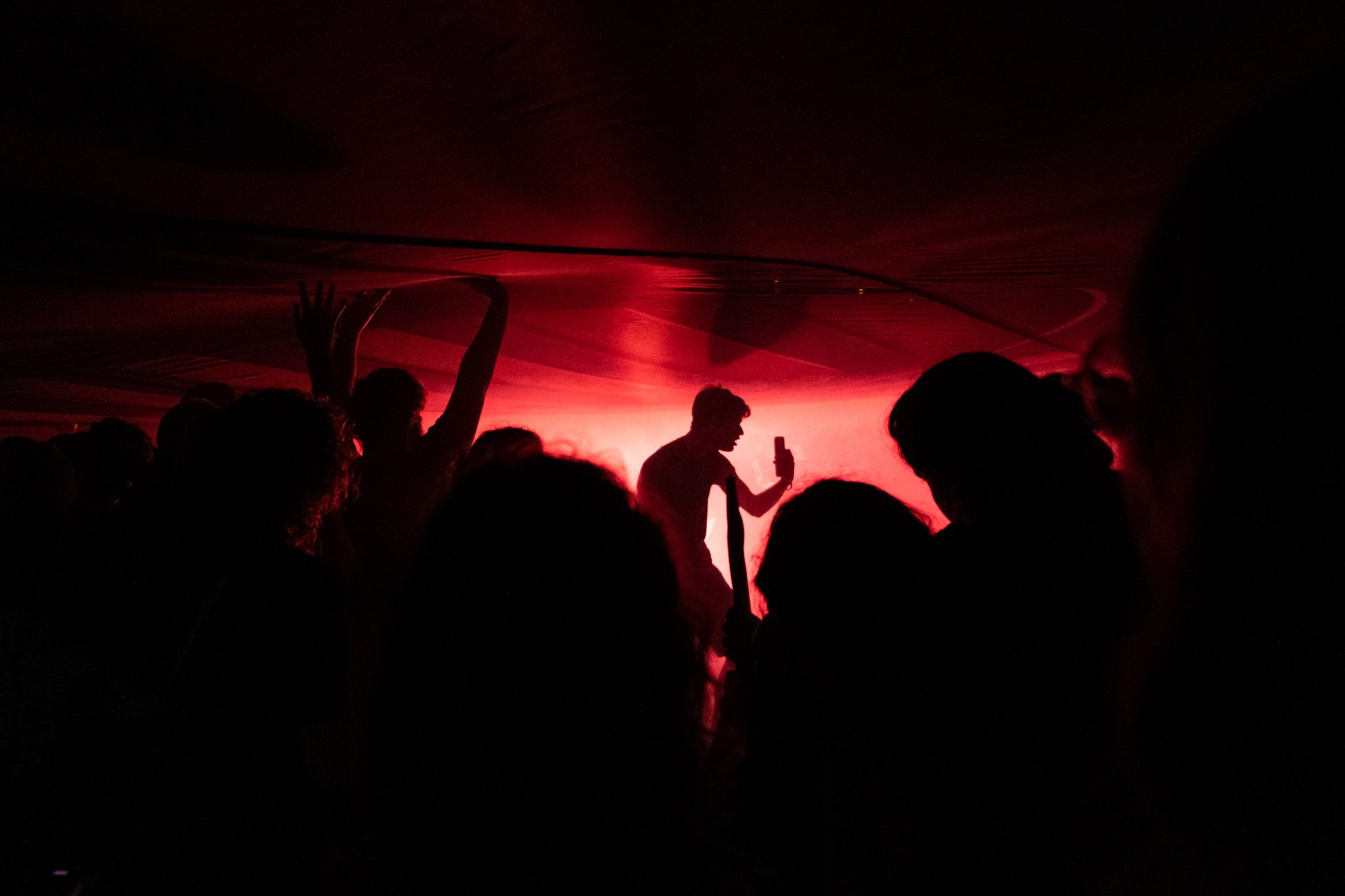
Large screens broadcast the images of the drones that flew over us and the people who spoke on a large stage. We reached the very epicentre where the songs and music came from. Youths with loudspeakers, bass drums, snare drums and whistles were clamouring for their rights and at one point a giant flag was unfurled above them which they all held and extended. From what the drones were transmitting I could see that on the flag there was a large caricature of the prime minister as if he were the pharaoh of Egypt. The flag engulfed the people in a kind of palpable communion, accompanied by music and chants.

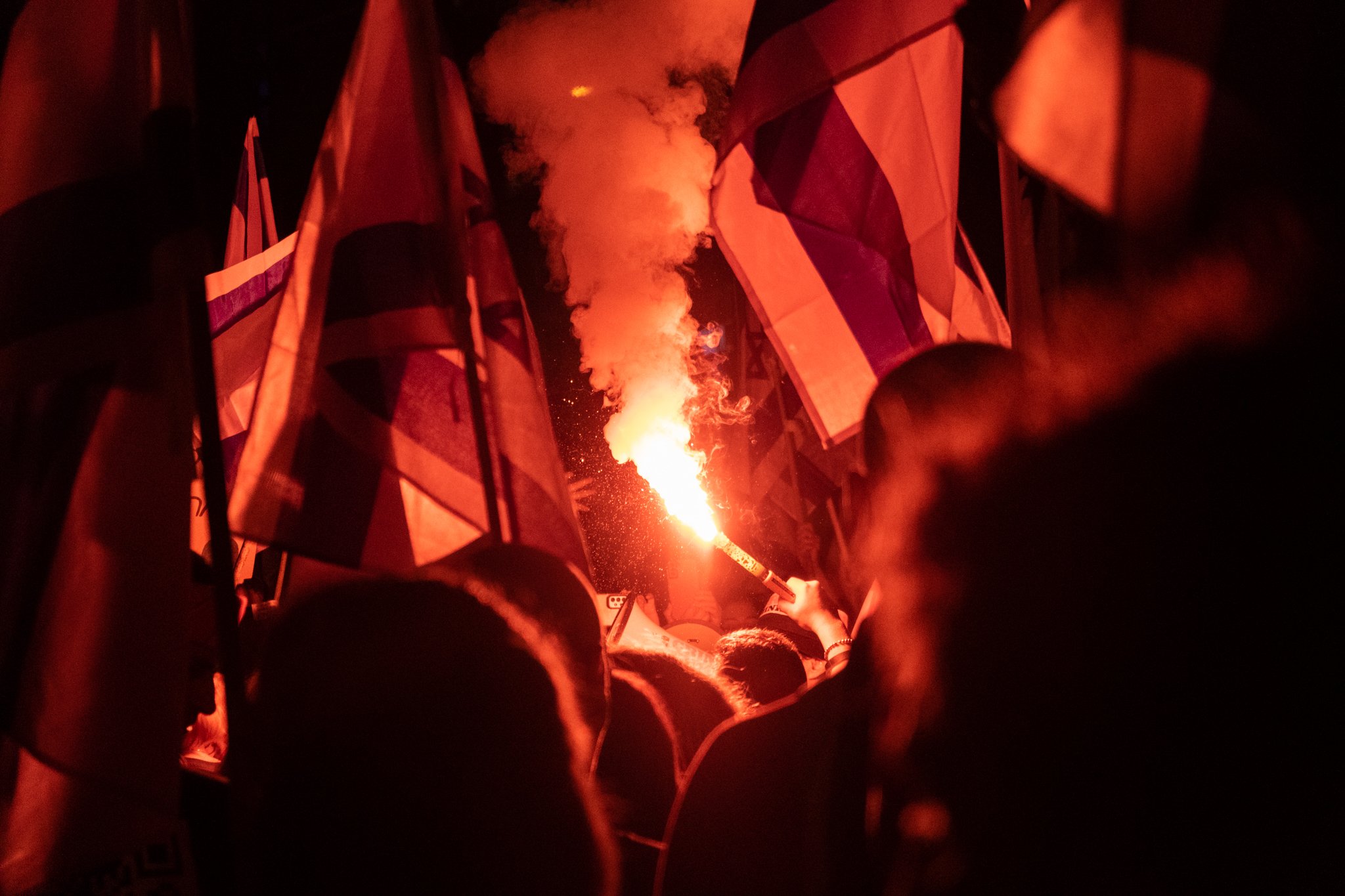
Suddenly red flares were lit creating a very special and fiery atmosphere, so I went under the flag to share and document that very special moment.

The minute of silence for those who fell victim to terrorism in those days and the solemnity of the hymn sung by all was absolutely moving.

I was happy to have been able to participate and share the vibration of the people and make a photographic record of the protest.

At home, I began to download the photos from the camera and coincidentally saw a video on YouTube in which Mika Almog, a writer, journalist and social activist, granddaughter of the late Simon Peres, in which she describes the situation in Israel “The ground beneath our feet is burning!”

So I understood that this was exactly what I experienced when I was under the flag and I want to share it with Progressive Street.

DSCF2940.jpg
DSCF2941.jpg
DSCF2942.jpg
DSCF2940.jpg DSCF2941.jpg DSCF2942.jpg
 
DSCF2970.jpg
DSCF2975.jpg
DSCF2976.jpg
DSCF2977.jpg
DSCF2978.jpg
DSCF2970.jpg DSCF2975.jpg DSCF2976.jpg DSCF2977.jpg DSCF2978.jpg
 
View fullsize DSCF2939.jpg
View fullsize DSCF2996.jpg
View fullsize DSCF2931.jpg
View fullsize DSCF2926.jpg
View fullsize DSCF2934.jpg
View fullsize DSCF2915.jpg
View fullsize DSCF2937.jpg
View fullsize DSCF2962-2.jpg
View fullsize DSCF2910.jpg
Eduardo Storch
Sunday 04.23.23
Posted by Progressive-Street
 

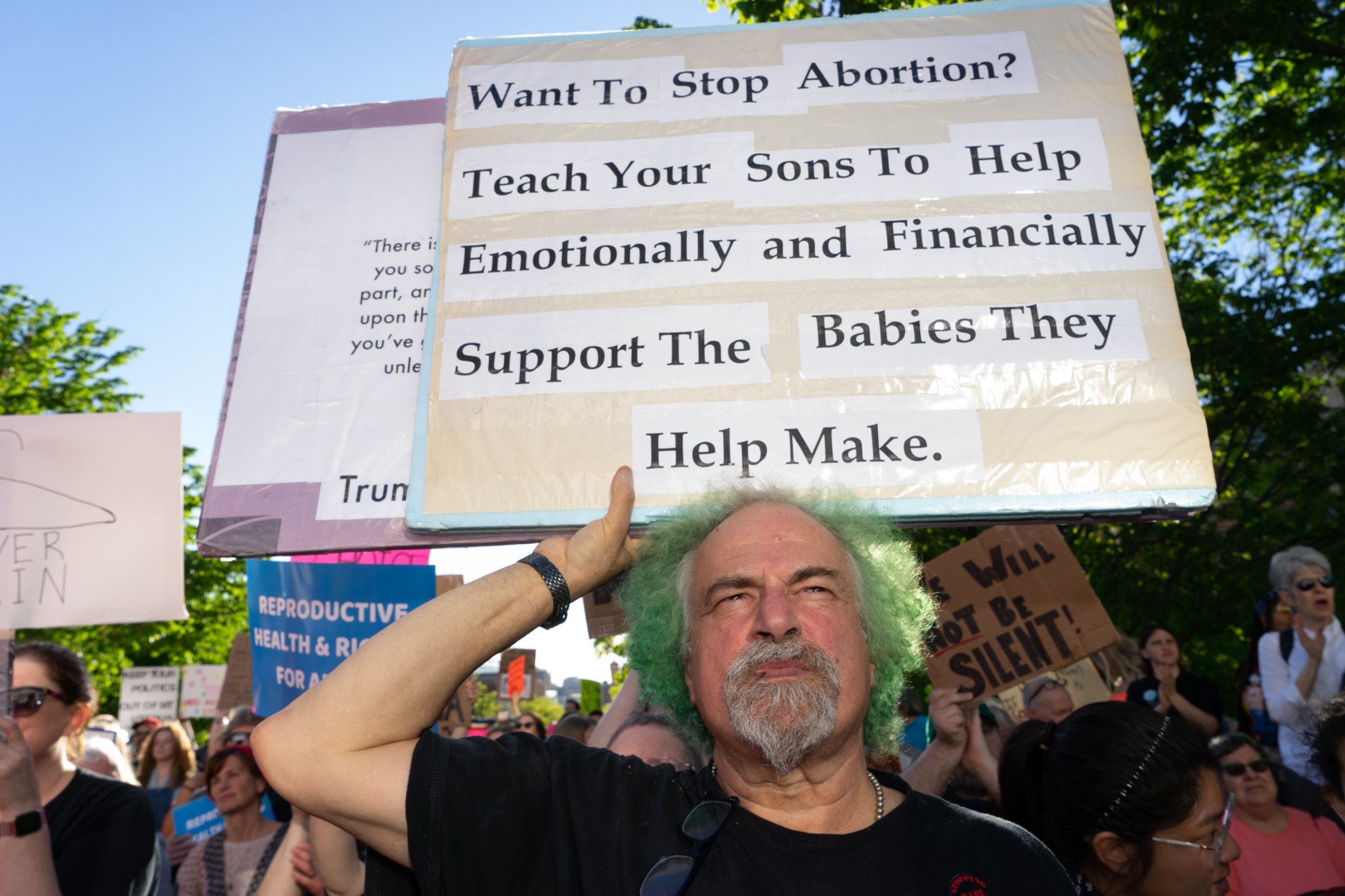
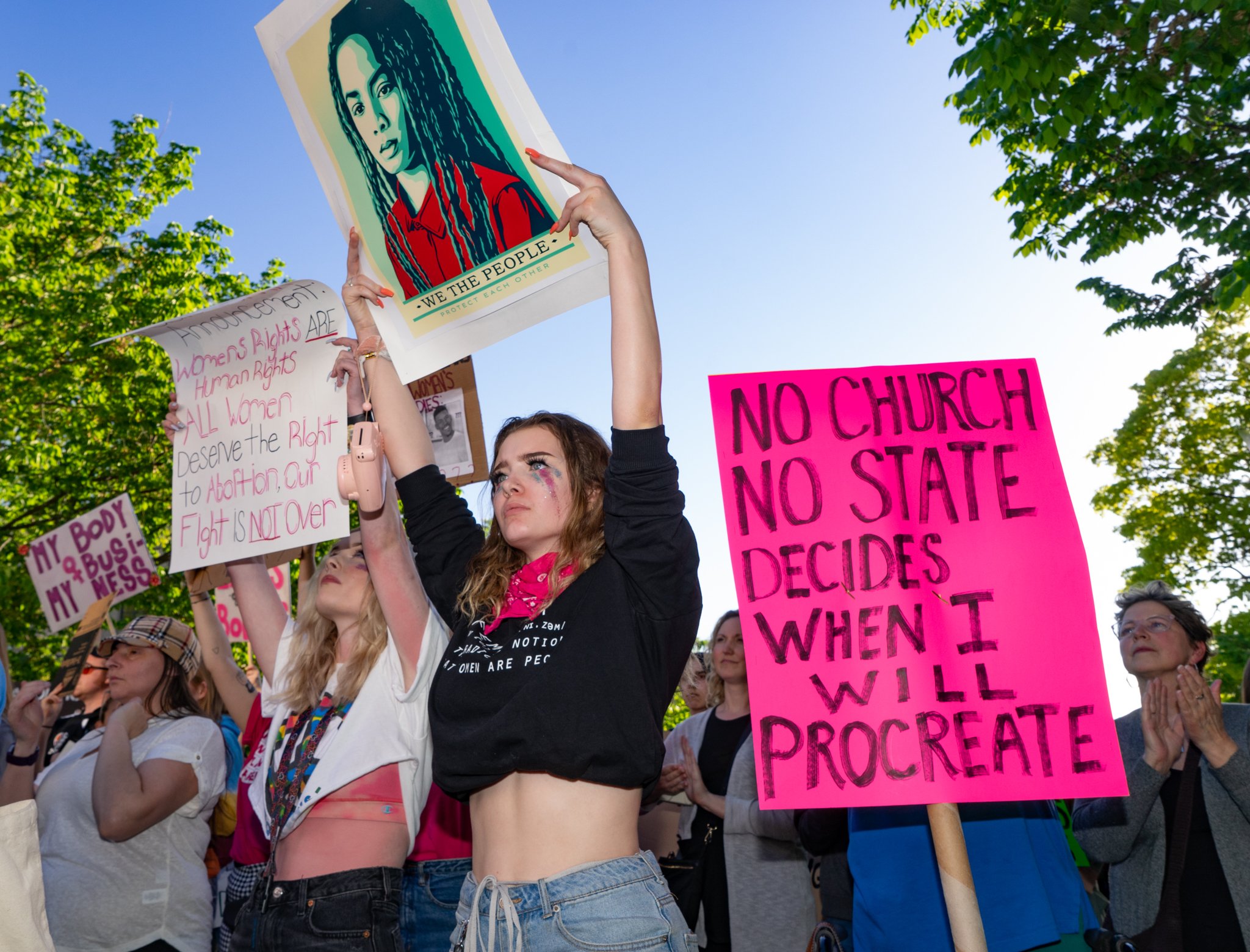
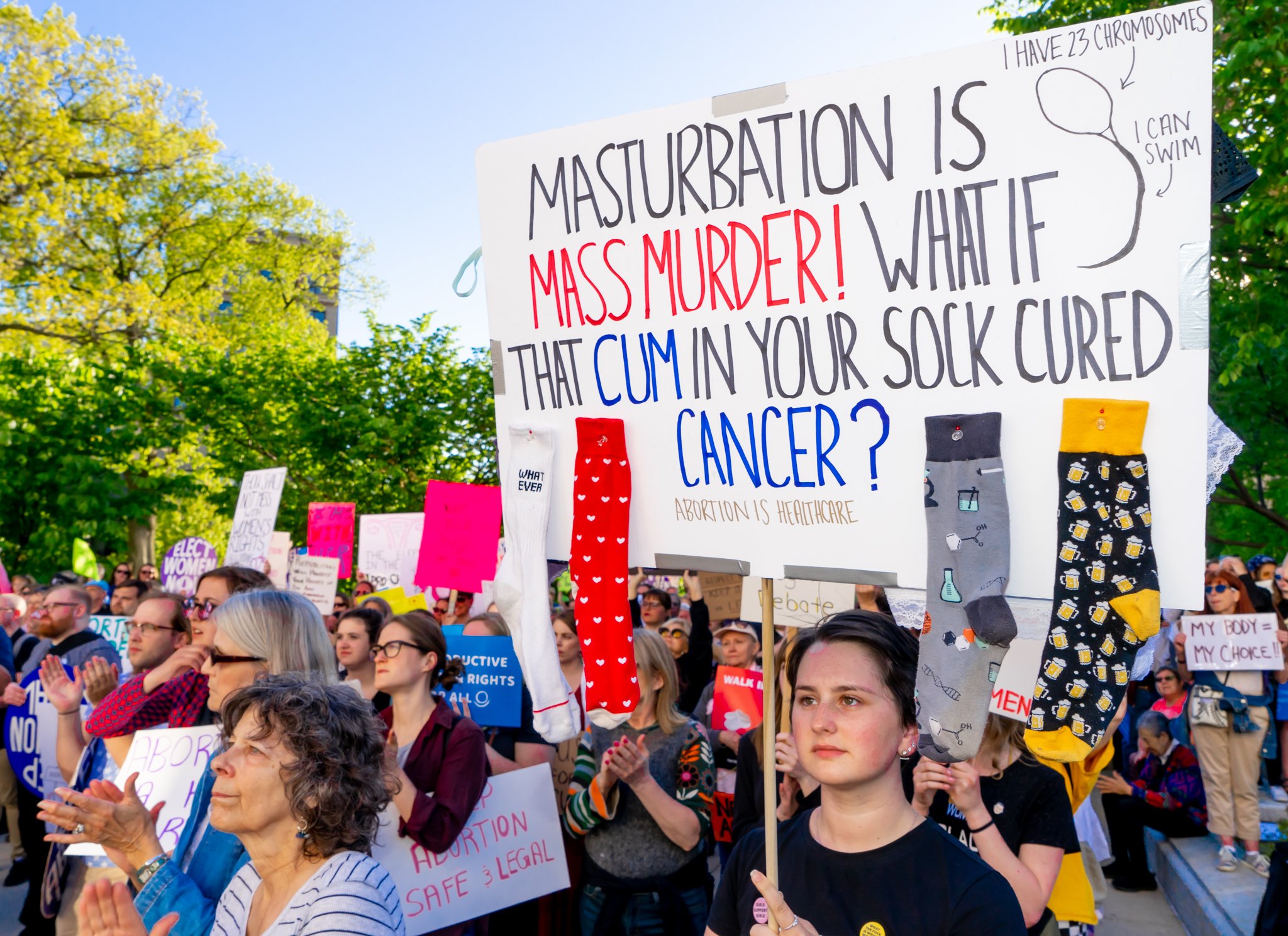
Common Voices – Abortion

by Patty DeJuneas

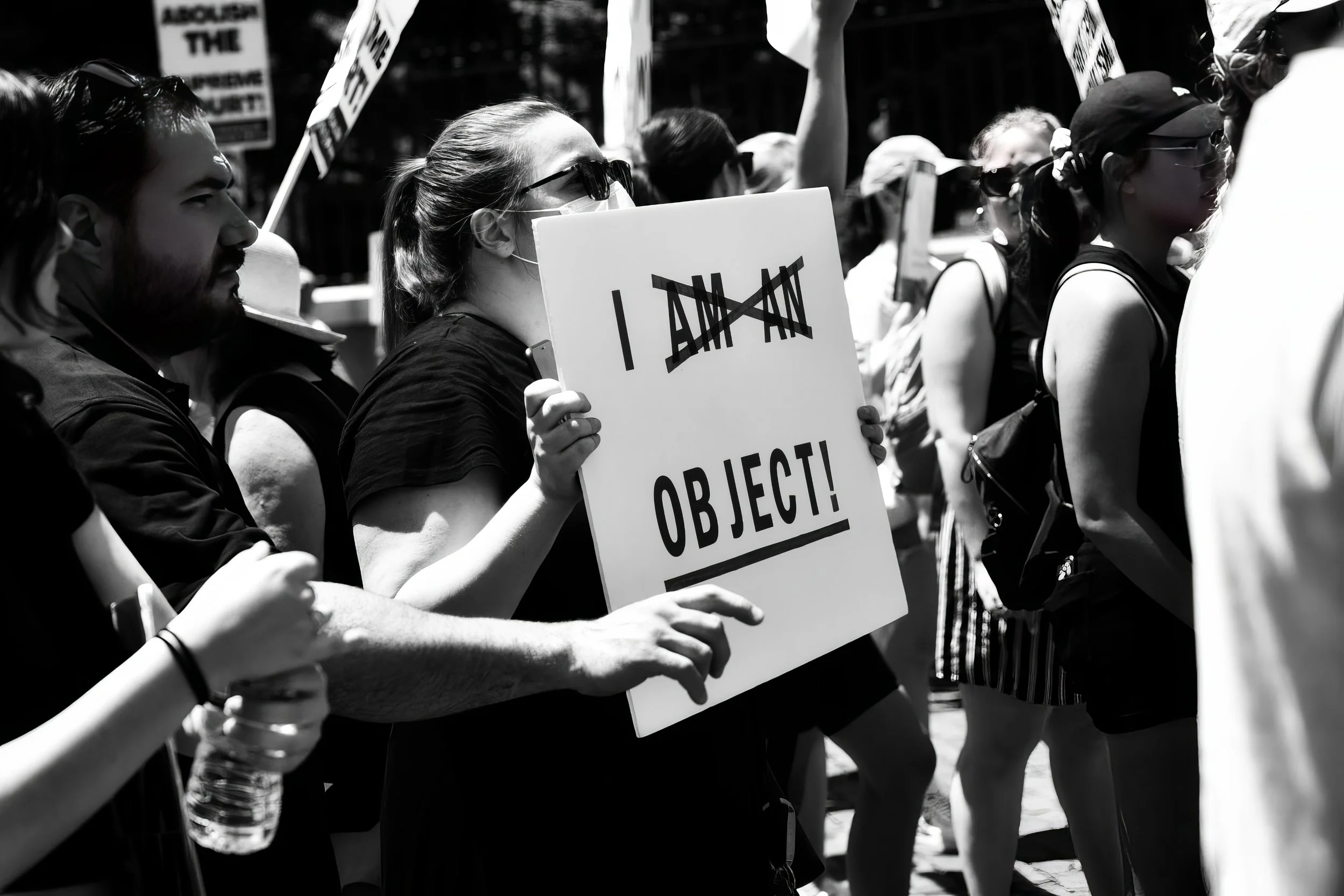
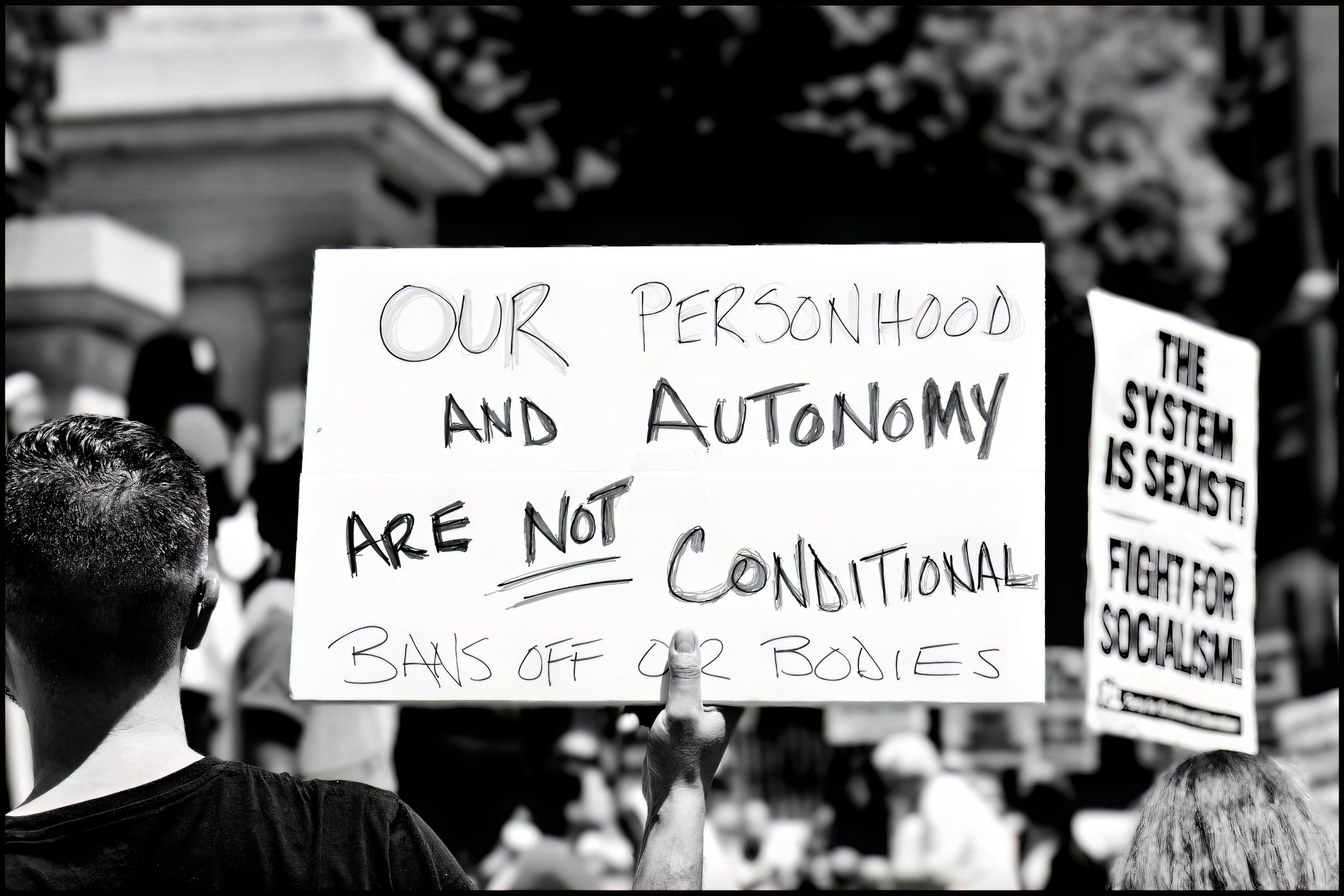
For 50 years, women across the US were free to make decisions about their bodies. No more. Last summer, the Supreme Court decimated our right to bodily autonomy. Protestors have since turned out in droves.

Boston Common – “the Common,” as its known to locals – is the oldest public park in the United States. Located across from the Commonwealth of Massachusetts State House, the Common has long been a place for public discourse.

In the 1800s, abolitionists protested slavery there.  Suffragists demonstrated and demanded equality at the voting booth.  In the 1900s, the Common was rife with civil rights rallies, including one led by Martin Luther King, the minister and civil rights champion who fought tirelessly for racial equality in a time when politicians ran for office promoting segregation and racism. Today, the Common is a place where people of all stripes, colors and nationalities continue to gather to make their voices heard.  As many protestors shout out, “This is what democracy looks like.”

While shooting this series over the past year, I came to realize that these voices, despite their diversity, share a common goal: freedom.  Freedom from the patriarchy obsessed with controlling women; freedom from dictators who impose their will and control upon their citizens; freedom from fascism; freedom from racism; freedom from police brutality; freedom for the untold numbers of innocent men, women and children who have been wrongfully convicted; and freedom from irrational and ignorant hate against our LGBTQ loved ones and friends.

I chose black and white for this series for a simple and painful reason:  little to nothing has changed over the decades.  In this first installment, I document the women, children and men who turned out in droves to protest the backward trajectory of women’s rights. For 50 years, the right to choose whether and when to become mothers was protected under the U.S. Constitution.  But in June 2022, religions zealots and misogynists on the Supreme Court decided to take away that right. Today, many American states have outlawed all abortions, no matter the circumstances.

Within months of the Supreme Court’s ruling, an 11-year-old pregnant rape victim was forced to travel to another state for medical treatment.  A right-wing judge in Texas overruled the government’s approval of a drug used in medical abortions.  Women with sepsis have been forced to wait until near death before doctors will intervene for fear of being arrested and prosecuted. This is not what democracy looks like.

 
View fullsize Common_Voices_-_AbortionDSC_0752~4-01-topaz_-enhance-faceai.jpg
View fullsize Common_Voices_-_AbortionDSC_0807_1_2_photos_v2_faces_x2_colored_toned_light_ai~6-topaz_-enhance-faceai.jpg
View fullsize Common_Voices_-_AbortionDSC_0780~3-01-topaz_-enhance-faceai.jpg
View fullsize Common_Voices_-_AbortionDSC_1017~2-01-topaz_-enhance-faceai.jpg
View fullsize Common_Voices_-_AbortionDSC_0828~4-01-topaz_-enhance-faceai.jpg
View fullsize
View fullsize Common_Voices_-_Abortionimage-406-topaz_.jpg
View fullsize Common_Voices_-_AbortionDSC_1052_2-01_2_photos_v2_faces_x2_colored_light_ai~2-topaz_-denoise-faceai.jpg
View fullsize DSC_0746_1_3_photos_v2_x2_colored_toned_light_ai_2_auto_x2_(1).jpg
View fullsize DSC_9841_5_ml_resize_x2.jpg
View fullsize Common_Voices_-_AbortionDSC_9797_2_auto_x2_colored_toned~2-01~3-topaz_-denoise.jpg
View fullsize DSC_9827_2_auto_x2_(1).jpg
View fullsize DSC_9871_3_auto_x2_(1).jpg
View fullsize DSC_9879_3_ml_resize_x2_(1).jpg
 
 
Patty DeJuneas
Tuesday 04.18.23
Posted by Progressive-Street
 

The Women's struggle within the Israeli judicial reform protests

by Corinne Spector

April 2023

I’m in the thick of a large group of protestors, within a sea of blue and white flags, when suddenly a red stream bursts through. It's like the parting of the Red Sea, or more precisely, the moment when all the rivers of Egypt turned red with blood, just like in the first of the ten plagues we recall now during Passover.

We see hundreds of women in flowing red robes, with broad white bonnets walking slowly and silently, their heads down. Everyone else in this demonstration is forgotten as these "handmaidens" come through. Some members of the opposition yell rude comments at them, not understanding this symbol, but the women maintain their silent, submissive posture. 

We are seeing a representation of the women's struggle for their rights, similar to others around the world, inspired by Margaret Atwood's book "The Handmaiden’s tale".  The bonnet serves to keep women's eyes focused on the ground -looking up or around is considered dangerous. Although this book came out forty years ago and represents societies from past and present, we hope its dystopian vision is not what we will see in our near future in Israel. This uniform is no less than a symbol of the fight against the potential totalitarian control over democracy.

The use of this costume began with the abortion-related protests in the US and has spread in variations to other parts of the world. In Israel, we understood that a situation could arise quickly here, in which women would have fewer societal rights, as a result of the new government coalition with its members from the religious extreme-right.  

In the beginning, women wore red to the protests here in order to symbolize their resistance; the symbolism of red as blood, as birth, as loud protest. Soon there was an awakening wherein women and some men in more than 80 cities and towns came together. They understood that this government was seeking to harm a basic and universal truth: that women also need representation in our society and in our government. 

People have long realized that due to the demographics of their high birth rate, by the year 2060, one-third of the Israeli Jewish population will have become very religious (Ultra-Orthodox). Now, however, people have understood that these changes will likely weaken or even erase the concept of democracy, and instead Israel will become a theocracy.  And so now, suddenly, due to the push to reform the judiciary by this right-wing, religious government, a great fear has arisen that Israel's democratic essence is in great danger!

And so women began to see their future through the eyes of this new government, and they held up signs that asked other women: "Have you woken up yet?" And other signs followed saying "I'm awake!"  (Similar to the term 'woke' in America, but focusing here on women's issues).

Women are lacking in the government here – there are now only 9 female members out of 64, or 14%.  In the 70s we were forerunners when Golda Meir was our Prime Minister but since then, our numbers in government have dwindled. Obviously, if this generation of women isn't seen in positions of power, the next generation will surely not be able to follow. 

In a recent parliamentary session, not one item dealt with women. Women are not getting the representation they require and deserve. A law that proposed requiring that violent men wear electronic bracelets was simply dropped!

It is of grave importance to prevent discrimination and violence against women. Historically, suppression of women has been very strong in the home, the streets and in the corridors of power. And who among us has never had fears of men in a deserted or dark place, has never been touched inappropriately or put down in other ways, big and small?  The women's demonstration now brings together all these matters at once.  

Suddenly many women's daily routines have changed and grass-roots leaders have arisen.  There is now a platform for women's empowerment and activist, apolitical pressure groups that are talking about essential issues when they meet, and also online.  They include: Sharsheret Nashim lema'an hademocratia (A chain of women for democracy); Bonot Alternativa (Building an Alternative); Thank God for making me a woman (which is a direct retort to the religious peoples’ prayer saying ‘Thank God for making me a man’) – Women standing up for women. All of this effort and these groups, led by women, stand out clearly now in the protests that are taking place across Israel. 

Near Israeli embassies around the world, demonstrations by Israelis are also taking place, some including women in handmaiden costumes. Atwood herself has been very supportive of these demonstrations. 

The leaders of the demonstrations have recently decided that there will no longer be handmaidens in our protests. Yes, there will continue to be women wearing red shirts and Superwoman capes, but we refuse to be passive servants any longer.  In short: we are strong women who are fighting for our rights and our place in society, for the good of us all. 

Demonstrations continue here on a weekly, and sometimes daily basis, as the new government is trying to quickly push through changes to the currently independent judiciary which, due to our lack of a Constitution, is our lone balance against negative political influence. 

*******   It is very challenging to both take part in these protests and document them, as I'm holding a flag in one hand and a camera in the other.  But here I am, having awoken also to this new frightening reality.  I'm a photographer but also an Israeli woman who is secular and liberal and feminist, and each of these identities has meaning in the current struggle. 

I took still photos at street level, so I could never see the whole picture, such as the huge stream of people who were out demonstrating, as one could with a video or a drone. I was just one of thousands of people on the street, and I felt like a child, seeing only up to the height that I am. I usually see just the backs of people in front of me or their sides. I don't feel that I'm in any danger here; these are not violent protests, but rather protests in favour of the country most citizens have known and love. These are people trying to protect this country and the democratic nature of its judiciary.  I've been taking pictures of this protest for three months, trying to document the demonstrations from a historical perspective but I feel like I can only take partial pictures of the moment I am in. 

Atwood noted, in an interview with a local paper, that when people threaten to do something against women, this generally does happen. Women in Israel have now understood that we cannot assume that the way our society has been operating until now is a given and that it will continue in the same manner.

*******  Supreme court judges who have been chosen by other judges on the basis of their records are presumed to be independent. If politicians appoint the judges, and the government is able to overturn the judiciary's decisions with a slim majority, the judiciary would no longer be independent. For the past 75 years, this independent judiciary is our only source of protection for minority rights and those of other weaker sectors of society –including women. 

There is also a Rabbinical court here that deals primarily with marriage and divorce of Jewish citizens, and sometimes with matters of division of property, child custody and support, and visitation rights. This court is made up of male rabbis, among whom there has never been a woman. Since this is a religious court, and they believe women's status is unequal to men's, this is problematic. 

Recently, however, the government in the Knesset has passed the first reading of a law for the expansion of the rabbinical courts. The result would be an expansion of its responsibilities over civil legal matters. It's feared that many of these judgments would be opposed to the universal human rights found in much of the modern world such as: respect for women's and minority rights and freedoms, as well as democracy and equality of all Israel's citizens.  

Women's fear is that 'the clock will be turned back' for women here, as religious law tends to favour men in cases between the genders.  Anything that affects women negatively will affect every part of people's lives.  Those in favour of this law seek citizens who will accept their authority in a submissive manner.  

Religious women (particularly the Ultra-Orthodox) have made a bargain between themselves and their husbands, as well as with their community.  Their desires are: to raise their children, to be responsible for their households and to support their husbands –sometimes also financially, via community-approved jobs-- while the men study religious Torah texts, and do not serve in the army. The men contribute little to the national economy, supported by taxpayers and donations. They hope their sons won't serve in the army, but will also study Torah. 

This bargain is not the same one that secular women in Israel have accepted.  These modern women may choose to work outside the home, and they generally seek partners in raising their children and in keeping house. Both their sons and daughters will serve in the army to protect this country. Thus this is a big sticking point between secular and religious, and has been since the inception of this nation, while the numbers of the Ultra-Orthodox have grown greater with time. 

A democracy cannot support the suppression of women, nor of its other weaker elements. Judicial reform is not the sole issue, but rather that deep societal changes are needed here, urgently.  I am a mother to three daughters and I've always taught them that they can do anything they choose. I hope to leave them a society that is healthy and thriving, rather than one that is limiting and hurting. 

View fullsize DSC01143.jpg
View fullsize DSC02510.jpg
View fullsize DSC02871.jpg
View fullsize DSC01205.jpg
View fullsize DSC02499.jpg
View fullsize DSC02500.jpg
View fullsize DSC02465.jpg
View fullsize DSC02921.jpg
 
View fullsize DSC03518.jpg
View fullsize DSC03531.jpg
 
View fullsize DSC03653.jpg
View fullsize DSC03707.jpg


Corinne Spector
Friday 04.07.23
Posted by Progressive-Street
 

"No one is above the law"

by Martin Ingber


Yesterday your wish came true- the disgraced ex-U.S. president Donald Trump was in court here in NYC to be arrested & arraigned for illegally paying off a porn star, Stormy Daniels, for sex, so that voters in the then upcoming 2016 election wouldn't learn about it. Many New Yorkers turned out to express support for this unprecedented indictment, believing that, in America, "No one is above the law", and even the rich and powerful should be held accountable for their crimes.

There were also some die-hard Trump supporters present, and plenty of police to keep the two groups separated. And unlike some previous, ugly Trump-inspired demonstrations, there was no violence.

Legal consequences can take time, but in addition to the current indictment, trump is now facing a rape trial; as well as the likelihood of upcoming indictments for various crimes including election interference in Georgia; and Trump's role in the attack on the U.S. Capitol and attempt to overturn the results of the 2020 election  -all in the coming weeks and months. 

 
View fullsize Lincoln at demonstration.jpg
View fullsize Cop w trump doll.JPG
View fullsize MAGA.jpg
View fullsize No One.jpg
View fullsize This pussy grabs.jpg
View fullsize trump arrested.JPG
 
 
Martin Ingber
Thursday 04.06.23
Posted by Progressive-Street
 

2011 Arab Uprising

by Martin Agius

When the Arab Uprising began in 2010, I was still at the beginning of my journey as a photojournalist with Media.Link Communications Ltd., and I was only working on a part-time basis.

At first, not much happened in Malta, but in early 2011, things started to happen in Malta too, with Libyan Protestors, protesting in front of the Libyan Embassy in Balzan. I remember exactly the first day that I was called to cover these protests. It was the 22nd of February 2011, which happens to be my birthday, so I will never forget this date. 

I was astounded by these protestors, many of whom were waving banners with writing on them, some of whom were holding printed photos of the Muammar Gaddafi regime's massacre in Libya, some of whom were crying, and even children were brought to these protests.

 What amazed me most was that when it was time to pray at noon, they stopped the protest, faced Mecca, and started their ritual praying. Muslims first pray standing up, then kneeling or sitting. They recite from the Quran and glorify and praise Allah.

 People residing in Libya started fleeing the country, especially Europeans, Americans, and Asians. They started arriving in Malta since it is the first land in Europe, around 355 km.

 The Maltese government at the time really had a big headache trying to keep up with all that was happening, helping people get over to Malta from Libya and then arranging for them to fly to their respective countries.

 One fine day, two Libyan Air Force Mirage Jet fighters arrived in Malta. At first, there was a bit of panic as it was thought that they were attacking Malta. But after negotiations and confirming they were not attacking Malta, they were allowed to land in Malta. The pilots informed Maltese authorities that they fled Libya after being ordered to attack civilian protestors who had taken over Benghazi.

 We had to work very long days as many things were happening, and sometimes we couldn’t keep up with everything that was happening. We also had to keep up with other work like sports, Government events etc.

 This historical event influenced me greatly. It made me a better photographer first of all; I learned to see things faster and even anticipate them; it made me learn journalism better; and it also taught me that when people have enough, they will rise to the occasion, and no matter what the circumstances, be it life or death, they will get to their goal, which most of the time is freedom.

 Some of the images that I took during these events won me many awards, from Gold to Silver Awards to the prestigious "Press and News Photographer of the Year" award in 2011” with the Societies UK.


Libyan_Crises_Protest_Embassy_Balzan--5.jpg
Libyan_Crises_Protest_Embassy_Balzan--7.jpg
Libyan_Crises_Protest_Embassy_Balzan--8.jpg
Libyan_Crises_Protest_Embassy_Balzan-.jpg
Libyan_Crises_Protest_Embassy_Balzan-5869.jpg
Libyan_Crises_Protest_Embassy_Balzan-5908.jpg
Libyan_Crises_Protest_Embassy_Balzan-5917.jpg
Libyan_Crises_Protest_Embassy_Balzan-6186.jpg
Libyan_Crises_Protest_Embassy_Balzan-6213.jpg
Libyan_Crises_Protest_Embassy_Balzan-6301.jpg
Libyan_Crises_Protest_Embassy_Balzan-6417.jpg
Libyan_Crises_Protest_Embassy_Balzan-6533.jpg
Libyan_Crises_Protest_Embassy_Balzan-6597.jpg
Libyan_Crises_Protest_Embassy_Balzan-6615.jpg
Libyan_Crises_Protest_Embassy_Balzan-6635.jpg
Libyan_Crises_Protest_Embassy_Balzan-6641.jpg
Libyan_Crises_Protest_Embassy_Balzan-6728.jpg
Vapur_Red_Star_SIrte-8811.jpg
 

Giurnalist InglizÌ Guy Martin

 
View fullsize Libyan_Crises_Protest_Embassy_Balzan-6222.jpg
View fullsize Libyan_Crises_Protest_Embassy_Balzan-6310.jpg
View fullsize Libyan_Crises_Protest_Embassy_Balzan-6587.jpg
View fullsize Libyan_Crises_Protest_Embassy_Balzan-6592.jpg
View fullsize Libyan_Crises_Protest_Embassy_Balzan-6639.jpg
View fullsize Libyan_Crises_Protest_Embassy_Balzan-6676.jpg
 
 
Martin Agius
Wednesday 04.05.23
Posted by Progressive-Street
 

Scottish Trades Union Congress St Andrews Day March

by Cameron Scott

On 26th November 2022 the Scottish Trades Union Congress held a protest march through Glasgow city centre to raise awareness of refugee welfare and the work of Scotland's Black and multi-ethnic communities and allies against racism and the far right. Over one thousand marchers from various community action groups, trade unions and the Sheku Bayou Family Justice Campaign marched from Glasgow Green through the city centre to end with a rally in Bath Street. In the images shown here I’ve tried to capture the peaceful nature of the event, although there was a potential flashpoint when a taxi driver deliberately tried to drive through the procession, thankfully nothing came of it. 

View fullsize CScott_STUC_StAndrews_001.jpg
View fullsize CScott_STUC_StAndrews_002.jpg
View fullsize CScott_STUC_StAndrews_004.jpg
View fullsize CScott_STUC_StAndrews_005.jpg
View fullsize CScott_STUC_StAndrews_006.jpg
View fullsize CScott_STUC_StAndrews_007.jpg
View fullsize CScott_STUC_StAndrews_008.jpg
View fullsize CScott_STUC_StAndrews_009.jpg
Wednesday 04.05.23
Posted by Progressive-Street
 

Zan, Zendegi, Azadi

by Cameron Scott

On the 19th November 2022 the Iranian Scottish Association held a protest march through the streets of Glasgow to voice their support for the struggle for liberty in Iran and to protest against the death of Mahsa Jina Amini, a 22 year old Iranian girl who died in police custody in Iran after being detained for wearing her hijab too loosely. Over one thousand protestors took part in the procession, many carrying banners proclaiming Zan, Zendegi, Azadin which means Women, Life, Freedom.

View fullsize CScott_ScotIran_002.jpg
View fullsize CScott_ScotIran_003.jpg
View fullsize CScott_ScotIran_004.jpg
View fullsize CScott_ScotIran_005.jpg
 
cameron scott
Wednesday 04.05.23
Posted by Progressive-Street
 

Protests in Leeds, Yorkshire

by John Gill

Some protests against a perceived discrimination by the police during the Leeds Pride

View fullsize 0001.jpg
View fullsize 0007.jpg
View fullsize 0004.jpg
View fullsize 0005.jpg
View fullsize 0006.jpg
View fullsize 0003.jpg
 

During a protest against our Government’s Brexit policies – supporting membership of the EU and against Boris Johnson’s prorogation of parliament

View fullsize 0008.jpg
View fullsize 0009.jpg
View fullsize 0010.jpg
View fullsize 0012.jpg
View fullsize 0013.jpg
View fullsize 0011.jpg
View fullsize 0014.jpg
View fullsize 0015.jpg
View fullsize 0016.jpg
View fullsize 0017.jpg
 

Violent demonstration and counter-demonstration in support of Yaxley-Lennon (aka Tommy Robinson) – a hard-right racist

View fullsize 0018.jpg
View fullsize 0021.jpg
View fullsize 0023.jpg
View fullsize 0022.jpg
View fullsize 0024.jpg
View fullsize 0025.jpg
View fullsize 0026.jpg
View fullsize 0027.jpg
View fullsize 0028.jpg
View fullsize 0029.jpg
View fullsize 0030.jpg
View fullsize 0031.jpg
 

Trans-rights activist


Anti-racism demonstration and support for refugees

View fullsize 0033.jpg
View fullsize 0034.jpg
View fullsize 0035.jpg
View fullsize 0036.jpg
View fullsize 0037.jpg
View fullsize 0038.jpg
 
John Gill
Tuesday 04.04.23
Posted by Progressive-Street
 

American Protests

by Bruce Saille

People protesting candidate Donald Trump's visit to Milwaukee, WI in March of 2016 

Men wearing gas masks at the protest of Donald Trump's visit  to Milwaukee in March of 2016 


Protesting the KKK's visit to  the Capitol in St. Paul, MN in March of 2016


All of these photos are from the same event, President Trump visiting Snap on Tools Corporation in Kenosha, WI on April 4th 2017. 

Trump supporters were on one side of the street and protesters were on the other side of the street. Sometimes the two sides would intermingle and then there would be confrontations.

The picture of the boy holding the sign is a reference to that the protesters were being paid. The picture of the girl, I like because of the concern she seems to be showing when chaos erupted around her.

Trump supporters yelling at protesters.

Trump supporters yelling at protesters.

7.jpg
Man in sunglasses quietly holding a half burnt flag next toTrump supporters and the goes on to confront a supporter.

Man in sunglasses quietly holding a half burnt flag next toTrump supporters and the goes on to confront a supporter.

Boy holding sign that references that he is not a paid protester

Boy holding sign that references that he is not a paid protester

 Girl looking concerned as a chaotic scene is happening near by

Girl looking concerned as a chaotic scene is happening near by

Is a attachment of the chaos that is erupting near the girl being held by her mother

Is a attachment of the chaos that is erupting near the girl being held by her mother


March for Science, St. Paul, Minnesota


There were many cities across the nation that participated in the first March For Our Lives on March 24, 2018, this is from the Chicago march.

13.jpg
14.jpg
15.jpg
18.jpg
16.jpg
19.jpg
20.jpg
17.jpg


Almost 3yrs. before the Dobbs decision, protesters gathered on the steps of the Capitol in Madison, WI  in May of 2019 as part of the Stop The Bans movement, which advocates for safe, legal, and affordable abortion options.

21.jpg
22.jpg
23.jpg
24.jpg
25.jpg
 

A brief confrontation with God's Army at the March On the DNC in Milwaukee, WI in August of 2020

 
Bruce Saille
Sunday 04.02.23
Posted by Progressive-Street
 

Protest in NYC

Images by Martin Ingber that can be used as examples to understand the spirit of American protests

by Martin Ingber

This photo should be called 'March For Our Lives'. It's from June of 2022 in Great Neck, New York, & shows one of many local March For Our Lives events that are held throughout the US to protest the ongoing American epidemic of senseless gun violence. These were originally organized by survivors of a horrific High School shooting in Florida that resulted in mass deaths of young people. This image shows a local activist, Nina Gordon (who is also a friend of mine), accompanying a student organizer who was leading the crowd in song.

(May 2019) A demonstrator covered in fake blood, facing Trump Tower on 5th Avenue in NYC, when climate-change denier (& evil idiot) Donald Trump was the US President.

Women's March (Jan. 2017) in NYC, one of many enormous demonstrations held across the US (& around the world) in response to Trump becoming president. I thought it was one of the most artistic signs.

Women's March (Jan. 2017) in NYC, shows part of the huge crowd that completely filled the streets; this view is of 5th Avenue in the heart of Manhattan.

 
Martin Ingber
Saturday 04.01.23
Posted by Progressive-Street
 
Newer / Older
Subscribe to newsletter